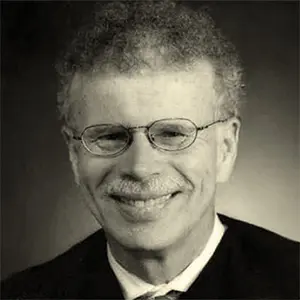
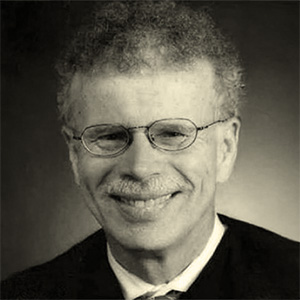
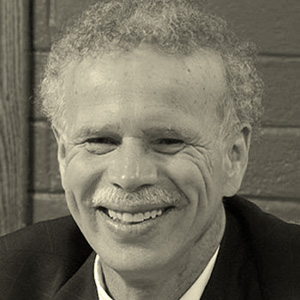
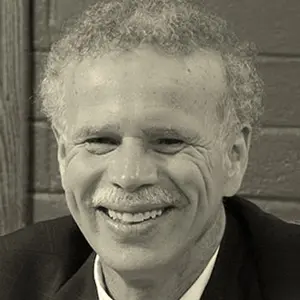
Listen to Dan Boudreau share the story of his life, fulfilling career in law, putting a Tulsa minister in jail, and his experience as a state supreme court justice.
A Massachusetts native, Dan Boudreau served 25 years on the state’s judiciary before retiring in 2004 to focus on mediation and arbitration. He earned a bachelor’s degree from Boston College and a law degree from the University of Tulsa College of Law, after which he practiced as a private attorney prior to judicial appointments.
His judicial career began in 1979 as a trial judge; he progressed to the Oklahoma Court of Civil Appeals, where he authored hundreds of opinions for eight years, leading to an appointment by Governor Frank Keating to the Oklahoma Supreme Court as an associate justice, briefly serving as chief justice upon swearing in.
Post-retirement, Dan contributed to dispute resolution as a mediator and arbitrator.
Full Interview Transcript
Chapter 1 - Introduction
Announcer: A Massachusetts native, Dan Boudreau served 25 years on the state’s judiciary before retiring in 2004 to focus on mediation and arbitration. He earned a bachelor’s degree from Boston College and a law degree from the University of Tulsa College of Law, after which he practiced as a private attorney prior to judicial appointments.
His judicial career began in 1979 as a trial judge; he progressed to the Oklahoma Court of Civil Appeals, where he authored hundreds of opinions for eight years, leading to an appointment by Governor Frank Keating to the Oklahoma Supreme Court as an associate justice, briefly serving as chief justice upon swearing in.
Post-retirement, Dan contributed to dispute resolution as a mediator and arbitrator.
Listen to Dan tell his story about being a Vista volunteer, how he put a Tulsa minister in jail, and his experience as a state supreme court justice on the podcast and website VoicesOfOklahoma.com.
Chapter 2 - School Experience
John Erling (JE): My name is John Erling, and today's date is July 23, 2025. So, Dan, would you state your full name, please?
Dan Boudreau (DB): My name is Dan Boudreau.
JE: You have a middle initial name?
DB: Daniel J. Boudreau.
JE: And we are recording this in the facilities of Voices of Oklahoma. Your birth date.
DB: My birthday is May 10th, 1947.
JE: And your present age?
DB: 78 years old.
JE: And where were you born?
DB: I was born in Natick, Massachusetts. Didn't stay there very long, though.
JE: Well, let's talk—we'll find out why. Let's talk about your mother, your mother's name, maiden name, where she was born and raised.
DB: My mother was born in Wellesley, Massachusetts. And her name is Mary Elizabeth Duffy, a good Irishman.
JE: What kind of personality did she have?
DB: She was very warm and very affectionate but very old-fashioned Irish. I mean, I've obviously got no complaints with my mom or dad. My dad was Daniel J. Boudreau. He was born in East Boston, Massachusetts.
JE: And that's where he grew up, in that area.
DB: That's right, East Boston. Surprisingly, although Boudreau is a French name and he was half French and half Irish, East Boston was an Italian community. So my mother grew up in a more refined community than my dad did.
JE: They probably let each other know that. What did he do for a living?
DB: He got a master's degree in social work from Boston College and he basically was the executive director of Catholic Charities in Newburgh, New York, and also in Albany, New York.
JE: So you grew up in the Catholic Church?
DB: Yes, I did, very much so.
JE: His personality then was like what, and what would you think you drew from him?
DB: He was emotionally restrained like a lot of dads at that time. But honestly, I mean, there was no doubt in my mind that he loved me and he wanted what was best for me. Back in those days they didn't treat the kids like I treated my kids; they weren't as supportive and encouraging. And I think there was a sense—and it was a Catholic sense too—that you don't want to spoil the kids.
JE: You never questioned that you were loved and cared for?
DB: Absolutely not.
JE: I love that term, "emotionally restrained." So then your education, where did you begin grade school?
DB: I went to a little school called Saint Mary's School. It was taught by the Dominican nuns in Newburgh, New York. Newburgh is a little community about 60 miles north of New York City on the Hudson River back in the late 50s and early 60s. It was an ideal place to grow up. Since that time it's fallen on very, very hard times, and it's not so ideal anymore. But back in those days, I mean, I went there, then I went to a small Catholic high school for three years—three of my four years—and it was called Saint Patrick's. There were 29 people in it aside from me. Probably the most well-known personality was the author James Patterson, who is my best friend for my sophomore and junior year of high school.
JE: Okay, James Patterson, the one who's writing all these books. He wrote one recently with Bill Clinton.
DB: Right, right. Dolly Parton—he's writing these thrillers. He's the most prolific author, and he's had the number one bestseller more than I know.
JE: This is about you, but quickly, was he a writer then in high school? Could you tell that?
DB: No, but he read. He was an avid reader. There was something about him; he was a little more focused, a little more mature. He was different than the rest of us. I mean, you could see he was on a path to success.
JE: So you graduated high school what year?
DB: 1965. And by the way, I went to the public high school my last year. I left this Catholic school and went over to the public high school.
JE: Which begs me to ask why?
DB: Because the Christian Brothers who ran the Catholic high school were well known for their—I don't want to say physical abuse, but their use of physical discipline. My mother just didn't like it and kids were getting hit.
JE: Were you?
DB: No, but I mean the five or six—it was a small school, as I said, there were 29 or 30 people in my class—and four or five of the students exited for that reason, and I was one of them. In defense of the Christian Brothers, they had a convention in 1978, much later than I graduated from school, where they just decided that they weren't going to utilize physical corporal punishment any longer, that it wasn't productive and it wasn't helping. But that's essentially why I left.
JE: So then that experience in public school, what was that like for you?
DB: Well, it was the first time since grammar school I had been with women. This was an all-boys school, the Catholic one. And so it was remarkable in that respect. Another respect is if you were called on in a Catholic school, you stood up. I mean, if you were asked a question, you stood up and answered the question. The first time I was called on in the public school, I immediately stood up and every head turns around and looked at me. I mean, you could tell they were thinking, "What is this guy doing?" and I kind of slink back down into my seat. But in my view, it was just a much healthier environment for me—healthier in the sense I don't think it's that healthy to be going to a school with all boys. Boys can be jerks at times and I think having women in the class, females, kind of tempers that a little bit.
JE: So did you feel your education was on par with your previous school?
DB: Yeah, I think actually I think the education in the public school was a tad better. My only concern is I wanted to go to Boston College. It ended up, I mean, it was a family school. My uncles went there, my father went there, and I wanted to go there. I was a little concerned that because I had left and I was dependent on a couple of the brothers for recommendations for college, it caused me a little consternation in that regard. But as it turns out, they were very good and they gave me—because I was going to a Catholic school—they were willing to give me a good recommendation.
JE: Again, you graduated from high school in what year?
DB: 1965.
JE: 1965. All right, then on to Boston College.
DB: And I went on to Boston College.
JE: What was your major there?
DB: It was history, East European history.
JE: And why?
DB: Just for the lack of anything else, really. I mean, I'm not going to say I dissipated my four years in college, but I certainly, if I had applied myself—Boston College is a good school, good institute—and if I applied myself I could have gotten a lot more out of it than I did. But I just think I was too immature at the time.
JE: You graduated from Boston College?
DB: Yeah, I did.
JE: What year?
DB: 1969.
Chapter 3 - Vista
Dan Boudreau (DB): Then I was a Vista volunteer for a year.
John Erling (JE): And what is Vista volunteer?
DB: Vista was at the time—it was a domestic Peace Corps. Instead of going to other foreign countries, you had assignments within the United States, and I was in Central Virginia for about one year and two months. Normally the term runs one year. I stayed over for two months.
JE: What was the nature of your work?
DB: We worked with a group called National Welfare Rights Organization. There was in Central Virginia—they just absolutely refused, I mean, to put anyone on the welfare rolls, whether or not you were blind or deaf. So we worked on that a little bit. We were organizing welfare recipients and the other thing we did is we worked with the University of Virginia in bringing a medical clinic to the county that I worked in, which was Buckingham County. The experience in Vista in Virginia was a maturing one for me. And it did far more for me than anything that I accomplished there. I met people that I'm still close to today. It was one of the best experiences of my life.
JE: So I'm interested -- why did you do that? You could have gone on to further education.
DB: Well, I'm going to go on to further education…
JE: But why did you choose to…?
DB: But I just, as I said, I was pretty irresponsible about my college years. I think I use the word—I may have dissipated them. I really knew in a sense, John, that I wasn't ready. I didn't take school as seriously as I should have when I was in college. I don't want to embark on graduate school and do the same thing. I said, "I need to take some time off and get a more mature perspective."
JE: So you grew up.
DB: I tried to grow up.
JE: So then after a year and a few months with Vista -- then what?
DB: Then I went to graduate school of social work in Rutgers University and got an MSW, master's degree in social work.
JE: And how did you end up deciding that?
DB: Well, my dad—both my parents were social workers. I mean, so it wasn't a big stretch.
JE: Did they encourage you or you're just—?
DB: No, no. I just thought, "They've done it, and maybe I'll try it." Two months into school when I met a young woman named Faith Santangelo.
JE: Did you meet her in an elevator?
DB: Yes, I did meet her in an elevator.
JE: Tell us that story.
DB: So we're in the elevator and we're in one class together—it was called group dynamics. She was as cute as a button and she was—she's a little Italian girl from Rochester, New York. I got in the elevator and I said—we just started talking—and I said to her, "You're in my—you're in the group dynamics class." So she played it a little coy, John, and she looked at me and said, "Are you in that class?" But as it turns out, we ended up talking that evening for about three or four hours. I told her about Boston College and my Catholic upbringing. Now, interestingly enough, she was a Sister of Mercy. She was a nun for four and a half years. She had taken her temporary vows.
JE: Faith did?
DB: Yeah. She had taken her temporary vows. When I started with the Boston College, and I come from an Irish Catholic family—I mean, so she called her mom that night and she said, "Mom, I just met the boy I'm going to marry." Her mom says, "Faith, don't do anything rash, please." And she says, "Oh, don't worry. I don't even—" She says, "I don't know—his name is Danny. I don't know what his name is." She said, "Let me look at the roster." She goes, "It's either Danny Boudreau or Danny Bernstein." She said, "I think it's Danny Boudreau." I want to say right off the bat that I had nothing to do with extricating her from the convent. She had left before and came down.
JE: Did you feel the same way about her as she said to her parents?
DB: Yes, I mean it was that day we knew. It took two years to get married but basically we knew that that's where we were headed.
JE: Isn’t that nice?
DB: I mean it was really nice. She's—we're still married today. She's the luckiest thing that ever happened to me and she went a very long way towards maturing me.
JE: So what year were you married?
DB: 1972.
JE: OK, let's continue her story right here because she had a diagnosis that was not pleasant.
DB: Yes, about 22 years ago she was diagnosed with lymphoma and it implicated 40% of the bone marrow. It was stage 4. And honestly, I mean, I thought at that point in time we're going to lose her. We went down to MD Anderson. There was a relatively new protocol available at that time for lymphoma. They provided the appropriate protocol; we came back to Tulsa and this is where she got the chemotherapy. She did fine. She got better for about 12 years. Now she's had four subsequent smaller relapses, and two of them they've been able to obviate by surgery. This is something that she constantly struggles with, and she runs a cancer group. They meet every Wednesday night. There's probably 15 to 25 in it. A lot of young women 30, 35 years old who have serious forms of brain cancer. They can't meet together—they have to meet by Zoom because everybody's immunosuppressed. But she's been doing this for years.
JE: But she was also a co-founder of a healing—Celebrating the Art of Healing?
DB: Right, she did that immediately after her own experience, and she formed this group. It was called Celebrating the Art of Healing, and it met probably for about 12 years, every year, and they had a big conference. She had a lot of help with it. There were other women—they contributed immensely to the project.
JE: OK, so you graduated from Rutgers University in what year?
DB: In 1972.
Chapter 4 - District Judge
John Erling (JE): So then what happened after Rutgers University?
Dan Boudreau (DB): I worked for a year as a social worker at Boston City Hospital in a methadone maintenance clinic, and I worked with old drug addicts in East Boston, Massachusetts.
JE: What an experience that had to be.
DB: It was, it was an amazing experience because most of the patients—and I'm saying patients because it was a methadone maintenance clinic—were older, in some cases substantially older than I am. Any time there was any stress, any anxiety in their life, John, they would resort to some kind of substance, some kind of medication to hide it. So most of them never developed the maturation process you need to have to deal with the stresses of daily life. They would just turn to some kind of substance and in this case it was mostly heroin. I worked there and I saw that a lot -- amongst the myriad of social problems they had -- I saw some of the most significant were legal problems.
JE: Legal problems?
DB: Legal problems. They were forced to resort to the black market to get drugs. They had multiple arrests. They couldn't get jobs. It was really a dead-end street for most of these guys, and I thought, "I wonder if I could do more on the legal end than I can on this end." And so that prompted me to apply to law school.
JE: Wow. Did you see any success stories in that year? Have you helped someone get out of that?
DB: Yes. I mean, we each had a client list, and we basically did—they came in, took methadone, they did counseling with us. I saw some success stories. Addiction is really in some sense an intractable problem. I saw a lot of people, a lot of young kids commit suicide, but yeah, I saw some positive things. But I saw a great deal of negative things also. It was a good experience for me, as I said.
JE: You said heroin, but could there be alcohol involved and all?
DB: It's interesting, John, particularly with the older addicts, they reach a stage I observed around 40, 42 years old. Now, keep in mind I'm 23, 24 at the time. Where they would stop taking heroin and they become—they just start drinking. The drinking almost in every instance would kill them in 3 or 4 years. I mean they could stay if they could get a supply of heroin and they didn't have a contaminated supply, they could stay on it for—the long-term effects of heroin are decreased sexual functioning and an addiction. But there were plenty of nurses and doctors that had heroin addictions too. But yes, once they turned to alcohol, it normally was the end of the line for a lot of these guys.
JE: Well, their bodies had been so beat up anyway in a weakened stage and alcohol enhanced the end of their life.
DB: Right. The long-term physical effects of alcohol are worse than heroin.
JE: OK, so that's when you started thinking about the law.
DB: That's correct.
JE: And then you came to Tulsa.
DB: I came to Tulsa.
JE: … from out east. Why Tulsa, Oklahoma?
DB: One of my good friends in Newburgh, New York, his name was Jeff Berry. He went out in 1972. He came out here. And I was conversing with him and telling him I was thinking of going to law school. And he says, "You need to come out here. We've got a brand-new building out here that you'll be—if you start in 1973, you'll be the first people, first class ever to be in this building.
JE: At the University of Tulsa?
DB: Prior to that, the law school was down in Central High School for a while, and then it was at an office downtown. So when I came down in 1973 there was a big beautiful building. And I also had some money and also TU is considerably less expensive than the private law schools back East so I said to Faith, "I know this is a big ask. But will you come down to Tulsa with me?"
JE: But you were married by that time, weren't you?
DB: Yeah, I mean, but I still just couldn't tell. I said, "Will you come down to Tulsa with me? If you do and you don't like it, you can pick out where we go next." So that's the bargain we cut. So I came down to law school. She came with me.
JE: And she was a school counselor herself, Faith.
DB: Oh, she was for a while. She worked as a psychiatric social worker for a long time at Children's Medical Center. Do you remember when Children's Medical Center was out around 51st?
JE: Yes, right.
DB: And she worked out there for a long time and then we had the two kids. She worked at Monte Cassino as a kind of a social worker position.
JE: So when you started your studies, University of Tulsa College of Law, did you feel that I made the right decision or did you ever question it?
DB: No, it was a perfect decision for me. I knew right away. I mean, first of all, it was the first time in my life that I really took my scholarly studies seriously. I realized, "This is a profession you're gonna need to know what you're doing."
JE: It may have come easier for you too once you're committed, right?
DB: Right, so I had no question that it was the right decision for me. Interestingly enough, Faith and I liked Tulsa a lot. I completed the 3 years. I've been offered a position out in Broken Arrow with a law firm called Funston, Courtwright and Boudreau. Boudreau wasn't in it when I was offered the position, but I later became a partner. She was working at Children's Medical Center, and I said, "Faith, what do you wanna do? Do you wanna stay here? Do you want me to look for a job someplace else?" And she says, "Let's stay here for a while." Faith is the biggest sweetheart, but she's a little risk-averse. So she says, "Let's stay here for a while." And that's what we did.
JE: Well, how long were you with that law firm?
DB: From 1976 to 1980. I need to tell you something about my other two partners. Bob Funston was a state senator from Broken Arrow. He made what might not have been the best decision in the world in 1978. I mean, he had a position he could have kept for as long as he wanted it, and he loved the political machinations of Oklahoma City. But he ran against George Nigh, Larry Derryberry, and him, and the three of them vied for the Democratic nomination for governor. He left the position that he could have kept for an awful long time.
JE: You mean in the law firm?
DB: No, as the state senator. This law firm for him was secondary. He was more of a politician at this time than anything else. He ran and he got enough votes. He kept Nigh from getting a majority of the votes, so he forced Nigh into a runoff with Derryberry, and Nigh ultimately won the governorship. My other partner was Steve Courtwright, who was in the Air Guard. He later became the adjutant general of Oklahoma under Keating—a great guy—but he loved flying planes. He was a fighter pilot. He was a fighter pilot in Vietnam and any time he had the opportunity to get into a plane and go someplace he was away. So here I'm in this law firm that I have two guys, at least at this moment in time, aren't that committed to practicing law. So I'm sitting there in all honesty, I was probably handling some matters that I probably shouldn't have been given the level of my experience, but nothing disastrous happened. I worked there, but it was a baptism of fire for me. I mean, they were rarely in the office. I was doing all the work. The benefit to it was I was down at the courthouse all the time and I knew all the district judges. Remember my entry-level appointment as a special judge that was determined by the special judges. I do this for 4 years. I'm going to the courthouse regularly. I'm cultivating these relationships with district judges. And in 1980, I love the two guys I'm in business with, but they just don't have the same commitment to it that I do. They're making money elsewhere. So I thought I'd apply for a special district judgeship in 1980. I had been teaching during 1976 to 1980 when I was in a general practice. I had been teaching family law for 2 or 3 years at TU law school. So this opening came along. I applied for it. I think there were 19 original applicants. They narrowed it down to 5. One of my competitors was John Reif, who later became a Supreme Court justice. Another was Deborah Shallcross, who became a judge here. I was very fortunate to get this position when I applied for it.
JE: But that was a new Tulsa County District Court special judgeship. It was a new position?
DB: A special judgeship is a limited-jurisdiction judge. In civil cases you can't try—without the consent of the parties—you can't try anything over $10,000. In criminal cases you can't do anything beyond a preliminary hearing. You had coextensive jurisdiction in family law matters. I don't know, was it a new position or was I filling in—I can't tell. This wasn't a gubernatorial appointment. The general jurisdiction trial judges, or what I'll call district judges in Oklahoma, appoint the special judges.
JE: The presiding judge William Means said that you would be placed in the family relations division of district court.
DB: That's correct.
JE: So how long were you there in that position?
DB: When I got the job, John, I thought, "This is it." I mean, this is all I wanted. I'm gonna be satisfied in life if this is—OK, that lasted about 6 months. But I looked around and there were other special judges like Jane Wiseman, Burt McElroy, Richard Eldridge, Rob Frank, Tony Graham—who passed away recently—and I looked around and I said, "Oh, it's gonna be years before I move up to district judge."
I think in '82 a position came opening. Governor Nigh is the governor at this point in time. Now with the general jurisdiction judges, the way it works is this: the judicial nominating commission—it's composed of 15 members: 6 lawyers, voted by the bar association, one from each of the six congressional districts, 6 appointments by the governor, and 3 other appointments by the Senate pro tem. So they come out with 3 names. They submit those 3 names to the governor and the way the system works is that he's obligated to appoint one of those 3.
There was a couple of points I wanted to make before...
When I was interviewing in front of the judicial nominating committee, I knew I was gonna be asked—and one of the questions was: "What makes a good judge? What are the traits of a good judge?" I knew a little bit about that at the time because of my 4 or 5 years in private practice. And I think in that respect I learned more from the bad judges than I did from the good judges. Probably one of the most important things, John, is you have a good judicial temperament. And what I mean by a judicial temperament is, obviously you need legal knowledge and competence—that goes without saying—but how you relate to the people in the legal process. So are you patient? Are you a good listener? You got to strike a balance between being decisive but not rushing to judgment. It's all the things that make it enjoyable for an attorney to be before you, because you can—if you want to, and many do—you can make it miserable for attorneys. I think I had an intuitive sense immediately that my success in life is going to depend to some extent on how I related to these attorneys and how supportive they were of me. You've got to be industrious, you gotta be able to move a docket. If you can move a docket, you have a good judicial temperament, attorneys will forgive a lot of lapses in legal expertise and competence. They’ll be much more forgiving. They won’t be happy about it, but if you treat them fairly and impartially, they'll forgive a lot of shortcomings in a judge.
Chapter 5 - Memorable Cases
Dan Boudreau (DB): One of the other things I realized right away too when you become a judge—there's an occupational hazard no judge is gonna, I think I'm gonna be the only one who will acknowledge this to you. Think about what happens that first day that you're sworn in. You're given a robe. You're given a gavel. You're given a new title, "Your Honor." You're given a courtroom, your own courtroom, you're given a position in that courtroom that's elevated from everybody else. From that moment on, people who wouldn't say word one to you in the elevator are very deferential. You can come in late and people aren't going to say anything about it.
John Erling (JE): And did you embrace that because then you were a judge for many, many years and you enjoyed that level?
DB: No, no, I realized—I mean every joke I told was funny. (Laughing)
JE: (Laughing)
DB: I had the good sense to realize that this is artificial attention I'm getting. But I think a lot of judges—Mike Turpin had an expression, I think we discussed this earlier, that “some men and women grow in the robe, some swell in the robe.”
JE: But you had no idea that feeling was gonna happen to you even though you had appeared before judges until it finally happened?
DB: Until it finally happened. But I realized right away that this is something—it's—you get a—unless you have a good wife, you get a complete absence of corrective feedback. Nobody's gonna tell you that—you just get all kinds of deferential behavior.
JE: But when you came home, Faith probably said, "You ain't a judge in this house."
DB: That's right. That's exactly what she told me, and so I owe her a lot for that.
JE: Kept you grounded.
DB: Yeah. I think if you talk to most judges they'll say, "Oh no, that doesn't bother me, that doesn't affect me." You can't be subject to so much flattery in a way that it doesn't—it does—at some point in time you start thinking, "Well, this must be because of me!"
JE: So how long were you as a special judge?
DB: Well, I was a special judge for maybe a little less than two years, from '80 to '82. In '82, I became a district judge.
JE: And the Governor George Nigh appointed you?
DB: He appointed me to …
JE: To Tulsa County District Court.
DB: We're talking about corrective feedback from your wife.
JE: Yes?
DB: She looked at those pictures and she said, "You look like a reformed drug addict. She says, 'Rob Frank looks like a used car salesman. She says, 'Don Lane is the only one who looks like a judge'".
JE: Well, you just showed me a picture. This is from the newspaper. Donald Lane, Robert D. Frank, and Daniel J. Boudreau.
DB: So I said—
JE: I would agree. Donald Lane looks like a judge.
DB: He was the quintessential judge. And I said, "Faith, I said you could give me a little more encouragement than that," but I got an appointment by Nigh.
JE: So what does that entail to be the Tulsa County District judge?
DB: You have jurisdiction over any case. Now I got, after a small stint in family relations, I got a civil assignment, though those assignments are administrative only. There's a—there would be, you know, you could be assigned to probate. You could be assigned to criminal law. You could be assigned to civil. You had the power to act in any one of those capacities if you were a district judge. Although we don't have—in state district court resolves the majority, the vast majority of legal disputes in this country. We don't have the embarrassment of riches that the federal courts do. I mean, they have very limited jurisdiction in some respects. In state court, you can put somebody to death. You can divorce them. You can try a medical malpractice case. But I was assigned to the civil jurisdiction primarily for the eight years I was a district judge. I had a civil assignment.
JE: So you were 8 years as Tulsa County District Court?
DB: Yeah, from 1982 to 1990.
JE: Did you enjoy that?
DB: I enjoyed it immensely. If you want to put your finger on the pulse of a community, there's no better place to do it than the local district court. Every day I would see jurors, witnesses, litigants, attorneys. I mean, it was just invigorating.
JE: Could you have stayed there for years and years and years?
DB: I could have, but remember we talked about ambition earlier—I probably could have stayed. I was there—there were two election cycles that I drew no opposition, so I could have stayed there for a long, long time.
JE: All right, well let me ask you about election as opposed to appointments. How do you feel about that?
DB: In general, I think the appointment system is a better system. You can have something like the judicial nominating committee that does a deep dive into the qualifications and the character of an individual that's applying for a judge. Keep in mind that Oklahoma is a populous state and they're not going to give up their right to elect judges. I mean, they want some control over that.
JE: Do you have any memorable cases as a district judge?
DB: Yeah, I had a couple. Now keep in mind every—I mean, I was trying medical malpractice cases, insurance cases, very significant civil cases—but the two cases that are the most memorable involved injunctions, and an injunction is when a court issues an order telling somebody to do something or to refrain from doing something. I had this case with a pastor by the name of Glenn Ellis. As part of his ministry, a daycare center for kids in the daycare center—I mean, it was without a license, by the way. He failed to get and he couldn't have gotten a license because it was being run by 14, 15-year-old girls. There were electrical outlets that were exposed all around. It was on the 2nd floor and there really wasn't—it was just a little flimsy gate that prevented these kids from going down. It failed when DHS went out there; it failed in all significant respects. He was adamant about it. He said, "This is part of my ministry." And we had a hearing and they established that he hadn't got a license so I said, "Pastor Ellis, you've got two choices. I said, one, you can secure a license and operate your daycare center, which I hope you'll do, or you gotta stop operating the daycare center because you cannot operate it without a license under these circumstances." He wasn't defiant. I mean, he was very polite and respectful to the court. But he said, "I don't believe you have any authority over me because this is part of my church ministry, and I'm not gonna get a license, and I'm gonna continue to run the daycare center." I said, "Well, Pastor Ellis, you've really left me with no choice. I'm gonna find you in contempt. It's—now this is a coercive remedy. It's not punishment." I said, "I'm gonna order you to jail for 6 months because that's the limit." And I said, "You have a choice here. I'm gonna leave you with the keys to the jail in a sense. You can get out any time you tell me you're going to acquire a license or any time you tell me you're gonna stop running the thing." So you have the keys to the jail. Now it developed some national attention. There was an assembly of non-denominational ministers that would come down. Faith and I were getting a lot of nasty letters. Some that weren't nasty—some saying they'd be praying for us that we do the right thing. Thanksgiving came up. All these ministers who were down here picketing went back home, and Glenn was still in jail. So a little bit after, maybe the beginning of December, I said to him, "Glenn"—I said, we're on first name basis by now—I said, "What are you doing?" I said, "Do you know where these other ministers who are egging you on here spent their Thanksgiving? They spent it with their wives and their children. I said, you spent it in jail." I hadn't quite convinced him at this point and I said, "I really wish you would reconsider what you're doing here."
JE: What denomination was he?
DB: It was non-denominational.
JE: What was the name of the church?
DB: The name of the church was Believers Ministry. The name of the daycare program was We Believers.
JE: OK, so you said, "What do you want to do? You haven't spent time with your—"
DB: So I'm telling him, "You need to reconsider this." He said, "I'll tell you what, I'll think about it, but I can't make any assurances to you at this point."
JE: How many days had he been in jail?
DB: 2 months almost. It was appealed to the Supreme Court under a habeas—our Supreme Court under habeas corpus—and they held 9-0 that he was where he should be. I was at a party on Christmas Eve. I got a call and it says Glenn Ellis would like you to come down to the jail and talk with him. I stopped what I was doing. I got in the car. I went down to the jail. And I said, "Glenn, how you doing?" He says, "I think I'm ready to do something here."
JE: This is Christmas Eve.
DB: This is Christmas Eve. And I said, "I really had hoped you would be telling me that." He said, "I'm gonna stop. I'm not going to concede the issue. I still don't think you have any authority over me, but I'm not gonna run this daycare center." And I said, "That's all I wanted to hear, Glenn." We let him out of jail that night. He wrote a little statement for the press which I helped him developed. That was the end of it. It was a huge relief. It was probably -- maybe -- the two most stressful months of my life on the bench.
JE: Because it really bothered your mind.
DB: And the other thing too is—do you remember when David Moss was here?
JE: Yes.
DB: Moss was the chief prosecutor. He was a district attorney at the time, and I think I was working with Mark Lyons, one of his assistants, but David didn't know whose side he was on. David was a member of Eastwood Baptist Church. He was a very upstanding religious guy. And he had genuine religious beliefs, and what this guy was telling him I think had some traction with David. And I was telling him, "David, I can't be the prosecutor in this case. I'm the judge. I mean, you got to decide what you're gonna—are you gonna let this guy flaunt the licensing requirement for a daycare center?" Finally came around, but that was another problem because he just wasn't all on board.
JE: And now we have a building, the David Moss Juvenile Center in his honor, and he died.
DB: He died at a very young age. He was a football player for TU. He was really upstanding. He was fine and he died a premature death.
JE: Pastor Ellis, was that separation of church and state? Is that what he was alluding—?
DB: That's basically what he was saying—that the state has no business impinging on my ministry. And it's protected by the free exercise of religion clause.
JE: So he decided not to have a daycare center and whatever happened to Pastor Ellis?
DB: I tried to look that up the other day and I don't know. I think he went on. I still think he's got a ministry going on someplace. And so the other case that we're talking about is it was an injunction case. It was a bar called Night Moves Show Bar, and it was essentially what you would call is a strip bar. And the city of Tulsa was trying to close down it based on a city ordinance that set 500-foot setbacks from a church and the bar. The owner of the bar was challenging the constitutionality of the city ordinance, and this is what the owner was saying. Although the properties were contiguous—this was the Trinity United Methodist Church at the time, it was on Peoria—and the property lines were contiguous. They were adjacent to each other. But if you measured it that way, there was no separation. But if you measured it from access to access, from front door of the church to front door of the strip club, it was 800 feet. It was outside of the 500-foot limit. We go into trial and the owner of the bar is basically—his defense is this is a benign mom-and-pop little bar, and he wouldn't even use the word bar. But I ruled in the case that the bar had to be shut down because it was in violation of the 500-foot setback line.
JE: It was 800 or 500?
DB: No, it was 800 if it was—remember, the statute said 500 feet. Now the question in this case came to: "How do you measure?" Do you measure it from property line to property line or point of access to point of access? If you measured a property line to property line, there was no difference. If you measured it from point of access to point of access, it was 800 feet and it would have been OK. But I said, "I'm gonna uphold the city ordinance. You're gonna have to close this bar. It's too close to the church." I got reversed.
JE: Really?
DB: Yeah, I got reversed in a sense that they said—the Court of Appeals said—this setback provision, this city ordinance, it is too vague to be applied. They said, "We don't know what the measuring point is, whether it's property line to property line or access to access." They said it's too vague and so they reversed me.
JE: How did you feel about that?
DB: Oh look, that's an occupational hazard to me. You cannot be a judge and be too sensitive about reversals.
Chapter 6 - Supreme Court Justice
John Erling (JE): Let's move you on then, district judge for 9 years, correct?
Dan Boudreau (DB): That's correct.
JE: Then there's an appointment coming along for you.
DB: So in 1990, a position comes open on the Court of Civil Appeals. Bill Means resigned. This was a David Walters appointment. Remember I told you I was very happy at the district judge level. I mentioned to a few friends of mine, and I'm thinking I'm giving some thought to applying for this Court of Civil Appeals. And they said to me, "You'd be stupid to do this, Danny. This is a politically dead-end position. We know you have aspirations for the Supreme Court. You're not going to the Supreme Court if you go to the Court of Civil Appeals. It's so cloistered up there." I was hearing this regularly. I mean with a great deal of frequency. So I said, "I need to talk to somebody who's been on that court." So I called this guy Fred DeMier, who had spent one term on the Court of Civil Appeals. He had a kind of a snide sense of humor, and I said, "Fred, this is what I'm hearing about going over to the Court of Civil Appeals, that it's just—it's cloistered. I'm gonna be living in this monastic situation over there. I mean, can you give me some guidance? Is this true?" And he looks, he says to me on the phone, he says, "Danny," he says, "if you get this position," he says, "in about a year your phone will ring," and he said, "You won't even bother to answer it because you'll know it's not for you." So he was affirming how cloistered it would be.
JE: When you say cloistered, what do you mean?
DB: I mean, you're there, you're over in the state office building. You don't see attorneys. The Court of Civil Appeals is—there's 12 members on it. There's 2 divisions, 2 divisions in Oklahoma City. There's 2 divisions in Tulsa, so you—and we sit, you sit on 3-judge panels. It's not like the trial bench where you're seeing new people every single day. You're seeing lawyers and stuff. I mean we didn't even have oral arguments at the time for about 8 or 9 years. I was over there and we were just writing decisions. Now the Court of Civil Appeals in Oklahoma is what they call an error-correcting court. All appeals go to the Supreme Court. And then the Supreme Court refers the vast majority of them to the Court of Civil Appeals. The Court of Civil Appeals isn't there to make law, decide novel questions. It's there just to see if the disputants in the controversy that they're looking at got a fair trial. The job is error correcting. Now, that doesn't mean when I say error correcting, it doesn't mean perfection seeking. You're not gonna—you don't get a perfect trial, John. Never ever.
JE: Right.
DB: So the question is in every case: did what happens during the course of the trial have an effect on the outcome of the trial? And most of the time it doesn't. Now sometimes it does. Sometimes the mistake is so significant that you have to reverse and send it back to the trial court. But the Court of Civil Appeals in Oklahoma has a very, very restricted job responsibility. I mean, we just take these cases, we look at them. And we write a decision. As lonely it was up there, I worked with some—I worked with John Reif. I worked with Bob Stubblefield. Do you know Jerry Goodman?
JE: Mm-hmm (in the affirmative).
DB: Jerry, I worked with Jerry for a while. They were all a pleasure to work with and it was very, very collaborative.
JE: But let me say you were warned about the condition about where you were stepping into and yet you did it anyway.
DB: I did it anyway.
JE: So how long were you there before—"I'd like to get out of here." Did you think that?
DB: The Supreme Court has 9 judicial districts, even though Oklahoma City and Tulsa represents 2/3 of the population of Oklahoma. They represent only 2/9 on the Supreme Court. So I had to wait. Bob Simms was there. He was in—nobody was resigning, so it really wasn't an issue for me, and I didn't know how long Bob would stay around. No, I really wasn't itching to get out of there because first of all I enjoy my colleagues. It was the work was very collaborative. The three of us sometimes on our panel would get a legal issue, put it on a blackboard, and talk about it. At some point in time, a Supreme Court position does come opening. Simms retires, and this is in 1999. The appointing authority, the governor at the time, Frank Keating. And Keating announced publicly in the newspaper that he wanted to appoint Jim Goodwin, a Black lawyer from the North Tulsa, as he—he wanted, he wanted to be the governor that basically integrated the Supreme Court. Jim's a very fine lawyer. He owns the Oklahoma Eagle, the newspaper.
JE: And I've interviewed him for Voices of Oklahoma.
DB: Yeah, yeah, he's a very fine lawyer. I don't know if he told you this story. So Keating announces, "I want Jim Goodwin. I want to appoint him to that position." Keating, who's normally very political, that was kind of an ill-politic thing to do because I think that the judicial nominating committee is thinking, "Wait, we have some input into who he's gonna consider." So we all interview. Jim interviews first. Now Jim—I don't know if you picked this up in your interview with Jim. He is absolutely without any guile at all to his own detriment. I mean, he just cannot be deceitful in any fashion. So they ask him this question: "Jim, how long have you been thinking about being a judge?" Now, John, there's an answer to that, but it's not the answer that Jim gave. Jim said, "Well, I've never really thought about it until the governor gave me a call and said he'd like to appoint me." I mean, they want an answer that, "It's something I've been mulling back and forth in my mind. I've thought about it for a long time. This is why I'm interested in being a judge."
JE: Is that what you said? They asked you that question.
DB: Believe me, yeah. I mean, I—
JE: Because you had been thinking about it.
DB: Well, I had been, yeah. Well, I was a judge at the time.
JE: That’s true. Right, right.
DB: 3 names come out of the judicial nominating committee: myself, Jane Wiseman, and a guy named Mike Medina who works for Fred Dalwart. I don't think Mike was ever, for a variety of reasons, was ever gonna be considered, and I think Jane, who's a dear friend of mine and a very, very capable attorney—I don't know if you know her—she had too big a D stigma, and I'm referring to a Democrat, for Keating to swallow. I think he reluctantly appointed me. Now that's not the way when he introduced me at the press conference—"Oh, it was Dan Boudreau all along"—but he appointed me.
JE: But wasn't that somewhat embarrassing to Governor Keating that he had come out and say, "I'd like to nominate Jim Goodwin"?
DB: It was. And interestingly enough, this judicial nominating committee. There's been two attempts in the last year by the Republican legislature to gut the judicial nominating committee because the governor wants to be able—the governor doesn't want to be restricted by the 3 applicants he gets. And instead has been pushing them to get rid of that. I mean, I think Keating realized that, to his credit, that “this is the way the system works and I'm restricted to these three.”
JE: Well, that had to be pretty exciting for you.
DB: It was.
JE: Because that was in 1999.
DB: It was exciting initially. I get this question frequently: "You were the first judge ever to be on the trial bench, the Intermediate Court of Appeals and the Supreme Court, which court did you enjoy the most? Which did you think was the most interesting?" And everybody expects you to say the Supreme Court. I wasn't willing to say that. There's very, very little collaboration. They take a case.
Now the Supreme Court's different than the Court of Appeals in this sense: they can pick and choose what cases they take, and they're gonna take cases where there's an unaddressed legal issue, a legal issue that hasn't been decided in Oklahoma. The Supreme Court wants to decide it if two divisions of the Court of Appeals, the Intermediate Court of Appeals, come to different conclusions. You've got two conflicting opinions out there, they'll take it. If it's a decision that's important from a public policy point of view, they'll take it.
In a sense they're a court of choice. They refer everything that they don't want down to the Court of Civil Appeals. And they take the cases. Case is assigned to a judge that they're going to take and judge writes an opinion, brings it in for a vote. You don't see the opinion until the day before where it's sitting, it's distributed. You probably 5 or 6 other opinions you're voting on. It was a very old court too. I was in my early 50s I think.
JE: And the rest of them were…?
DB: Over 70 except for Joe Watt. I'm gonna be very delicate about how I say this, but when you get into the 70s, some—you experience independent of any disease process. I'm not talking about dementia by Alzheimer's or Lewy body dementia—independent of any of that stuff, there's a moderate amount of cognitive decline. I mean we can see it. It's harder to recall names and stuff and also you have health problems. We had two judges—and I think you've talked with Justice Opala, right?
JE: Yes.
DB: He and Justice Kauger, who had been on that court forever. She was appointed to the court—if you recall, she was—she was the first judge ever not to be retained.
JE: That was just recently.
DB: Just recently. That was 2020 I think she was retained. I was in private practice in 1978 when she—so she was on there for 50 years.
JE: She was 85 years old.
DB: Yeah, he was—he was very old. He was also very old.
JE: “He” being?
DB: Justice Opala. I really thought the notion of a retirement age makes some sense.
Remember I told you about the lack of feedback you get. I mean, a lot of these judges get to think, "I'm indispensable to this court. It can't function without me." I think Ruth Bader Ginsburg thought that way. I think both Kauger and Opala thought that way. There was some decline going on, and I'm talking about those two judges because they were the most influential judges on the court.
They had embarrassing interpersonal relations. I don't know if he talked about this at all. They didn't get along very well at all.
JE: Who now?
DB: Kauger and Opala.
JE: Okay.
DB: And I will tell you they were both very capable, but they just didn't get along. I think I mentioned a story where the first day I was out there, she says—”we're gonna go out”—she just tells me we're gonna go out to eat.
JE: “She?”
DB: That being Justice Kauger.
JE: OK.
DB: Justice Kauger tells me we're going out to eat. So she takes me to a Vietnamese restaurant on 22nd in Classen in Oklahoma City called Lido's. And we walk in and I've been to Oklahoma City for a day and it's like a meeting of the Oklahoma County Bar Association. It's mobbed. We're sitting there and we're eating and about midway through lunch this diminutive little figure comes in, Justice Opala. And you can see him look. I mean he spots us in the middle and he yells out from about maybe 30, 35 ft away, (Imitating Opala) "Justice Kauger, Justice Kauger! I see you're already sucking up to the new justice," he says, "that's just your style." (Laughing)
JE: (Laughing)
DB: He was an exceptional judge in many respects. He was—he could make a presentation that was clear, lucid, but he was difficult.
JE: It's a remarkable story coming from Poland.
DB: Yeah, yeah, he was, and he was difficult. He said to me—he said the first day of conference, he says … I come out on Tuesday conference on Thursday. And all the other justices are being as nice to me as possible. They're saying, “Justice Boudreau, if you feel at sea at all, just come and talk to us. We'll—if you need any help, we'll guide you.'" And he looks at me and says, (Imitating Opala) "Justice Boudreau," he says, "never—never come to my office uninvited. I do not tolerate uninvited visitors."
JE: (Laughing)
DB: You know, there was embarrassing interpersonal relationships, so that detracted from the experience for me, John.
JE: Then he actually sued the Supreme Court.
DB: You talk about collegiality!
JE: Right. Tell us why he sued them.
DB: They had a rule in place about the presiding judge, the Chief judge. You got a little bit of more money, not much, and you got some ceremonial duties as the presiding judge.
JE: Oh, the Chief Judge?
DB: The Chief judge. And they had a rule when I come in and they tell me, "OK, now you can't be chief judge until everybody on this court"—and there were 2 year terms—"everyone in this court rotates around and is chief judge and they've all been chief judge before," because it's an old court. So they're essentially telling me, "You have to wait 16 to 18 years before you're gonna be considered as chief judge." Jim Winchester comes on as a younger guy, and we're kind of griping about this rule. We're saying, "Look, this doesn't make sense. You're just doing this to feather your own nest, and you need—you need some young energy in here." And so we convinced them that they need to do away with the rule. Well, Judge Opala was up next. He filed a federal lawsuit against all members of the court saying that they deprived him of the whatever money and the ceremonial privileges of the position of chief judge. Our pictures were in the New York Times. I mean it—the Court!
JE: Highly unusual.
DB: And can you imagine what kind of collegiality that court has when one of the judges is suing all the other judges?
JE: And what—so then ultimately—
DB: Then that case was dismissed. It was a frivolous case.
JE: Who heard it? I mean—
DB: It was in federal court. It wasn't in state court. It was in federal court and it was initially heard in Oklahoma City. Nobody in Oklahoma City wanted to touch it, so they sent it to Denver and the judge in Denver dismissed it.
Chapter 7 - Meaningful Moment
John Erling (JE): Can you describe a moment that stands out as particularly meaningful or challenging to you?
Dan Boudreau (DB): Really one of the most meaningful moments for me was, the Supreme Court when I was doing during the swearing-in ceremony when they asked me to get up and speak.
JE: Of your swearing-in, yes.
DB: I started speaking about Faith. I didn't have any plans. You know, I’ll almost start crying now, John, if I start telling you about this. I started saying, "There's certain situations in life where some people get credit and some people who probably deserve a lot more credit don't get any at all."
And I said, "I want to talk to you a little bit about my wife." I said, "She was the maturing influence in my life. She raised our two kids. She came down to Oklahoma with me. She stood by me all the way.”
I thought that this was a really schmaltzy speech I'm giving, but the Oklahoma's newspaper picked that up: “Routine swearing-in speech turns into a speech in praise of his wife.” That was a big part of it.
One of the things I observed in the profession is when I started private practice, really hardly anyone used billable hours. Billable hours, as you know, is basically the hours you put in a case times your rate of pay. Back in the days when I started, there was—if you were lucky you'd get a retainer from a wealthy client or a business you represented. Or you would have a fixed fee for, "I'll do this job, I'll do this probate job for you for X amount of money." And if you put in more hours than you thought you were going to, you took the loss; if you put in less hours, you got a windfall. Then there was an interesting thing called value where a lawyer would perform a task for a client and I give you a bill. I give you a bill and I say, "John, this is your bill." There would be no breakdown of hours. This is what I consider the value of my services.
Things later on changed to billable hours. The change was generated by in-house legal counsels—the proliferation of in-house legal counsel and their insistence on transparency in billing when they farmed out cases. We went from a system where the billable hour system now reigns supreme, but it's not entirely working because young lawyers are being burnt out. They get jobs at these prestigious law firms—there's about 6 or 7 new ones every year, maybe 2 or 3 are gonna make the partnership or get the gold at the end of the rainbow.
They're all striving and they have billable hour targets that are next to impossible if you wanna have a healthy home life. I'm seeing a lot of burnout and one of the things I think with the billable hours is it's frustrating to see lawyers who's saying, "I just don't want to do this anymore."
Chapter 8 - Managing Differences
John Erling (JE): Let me ask you, on our US Supreme Court, we know who the liberal judges are and the conservative judges. So does that play a role in our state Supreme Court?
Dan Boudreau (DB): In a much, much smaller sense. It's dramatically on display with our US Supreme Court. There's judges that by the nature of their character—I mean it isn't a—that were more conservative, that thought, "Well, this is too much money for somebody to be getting in this personal injury claim." But it didn't really run along when I was there—it did not run along politically partisan claims. You could predict certain judges' votes. You look at one of the most significant Oklahoma Supreme Court cases recently, Randall versus Drummond, that dealt with the virtual charter school, Saint Isidore's. Our Supreme Court heard that matter and voted 7 to 1
JE: Against it.
DB: Against it, and they were all appointed by very conservative—I don't know that there's any liberals left on the court anymore.
JE: In our state?
DB: Yeah. Well, let me say: I think they were all appointed by Republican-appointing authorities. They did what they thought was right, although the US Supreme Court ruled 4 to 4—and I think if Coney, who had to disqualify from that case because of her affiliation with Notre Dame who was a sponsor of that, would have probably been the deciding vote, they would have gone in the opposite direction. So in a sense, it's nothing like you would see at the US Supreme Court.
JE: How did you handle disagreements of different interpretations of the law?
DB: If somebody came up with a decision, you would try to—I did it the best I could to, if I could, sign on to anybody's decision. If I could do it in good faith, I mean, I wasn't gonna pick and pick at certain things. Sometimes I couldn't—I just disagree with what you're saying, what you're doing here. I don't think this is the way this matter should be resolved, and then you write a dissent. Marion used to write a million dissents.
JE: He was always against everything?
DB: Yeah. Not only what he would do too is interesting—he would, when he was writing an opinion in another matter, he would refer to his dissents. It’s interesting… My son—he's a Hollywood writer.
JE: What's his name?
DB: Duffy Boudreau. And he wrote for a show called Barry -- B-A-R-R-Y -- on HBO, and he's writing now—he's coming into town. He's writing for Sterlin Harjo's new show. And he tells me—I asked him what it's like in the writing room—and he says, “Sometimes you just have to be so delicate about the way you bring a matter to somebody's attention. If you get them defensive, you've lost the thing; you've got to be supportive.” And when I would try to bring up a point with Marion, I was so deferential it was sickening. (Laughing)
JE: (Laughing) Well, is there a time where you sit in a conference room or all of you in the same room and you're talking before opinions are written?
DB: Yeah, there's conferences normally held on Monday and Thursday in the morning. There's a set conference on Monday. What you decide is really this—it's called the certiorari docket. Basically you get a recommendation from a referee who works for the Supreme Court: "This is the case that we wanna take, this is why I think we should take it or why we shouldn't." Once you decide to take a case, you assign it to a particular judge, and he'll write an opinion. He might present it 6 to 8 months down the road on a Thursday and you would vote on the opinion, but there were conferences every Monday.
JE: In conference you'd sit around—one would say, "Yes, we've got to take it," "No, we shouldn't take it." Did you take a vote then?
DB: Yes, and you had to have 5 votes of the 9 to take certiorari.
JE: Does the US Supreme Court operate the same way?
DB: Substantially the same way. They have a specialized docket now that is more secret about what goes on, but they handle it basically the way they handle their regular docket—they make a determination: "Is this case worthy of our consideration?" That's basically what they decide: "Is this a case we wanna speak on?" And if it is, we'll assign the case to a particular judge—and it's a random assignment—but it's got to be someone who voted. If it was a 5 to 4 vote to accept certiorari, it has to be someone in the majority, and then they write the decision.
Chapter 9 - State Supreme Court
John Erling (JE): How many years were you on the Supreme Court?
Dan Boudreau (DB): Only 5 years.
JE: All right, I want to get to that. Is there one case that particularly maybe impacted you personally or that one case just jumps out at you when I ask you that question?
DB: You know, in a sense I'm embarrassed to say, John, there's not; because for this reason: for those 5 years I was there, there was—we did our work, we decided cases we should have. But there was no landmark case that came down. There was no case that changed the legal landscape. There have been cases that have come down from the Supreme Court, but it didn't—there just wasn't any during the five-year period. To me it was kind of a stagnant period. I wish I could tell you otherwise, but that was my experience.
JE: Yeah, you're 78 years old. You could still be a Supreme Court justice.
DB: That's right.
JE: So after 5 years, what happened? Did you just get bored?
DB: There's a number of factors in here. Faith, remember, had the lymphoma. So we never moved to Oklahoma City. I rented a little place at the Regency Towers in downtown Oklahoma City where I could just park myself when I went down there. Faith, the family never moved down there, which most families do. The most significant issue is I had 25 years in total on the bench, and you get 4% of your salary for each year so I was fully vested and I was entitled to 100% of my salary and I took a pen to paper and I thought, "It's costing me maybe $20,000 to work because I was driving down back and forth regularly."
JE: Did you go down on a Monday and come back?
DB: Yeah, and sometimes I'd come back, because when she was sick and she was having chemo, I'd come back more frequently than that. To be perfectly honest, that trip up and down the Turner Turnpike—that can be a bear in bad weather with those trucks—and I'm thinking, "I'm pressing my luck on this." I'm getting overtures from the dean of the law school who wants me to come on for a couple of years and teach, and I did that for 3 years. I became a lecturer at law at the law school when I left the bench. And I was also into ADR. ADR is alternative dispute resolutions, and it's a series of processes, primarily mediation and arbitration, but there's others. What happened when I was up in the ivory tower, people became a lot more litigious for whatever reason. I mean, they were much more willing to sue one another.
The discovery code was enacted, which was good in a sense, but it created problems because there were a lot of cases of overdiscovery and discovery that was too invasive, too personal. Discovery that was predatory where one litigant who's wealthy and has a huge amount of resources just uses this as a discovery system to beat the other party into submission. So it had a lot of bad factors, and so we had a lot of docket congestion.
Somewhere along the line people realized, "All these cases don't need to be resolved in the formal judicial system." We can carve a lot out, and it started really with insurance companies who thought, "We've got these cases languishing in court—homeowner's cases, automobile accidents. Let's just take them out and mediate them all at once," and that's how it kind of started. There were two grandfathers of mediation in the eastern part of Oklahoma which was Joe Polk, who ran a company called Dispute Resolution Consultants, and John Rothman who ran his own, and they got onto this thing early. They created viable businesses and Joe was constantly asking me, "Come aboard," and so I started doing some work with Joe, primarily mediation but arbitration also. It got to the point where it was becoming so lucrative, I started—”how long do I want to stay around law school?” So I stopped that and I started working for Joe on a full-time basis.
JE: Did you enjoy that more than being a judge?
DB: No. There's an enormous amount of satisfaction about bringing people to agreement, and I would say I enjoyed it as much as an adjudication.
JE: But you've left that now; you're retired from that.
DB: No, I'm—well, you're gonna hear—I'm gonna retire in December.
JE: Oh, OK.
DB: You're the first one hearing this news.
JE: Oh! “Breaking news!” (Chuckling)
DB: (Chuckling) Faith and I wanna start traveling a lot more.
JE: Did you have a philosophy? Is there a philosophy that you adhered to?
DB: If I had a philosophy, it was this: people talk about justice. A judicial system can't ensure justice. Decisions are made by human beings, are made by juries and stuff, but what the judicial system can ensure is fairness—that your case will be decided under these standards the same as everybody else's. You'll get due process. You'll get a neutral and detached decision maker. Basically that's the way it will proceed. Now how it turns out—I've seen jury verdicts that I thought were awful, but there was nothing that I could do to tamper with it.
JE: And justice seems to be interpreted differently because if you lose, you said, "That's not justice," but it really was justice, isn't that true?
DB: Right. The other thing is when I made a decision, John, if I was deciding your case, even if it—particularly if it was against you—I wanted you to understand my reasoning. So I was gonna sit there and look you in the eye from the bench and tell you, "This is why I decided this," because if you don't give a reason, they're gonna imagine all sorts of reasons why you came to the decision you did.
Chapter 10 - Looking Back
John Erling (JE): So then how do you reflect today looking back on your career? Do you have a feeling about that or what your legacy might be?
Dan Boudreau (DB): Yeah, I mean, I had a varied career, obviously. I had a small amount of time in private practice. I had 25 years on the bench. I've had 20 years in alternate dispute resolution. I've taught in the law schools. I tried to do different things in each area that I practiced. When I was on the bench. I don't care—I didn't care whether people agreed or disagreed with the decision, but I did want them to say, "Judge Boudreau took his—he was industrious about this. He evaluated this. He looked at it. He spent some time on it. This is a thoughtful decision. I might disagree with it. I might not have come to the same place that he did. It appears to me that he spent some time on this," and that's basically what I want.
JE: So basically what you're saying—that's the way you'd like to be remembered?
DB: Yeah. I think I had a—at the risk of being immodest and based on what I told you about the dangers of being a judge in terms of your inflated sense of ego—I think I had a very good reputation on all three: the trial bench, on the intermediate court of appeals, and on the Supreme Court. People were genuinely surprised when I left it. The expectation is when you get on the Supreme Court you're gonna stay there for your normal work life expectancy. You're gonna stay there till you retire, and when I retired, it surprised a lot of people.
JE: Was Marion Opala still there?
DB: He was still there when I—and—
JE: And what were—when you said you're retiring, did he have any special words or surprise or “glad you're leaving” or anything? What do you—?
DB: And I go—I'm just trying to think what Marion's response. (Imitating Marion Opala) He goes, "Justice Boudreau," he says. "The word is out in the legal community that you may be considering retirement," he says. "May I ask you about that?" That's—he was the first one to find out. I mean, he had his ear to the ground. And then Justice Hodges, who was really struggling at the time health-wise and it was kind of pushed off, said, "I wish I could stay here forever." I mean, it was kind of heartwarming.
JE: Well, when I interviewed Justice Marion Opala, I interviewed him October 6, 2010, and he died five days later. He was 89 years old. He died October 11th, and it was only recently, up until that time, that he actually talked about his World War II experience. And I just—when I talk to people, this is not about me, I guess, but people ask me, one of my favorite interviews is him because I loved his accent. It was so pure and so clear. And I think he thought that he got his accent from Poland, but also he was an interpreter for the British, and then he also considered his Oklahoma accent. They all three merged --
DB: Merged! Merged as one.
JE: -- merged so that he had that clear, precise way of talking. And that was good, but it was a shock to me to know that he died.
DB: He died 6 days after you?...
JE: He died 5 days afterward, right. So what advice would you give to young people considering a career in law or public service?
DB: Public service, I would always advocate. The law… I wish I knew how this AI is going to play out in the …
JE: Artificial intelligence?
DB: Yeah…
JE: Right.
DB: … in the provision of legal services to clients. There's stories already about lawyers submitting AI briefs that are just riddled with inaccuracies and—
JE: They're just lazy.
DB: Yeah, and—
JE: They're asking AI…
DB: "I have this situation. Would you write a brief for me?"
JE: Oh, my…
DB: Some of them have been sanctioned by the judges—at least the AI that they were using was just, as I said, riddled with incorrect information. Poor case citations—it said cases stood for propositions that they didn't. I know there's gonna be lawyers and it's gonna be a rewarding profession—for me it would—I couldn't have picked a better profession. I mean, I would tell him that I would say that it's been reasonably financially lucrative. It's been intensely personally rewarding. I've met so many people that I see out, and all my friends get mad at me. I'll go to Biga or I'll go to Stone Horse, and I'll know everybody in the place. And my friends will say, "Well, sit down at this table and eat dinner with us—you're not running for election now."
JE: You became a celebrity. So your advice then to them—this is a profession that you loved?
DB: I loved it. I got a lot out of it, and most of all I thought I made a significant social contribution determining people's disputes.
JE: The only judge in town to put a minister in jail. (Laughing)
DB: That’s right. (Laughing)
JE: You talk about your career in law and all that, but you had a private life and soccer played a big role in your life.
DB: When I was about 28 years old, somebody asked me to go out and kick a ball around, a soccer ball around. I did, and I fell in love with it ever since—I've played on adult teams. I go to tournaments 2 to 3 times a year.
JE: Right now at 78?
DB: At 78. I was just out in Santa Fe, but I missed one that was in Detroit. These things are age-bracketed every 5 years from 50 to 75. So there's a 50 to 55 group, a 55 to 60 group. I've made friends all over. I haven't—there's a World Cup that takes place either in Asia or Europe. We go too many other places for me to have done that, but I've been invited to go there. No, I'm not suggesting that it's because I'm such a—basically at my age if you're able to run pretty quickly—so, but it's—
JE: I'm quite certain you're being humble right now and you have an ability for it.
DB: No, I practice and I stay in shape. I gave the Tulsa County Bar Association luncheon talk when I was on the court one time, and they had me on the cover of it in a durag playing out on the soccer field—that's been a big part of my life.
JE: And paying off for you physically now and what great shape you are to run.
DB: Yeah, I mean it's been good, but I'll tell you what: you can only test Father Time so much. When I was 76, I thought “I'm never gonna get it—I'm never gonna physically decline.” At 78 I know that not true anymore.
JE: There’s signs, aren’t there?
DB: There's some—I'm starting to feel it every morning.
JE: But you don't see stopping playing soccer anytime soon, do you?
DB: Oh, I'm gonna play as long as I can. I'm gonna play as—a friend of mine told me, I asked him, "How long are you gonna play, David?" and he said, "Well, until they tell me to take my ball and go home, I'm gonna play." I'm gonna continue playing.
JE: Well, I want to thank you for sharing your story here at Voices of Oklahoma.
DB: Well, thank you. Thank you, John.
JE: And I know the public will be intrigued by your comments. And the variety of jobs you did was remarkable. Not everybody can say that in the law profession.
DB: Right. I think the thing I'm most proud of is that I was the first judge in the state of Oklahoma to be on the trial bench, the intermediate Court of Appeals, and the Supreme Court.
JE: Yup.
DB: That's it.
JE: Yeah. That’s it. Thank you.
DB: OK, thank you. Thank you, John.
Gallery
Production Notes
Dan Boudreau
Program Credits: Dan Boudreau — Interviewee John Erling — Interviewer Mel Myers — Announcer
Notes: Recorded by John Erling in Tulsa, Oklahoma. Digital Audio Sound Recording, Non-Music.
Tags:Vista volunteer, Addiction, Heroine, Law school, George Nigh, District Judge, David Moss, Supreme Court Justice, Justice Marion Opala, State Supreme Court, Billable hours, Boston College, Mediation
Dan Boudreau. "Dan Boudreau: Oklahoma Supreme Court Justice" Voices of Oklahoma, January 28, 2026, https://www.voicesofoklahoma.com/interviews/boudreau-dan/, Accessed March 14, 2026