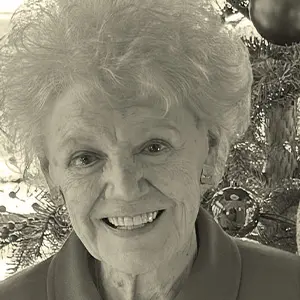
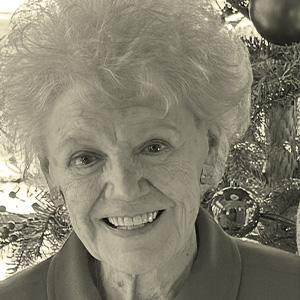
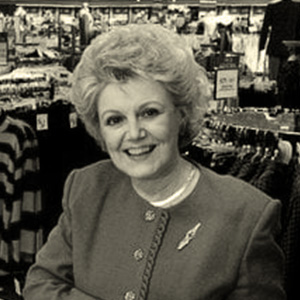
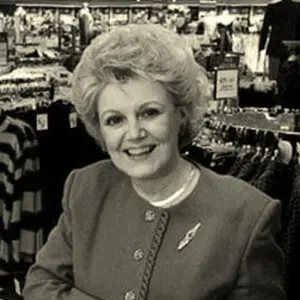
Gordona Duca shares her journey from a bank teller to a Tulsa real estate mogul, industry innovator, and community leader in her oral history interview.
Gordona Moore Duca received her real estate license in 1971 and was recognized, both locally and nationally, as one of the outstanding REALTORS®in residential real estate. She opened her own real estate firm in 1975 and was named REALTOR® Emeritus in 2011 by the National Association of REALTORS®.
During her extraordinarily successful career, Gordona received many recognitions and honors. She was appointed by Governor David Walters to the Oklahoma Real Estate Commission.
She was reappointed to a second term by Governor Frank Keating and became chair of the commission. Gordona served on the Kansas City Federal Reserve Bank board, in addition to many boards in the Tulsa area.
Tulsans voted Gordona the Best Business Owner in Tulsa People Magazine in 1988. In 1997, Gordona was named the Oklahoma Business Woman of the Year by The Journal Record, making her the first recipient when The Journal Record expanded it statewide, and in 1993, she was named REALTOR® of the Year by the Greater Tulsa Association of REALTORS®. She was presented with the PHH Cup in 1992, which is the highest award given by the largest relocation company in the real estate industry.
Full Interview Transcript
Chapter 1 - Introduction
Announcer: Gordona Moore Duca received her real estate license in 1971 and was recognized, both locally and nationally, as one of the outstanding REALTORS®in residential real estate. She opened her own real estate firm in 1975 and was named REALTOR® Emeritus in 2011 by the National Association of REALTORS®.
During her extraordinarily successful career, Gordona received many recognitions and honors. She was appointed by Governor David Walters to the Oklahoma Real Estate Commission.
She was reappointed to a second term by Governor Frank Keating and became chair of the commission. Gordona served on the Kansas City Federal Reserve Bank board, in addition to many boards in the Tulsa area.
Listen to Gordona talk about the celebrities who attended Will Rogers High School, the start of her real estate career, and how billboards helped her business on the oral history podcast and website VoicesOfOklahoma.com.
Chapter 2 - Change of Address
John Erling (JE): My name is John Erling. And today's date is November 4th, 2025. So Gordona, would you state your full name, please?
Gordona Duca (GD): Gordona Duca Heiliger.
JE: Your birth date and your present age?
GD: June 6, 1940. I'm 4 years older than D-Day and I'm 85.
JE: All right, we are recording this interview in the facilities of Voices of Oklahoma. So where were you born?
GD: Altus, Oklahoma.
JE: Let's talk about your mother. Her maiden name, where she was born...
GD: Lola May Mark-Moore. She was born in Chickasha, Oklahoma and grew up there.
JE: And her personality, how would you describe her?
GD: Very outgoing, very independent. My mother and dad were divorced when I was 2, and she would not take child support from my father so that she could have control of me and when he saw me, etc. And she was the first woman manager of Dresser Industries.
JE: What was that?
GD: I was trying to remember -- some big politician was a big deal in Dresser Industries. She was with Manning, Maxwell and Moore here in Tulsa, and then they sold to Dresser Industries, so she had to move from Tulsa to Pineville, Louisiana.
JE: Your father's name?
GD: Gordon Talmadge Moore.
JE: I was gonna ask you about your different name, Gordona. That's a little bit unusual. How does that come about?
GD: Well, my mother named me after my dad and put an A on Gordon and got Gordona. She thought she was the original, but probably 20 years ago or something we found out there's a Gordona in Italy spelled the exact same way and it was so sad because my husband and I were just a few miles from it. If we'd known about it, we would have gone there. And then my daughter found a Noritake China called Gordona and it was spelled the same way. How about that? So, Mother never knew she wasn't the original.
JE: But very rare, that's for sure. Then your father's name again. Say that again.
GD: Gordon Talmadge—which is a weird name—Moore.
JE: All right. And where did he grow up and where was he born?
GD: Chickasha, Oklahoma. They met there and got married there, and I spent a lot of time in Chickasha during the summer so she wouldn't have to pay a babysitter. I would go to my grandmother's because my grandmother stayed there the rest of her life.
JE: And your father's personality, what was that like?
GD: Compared to my mother, very dull. He wasn't sparkling. Every day was another day, so to speak.
JE: What did he do?
GD: Well, he did many things. He worked for Mistletoe Express for many years. He worked for a newspaper for many years. And when he moved to Wichita, Kansas, I don't really remember what he was doing there. But he was murdered.
JE: Oh, really?
GD: He'd retired and was driving a taxi. One thing—he did like being around people, so he took a job as a taxi driver and someone that was riding with him robbed him. And he fought the person robbing him and they killed him.
JE: Wow. And this happened where?
GD: In Wichita, Kansas.
JE: But your mother and father were divorced...
GD: Yes. But I kept up with my dad. I probably was better at keeping up with him than he was at keeping up with me.
JE: But that was horrible for you to hear about that.
GD: Oh, it was terrible, and bless his -- he was married and she was a sweetheart. I helped her a lot after that and kept going to Wichita to see about her. And then she finally moved to her daughters.
JE: Are you an only child?
GD: I am.
JE: All right. Let's talk about your education, your grade school. Where did you start school?
GD: Whittier. Whittier Elementary, Cleveland Junior High, and Will Rogers—and today is his birthday—
JE: That’s right!
GD: —High school. And I was in Central’s district
JE: Central High School’s District.
GD: Yes, I was a half a block off and I wanted to go to Will Rogers. My mother was... I said, "I'm gonna change my address at the school and give them a Will Rogers address," and she was fine with it. And I think it was because she preferred to drive me to Will Rogers than downtown to Central. And so at the beginning of my 9th grade year, I worked in the office and I went to my index card and changed my address. Towards the end of the year, many people changed their address because they wanted to go to Rogers and they checked all of them out. And so many of them didn't get to go, but they didn't check me out because I had done it the beginning of the year. And when I was put in the Hall of Fame at Will Rogers, I confessed and told what I had done.
JE: And too late now.
GD: Exactly.
JE: What year did you graduate?
GD: 1958.
Chapter 3 - Celebrations
John Erling (JE): All right, well, we need to talk about Will Rogers. Why did these people want to go to Will Rogers other than Central?
Gordona Duca (GD): I don't know, but there was lots of them and maybe it was because they lived close to the Will Rogers line also. And I had a really good friend who lived behind me, and it's so funny. He was in Central's district, but he went to Will Rogers, and I said, "Jerry, how did you get to go there?" Well, he used an address across the street versus his own.
JE: There are a lot of famous people that went to Will Rogers and in the Hall of Fame. Let's talk about some of them. Like, for instance, Anita Bryant. You tell us about—you had a friendship with her.
GD: Oh yeah, we were best friends. I'm gonna get choked up—she just recently died. Best friends from the time we were sophomores in high school. That's how we met. Her folks, her mother and stepdad moved to Tulsa. So she hadn't gone to any other school in Tulsa. And you know, John, the truth of the matter was Anita and I did not have money, didn't come from money. Upper crust at Will Rogers really didn't want anything to do with her because, basically, she lived on the north side—not far north, but on the north side. And so Anita and I bonded and oh my goodness, when her sister died, Sandy was buried here in Tulsa. She lived in Texas, but she was buried here in Tulsa. Anita came and Anita stayed with me versus her family. I mean, we were just really, really close.
JE: Was that in recent years when her sister died?
GD: Yes, probably 5 years ago.
JE: Well, we always knew her as a singer, 2nd runner up Miss America. And of course she represented the orange juice people. She would have been 14 or 15 years old. Is that how you would have been?
GD: Yes.
JE: Right. So was she a singer then, known to be a singer?
GD: Yes. Not known, but I mean, she sang with a band at Will Rogers, and so she was singing from that point on.
JE: When she graduated, what happened to her after graduation after Will Rogers?
GD: Well, she went to Don McNeil's Breakfast Club, wasn't it?
JE: Yes!
GD: She went, was on it and did a lot of singing there, and she was engaged to Pat Boone's brother. And then she went to Florida and that's when she met Bob and Bob basically just used her. He was terrible.
JE: Bob -- Bob?
GD: Bob Green, that was her husband.
JE: Okay.
GD: One time she had come back to Tulsa and was performing at Will Rogers. And would you believe that Bob stuck his head out from behind the drapes and made a face at everybody while she's performing. I mean, his ego was...
JE: Well, she was quite young then. When you say Don McNeil's Breakfast Club, I remember listening to that, and that was on ABC radio, I believe, and he was well known, so she did fine out of high school. Somebody discovered her here in Tulsa and brought her to the network. That's pretty remarkable.
GD: And then of course she was with Bob Hope and that was wonderful and he was so good to her.
JE: Right. And they traveled overseas?
GD: All the troops.
JE: All the troops, right. Well, that was a nice memory you have of her, but we have other people. Let me just—there are many that are very famous. Leon Russell certainly is one of them.
GD: Yes! He was a year behind us.
JE: And what was he like? What do you remember?
GD: You'd think maybe looking at him, he was a nerd. And very quiet and nothing like he ended up being, so to speak. I sold his house when he moved out of Tulsa. It was just obviously full of drugs, everything. And in fact, we didn't put him on Will Rogers' Hall of Fame for years because of his drugs. And I say "we" because I was in the first one and we then would serve on the committee to choose the next ones.
JE: So until he became so famous, you just had to put him in there.
GD: That's really kind of what happened. And I mean, some of like Dave Rader and Roger Randall were on there and boy, they never voted for him to go on.
JE: Was he known for music then? Do you remember him as...
GD: No, I mean, at least when I was a senior. I don't know, maybe his senior year he did, then I wasn't aware of it.
JE: I won't take time to mention them all, but football people will remember Don Chandler, kicker NFL Giants and Packers, winner of first two Super Bowls.
GD: And also David Gates.
JE: David Gates and Bread, and "Baby I'm-a Want You."
GD: Uh-huh, and he was always wonderful.
JE: Did you—was he known for his music in high school?
GD: Yes, absolutely.
JE: Was he—how was he in the same class as you?
GD: Yes, we were friends and his girlfriend went to Central. Jo, and one of the songs he did was "Jo Baby." She's very sick and he's in California and he's been taking care of her for several years.
JE: And you—so you kind of keep up with him, don't you?
GD: Yes, yes.
JE: But he was a nice person?
GD: Oh, very, very.
JE: Yeah, Paul Davis, artist, designed covers for Rolling Stone; Archie Goodwin, comic book writer; S.E. Hinton.
GD: Susie Hinton.
JE: Susan Eloise. That's what the S.E. stands for, Hinton.
GD: She was in the first Hall of Fame.
JE: And of course the author of The Outsiders and other books and so forth. And what do you remember about her?
GD: Well, actually she was quiet also, but very nice, of course. And I always thought, well, maybe because she's a writer that's made her quiet.
JE: But did you know she was a writer? Was she on the student newspaper or anything like that, do you think?
GD: I'm not aware she was on the student newspaper. We did know she would write. In fact, I think she wrote some poetry too.
JE: I've interviewed this person, Russell B. Myers. He created Broom-Hilda. National Cartoonists Society, Best Humor Award. I don't know if you remember him or not.
GD: I don't.
JE: But I have interviewed him. And then of course David Rader, TU star, and now in the Oklahoma Senate; Roger Randall, Oklahoma Senate, mayor of Tulsa; and then we can't leave out Gaylord Sartain.
GD: Right.
JE: And what do you remember about him? Was he around your age?
GD: He's younger, but he was always funny.
JE: Paula Unruh…
GD: Yes.
JE: … senior executive in the Reagan administration. And there's some others here too, but that's a pretty stout list of people who go to Will Rogers.
GD: Right.
JE: And then you were in that beautiful facility of Will Rogers.
GD: It is, and it's still gorgeous.
JE: It is because we were there recently for a function and every time we go in there, we just think, “These kids were so lucky to be in this school and this building.” It was the most beautiful high school in Tulsa.
GD: Oh yes, absolutely.
JE: Fond, fond memories of high school.
Chapter 4 - Danced with JFK
John Erling (JE): Graduate in 1958.
Gordona Duca (GD): Right.
JE: What's the next thing for Gordona? What did she do next?
GD: I worked for a bank. I went to work and I was a teller at different banks. In fact, I have to tell you that I worked for People's State Bank when John Kennedy ran for president and I was too young to vote. But I really liked him. So I quit my job and volunteered and worked for him. And so I did get to meet him and even danced with him in Oklahoma City at a function. Then when he got elected, then I went back to work for a bank and I worked at First National Bank then. I really liked being a teller and dealing with the people and it's really funny because I went to the drive-in as a teller and they would have to move the people out of my line because it would back up traffic because I had my customers and they had, and so they go around the block and come back so that I could wait on them.
JE: Well, that should be telling you something then you were a people person. And you attracted people to you. So that's a nice compliment.
GD: Oh, well, thank you. And David Hall was one of my customers. In fact, I got fired because of David, because he came through and I cashed his check and I didn't check to see if he had the money because he was David Hall, and he didn't have the money.
JE: And at that time, would he have been a district attorney? And he went on to become governor,
GD: Right, exactly.
JE: And he had a very charismatic personality, and you got fired because of him.
GD: Yes, but what was so funny was then years later, First National Bank entertained me because of my business or whatever, and the guy that had fired me had to entertain me. I loved it.
JE: Entertain you?
GD: Yes, they had a dinner for our people.
JE: Because you were doing business with him and there he was. Did you—did you talk about it?
GD: No; he was, I think, quite embarrassed.
JE: Because on the internet, you can research people, actually, you had a job before banks. I think you worked for Dillard's.
GD: Oh, I forgot about that! I was in high school and I was a runner. I took money when the cashiers ran out of money at the different places. I would take, take the money. And my mother had worked at Dillard's years as a second job. And so that's how I got the job was because of her.
JE: Did you work because you needed to bring money into the house as you were in high school?
GD: No, I just...
JE: Enjoyed working?
GD: Yeah; and my mother was gone a lot. I mean, so there was no reason for me to be at home and back then, you know, I mean, I was young and stayed by myself. Back then you could. She'd go out on the weekends, she liked to party and I would stay by myself.
JE: So back to John Kennedy.
GD: Yes.
JE: Your connection to him was strong, and then in 1963 when he was assassinated, November 22, 1963 in Dallas, tell us about how you heard about it, how you took it, and what happened to you in those days.
GD: Well, I was quite shocked, of course, like everybody was. I wonder, John, if that's when things kind of started getting worse as far as people being ugly. Nothing like today. It was very disappointing. I was disappointed in America and I really didn't think they did enough in proving who did it or whatever and why. I just think they wanted to go on down the road and not deal with it.
JE: But as I recall too, it was a whole week. America just froze and we watched television. I remember you did that on radio stations—whether they were rock and roll or not, they just played dirge music, classical music, somber music, that's all they would do. So it was a whole week of America stopping.
GD: It was certainly a big, big change.
JE: And he brought a lot of people into politics and youngsters. I remember we wanted to comb our hair like him. We wanted to wear our suits and he'd put his hand in his side pocket. We wanted to do the same thing.
GD: Uh-huh! That's how it started.
Chapter 5 - Gordona Duca Real Estate
John Erling (JE): Then you're in the banking business, and then there's at some point then you get into real estate.
Gordona Duca (GD): Yes, I got into real estate because my husband at the time started building houses. The guy that got him to start building houses told him that I ought to sell them. I was tired of working, so to speak, an 8 to 5 job, not realizing that I would now be working 6 o'clock in the morning till midnight, whatever. And so I got my real estate license and John Hausam, Jack Bohannon, and Shel Dietrich fought over me. I don't know why I negated Jack because Jack and Marge—I knew his wife real well and they were really nice. I think maybe they were too calm. But I ended up going with John, and so Shel told everybody, "Well, she couldn't have sold big houses anyway."
JE: So you went with John Hausam, and I have interviewed him, and he actually—somehow your name came up in it.
GD: I’m sure it --
JE: You were in another city walking down the street and pretty soon he says, "Gordona meets somebody and she's standing and talking in this city that we don't even live in…” So he was pointing out the connection you had to people.
GD: That was a good interview. We were good friends. He and his wife and my husband and I. We went out all the time. We did a lot of traveling.
JE: Well, he sure left his mark on the real estate market.
GD: Oh, absolutely.
JE: You got your real estate license in—was it, I think, 1971?
GD: Yes.
JE: What was Tulsa like in terms of real estate? In the city, and we hadn't started building south yet. Well, let me come back here. I'm gonna say you mentioned your husband at the time. What was your husband's name?
GD: Joe Duca.
JE: Joe Duca.
GD: He was a police officer and then Mel Waldorf is the one who got him to start building houses.
JE: OK. And so then you started selling his houses…
GD: Yes.
JE: … and that's how you got into it. All right.
GD: Yes.
JE: But tell us about the market and where we were building and how far south—like we're at 41st and say at Yale. Were we building much south from here?
GD: He was building more east, although he did go south too, like one of the houses was right behind Oral Roberts, so there was a lot of houses that he built in the Jenks school district because that was the big deal through a lot of the time that people wanted to go to Jenks schools.
JE: So in the 70s?
GD: Yes. Back then, I would door knock and see if somebody wanted to sell their house, buy a house, or when they advertised their house for sale, I would go knock on their door and try to get the business. I also did the same thing with builders and because I would go up early in the morning and open their houses up and then go back of an evening and close them up, I got a lot of builders' business and that's what I meant by working from 6 o'clock in the morning until midnight, probably.
JE: Oh, so there were other builders other than Joe.
GD: Oh yeah, I handle a lot of builders. I don't remember whether you remember Terry Davis, but he was one of my builders. He was a really good builder.
JE: Let's talk about the price of homes and let's say, what would be the square footage of some of those houses that were being built then?
GD: 3000 would be 2500 to 3000 usually.
JE: And then, so what would the cost of that house be in the seventies?
GD: I think the one behind Oral Roberts sold for—I want to say 150.
JE: Right, in that ballpark we're talking. And those of course there were new houses too? Brand new houses.
GD: Right.
JE: But then you were also selling other houses.
GD: Yes. Oh, yes.
JE: Did you particularly specialize in residential homes, or did you do business or—?
GD: No, I did strictly residential.
JE: Open houses—they still do it today, and you did it back then. Did that pay off for you, having open houses?
GD: Yes, because you met so many people. And to me, the big deal in real estate is meeting people. And especially if you're going to service them. I have to tell you, it's hard for me to give up people, so to speak. And the very first house I ever sold was to Jane and Brian Moran, and he was an associate pastor at First Lutheran. I sold him the house and then he left and went to—I think it was Memphis—with another church and I sold their house then when they left and I kept up with Jane and Brian for probably at least 15 years. I did all my employees too and they would get—their husband would get transferred or something—and even kept up with their kids.
JE: Well, it takes an extra effort, but you like doing it.
GD: Yes.
JE: So then that was in '71 when you got your real estate license. Somewhere along the line, you figured, "Well, I can have my own firm. Why do I need to work for somebody else," right?
GD: No, no. What happened—and I found this out later, but it's funny—John Hausam had a psychiatrist or something come in and interview his top agents, and I was interviewed. Anyway, that guy told John that I would end up leaving him and have my own company. Which was weird because what happened was one of the builders—in fact, he built Raintree, the condominiums there at Seventy-First and Yale—Robert Jones, and he was like a brother to me. I met him through his mother. I'm still friends with his kids and grandkids. He's been gone for about 8 years. Anyway, he called me one day and he said, "I need to talk to you because I'm thinking about opening up my own real estate company and I'd like to pick your brain." And I said, "Would you like a partner?" And he said, "Like who?" And I said, "Me," and he said, "I'll be by to get you in 30 minutes."
JE: Wow.
GD: And that—I mean, I never thought about it until Robert said that. And because he was building Raintree, he wanted to sell the condos, and that was why he was going to open the company. So we opened the company in '75 and then I bought him out. I think it was in '79.
JE: The real estate company, what was the name of it?
GD: Gordona Duca Realtors, and that was --
JE: From the beginning?
GD: That was from the beginning. That's what he wanted. He came up with it. And what is so funny is I didn't have my broker's license; we used his broker's license. John Hausam went to the real estate commission and was so mad about it all that now he had it changed. It was too late, but no longer could someone be a head of a company using somebody else's broker and they couldn't have their name on the company if they weren't the broker and the head of it.
JE: So did you find yourself in competition then with John?
GD: Oh yeah, because a lot of people left John to come to work for me—not a lot, but a few.
JE: OK. All right. But there were other companies at the same time in this town. Do you remember some of the others?
GD: Of course, Joe McGraw—which you—
JE: I’ve interviewed, right.
GD: But Joe was in a different class. He really wasn't—he dealt in higher priced homes and a different clientele. A wealthy clientele. So he really wasn't—we weren't competitors and I don't think we ever felt we were. Although I will say that when I got elected as president of the Tulsa Real Estate Board, Joe evidently thought he was going to be elected rather than me, and he should have been. So when they announced that I was the new president, he got up and walked out, which I felt terrible. And he's still a dear friend. I saw him not very long ago at the bistro.
JE: All right, well, about a week ago, I interviewed Roger Erker.
GD: And I know Roger very, very well.
GD: Right. And he and Joe had been together about a week and a half ago.
JE: And so Roger Erker was on the scene selling at the same time you were?
GD: Yes, yes, that's how I knew Roger.
Chapter 6 - Token Woman
John Erling (JE): I think when you were the 2nd woman in the state to own a real estate company, it was Mrs. Jonas Ford, who had done it first in Oklahoma City.
Gordona Duca (GD): Yeah, and what’s so funny is that the woman that lived across the street from me who was another mother to me—she was fabulous—she worked for Mrs. Jonas Ford. And back when I was a teenager, I would fix her MLS books all the time. Take out the ones that were sold and price changes, make it... and to think that then I ended up in real estate. And that family, they moved to California when I was a junior in high school. Of course, Bee is gone, but Tommy, her son, who was a year younger than me, we still get together and we still talk and everything.
JE: OK, you mentioned MLS. Tell us what that was.
GD: Multiple listing service, and so it would... they had the pictures of the houses and on (gesturing with hands) that size paper and they would tell all about the house. And so if the price changed, they would send out notices the price changed, so you'd have to go correct it. They would do that about once a week—the different ones that had sold, price changes, or gone off the market.
JE: At that time, it was mostly men that were selling.
GD: Oh, right. Oh yes, very much. It was men everything. One of the things that I've thought about because of how many boards I served on and did, it was really an advantage to me to be the token woman. I got to do things because I was the token woman. You know, that was a huge advantage. I didn't think about it one way or the other. Served on boards I didn't want to serve on because I always had to say yes to try to help other women get in, so to speak.
JE: So you never saw it as a negative—did men shun you in business? Did you get any of that prejudice?
GD: Yes, I brought broker agency to Oklahoma. I'm the first one to have started that.
JE: OK, let's talk about that. What does that mean?
GD: Before, you would either list a house or you'd sell somebody a house, but buyer agency, you worked for the buyer. So the buyer would hire you and you would get paid some by the buyer and some by the seller. It was a representation for buyers.
JE: Did you start that?
GD: Yes.
JE: It was your idea?
GD: Well, no, it wasn't my idea. I belong to a relocation group, which that was... I got the biggest award you could get, and I was the smallest company in that with over 500 companies. But we would meet and we'd brainstorm and so somebody in that group was going to do the buyer agency. And I thought I liked that idea. So I came back and did it in Oklahoma. And Shel Dietrich had a luncheon for all of the brokers—so to speak, that had companies—and I was the only woman at the luncheon because I was the only woman that owned a company. The luncheon was so that he could tell me and they could all laugh about the buyer's agency. It would never work.
JE: It did.
GD: It did -- big time. (Laughing) It still works today.
JE: So did men want to work for you, a female?
GD: Well, what's so funny is I never recruited men because I knew they would know whether they could work for a woman or not. And so the other thing I did was I made sure that the women that worked for me, they did not forget their husbands. So therefore, their husbands liked me. I wasn't competing against them for their wife's time. And that helped a lot. But so I did have a few men. They did very well. And in fact, one of them became a manager.
JE: OK, but then you were recruiting women at that time when there were very few women salespeople, so you probably had to convert. Maybe some people started their career with you.
GD: Well, yes, one of the things... I would meet somebody and I don't want to say I'm a good judge, but I read people really well. An example would be when Stitt was going to run for—thinking about running for governor.
JE: Governor Stitt.
GD: Yes; and he was on TV. And I turned to my husband and I said, "If he runs, he'll win." And my husband said, "Nobody knows him." I said, "If he runs, he'll win."
JE: And more people knew Drew Edmondson than him.
GD: Exactly. But I just kind of read people.
JE: So then you'd meet women and say, "Oh, by the way, are you interested in selling real estate?"
GD: I would say, "You know, you'd be really good at selling real estate. You ought to think about it. Come talk to me."
JE: And probably women that you knew were well connected in the community—maybe they—
GD: Not so much. Women who probably weren't that connected were more receptive. I think many times if you're connected, you want to be connected with the upper crust or be what you're connected with, so to speak.
JE: You ended up—when you sold, you had 500?
GD: Oh, yeah.
JE: So the percentage would be mostly women?
GD: Oh yes, absolutely.
JE: All right.
GD: But it's interesting in smaller towns... more men, not more men than women, but many more men would sell in smaller towns.
JE: Why was that?
GD: I don't know.
JE: Why did women become so good at this?
GD: Oh, because they're used to waiting on people. (Chuckling) They're used to taking care of their husbands and their children. So they take care of people buying and selling houses.
JE: But did they connect? Probably, is it true that if a couple's buying, it's the wife ultimately who makes that decision about buying a house?
GD: Not necessarily. I mean, it depends on the type of man she's married to, and it also depends, I think, on money and how much they have to spend.
JE: So you didn't find yourself really trying to sell the wife, necessarily.
GD: Oh, no.
JE: It was both of them you were working on.
GD: Yeah. I'll tell you one night I was door knocking and I knocked on the door and this man was so funny, he said, "Oh my God. Gordona?" And I didn't know him and I said, "Yes." And he yells at his wife, "Come here, you'll never believe who's here." They were just getting ready to call me because they wanted to buy a house. (Laughing) It was so funny. And I have to tell you, a few years ago a woman came and visited. I'm not on Facebook, but my daughter is. She came and visited, came back to visit relatives, and then she left and went back home. And so on Facebook, she said, "You know, there was just something missing. I just couldn't understand it. I just felt like I hadn't been to Tulsa." And she said, "And then I realized I didn't see any Gordona Duca signs. She said, 'Is she still living?'" (Laughing) And all these people came on talking about it. My daughter brings me and says, "Mother, read all this." And one woman said, "I went to school with her," and she signed it, "Vivian." And so Dawn assumed it was Will Rogers. I said, "No, it was grade school and her name was Vivian Fanning." And so Dawn wrote her back and she says, "Yep, that's me!"
JE: You became such a dominant force in this community. There's no question about that. I still drive when I'm at 71st and Yale—you had an office right there on the southeast corner.
GD: Yes. Correct.
JE: And that was—was that your main office?
GD: Yes, yes. And then I started out on 51st Street, 5139 East 51st Street, and then I moved there in '75, so four years later, I moved.
JE: Right. Don't you think a good salesperson in real estate... some people just really love houses, and some people, it's "a house is a house," but there are some people who are intrigued with houses. Did that make a difference in the salespeople? Why were some of your salespeople successful?
GD: I don't think it was because they were intrigued. I think it really was more in wanting to service the people and to make the commission because we did make good money—and let's face it, women didn't make money back then—but the commissions were good.
JE: You mentioned Dawn, so that's your daughter's name—
GD: Yes.
JE: How many children did you have?
GD: Just one.
JE: OK. And that's Dawn who brought you here today, right?
GD: Yes. (Chuckling)
Chapter 7 - Relocation
John Erling (JE): In the market in the 70s and then the 80s, let's go back to—let's go to 1980, the major oil bust, collapse of a boom starting around 1982, hitting hard in 1985 and 1986. Surely you remember that and how that affected real estate business and yours in particular.
Gordona Duca (GD): Mine increased.
JE: Really? Why?
GD: Yes, we did fantastic because I believe it's because I told my agents it was coming. And that people—there would still be people selling houses and still people buying houses. And you just had to keep working like you were. And our—from it was ‘80 to ‘81 or ‘79 to ‘80—we increased from the previous year 20%.
JE: OK, so are you a Nostradamus or what? You said Stitt was going to become governor and you knew this oil bust was going to take place.
GD: (Laughing) Well, no, I mean, the talk was that it was going to happen. And so I just prepared, told them that I thought interest rates would go up past 10%, which they did, and but we would still do business and they believed it and they did it and they kept working.
JE: And your salespeople stuck with it?
GD: Yes, and I think a lot of salespeople got out at that time of the business.
JE: Maybe some businesses went belly up, closed their doors?
GD: Yes. A few, but they were smaller companies.
JE: So we talked about you were married to Joe Duca, but then you got married for the 3rd time, and what's his name?
GD: Lawrence J. Heiliger.
JE: And he was a realtor as well.
GD: He was in commercial.
JE: I suppose you were selling his house, right?
GD: No, he—he was in Oklahoma City and I met him. The realtors would go to Washington DC, and that's how I met him, but that was several years before we got together.
JE: OK. You're in the same business. He must—did he help your business? Was he involved in any way?
GD: No, not at all. He did all commercial and for the first, I think, 5 years that we were married, he would travel back and forth from Oklahoma City. He'd usually come over on Thursday and stay till Sunday. And then go back. And then he eventually sold his company to one of the people that worked for him and he moved to Tulsa and he then officed in one of my offices for years and had a great life.
JE: Relocation, when companies are coming to town and they're bringing their employees is a big deal. You must have connected with that and enjoyed introducing Tulsa to these new people.
GD: What was so funny was the relocation—it was PHH coming to interview to get somebody in Tulsa, and they were going to interview me and they were going to interview John. And John thought it was funny, thought it was ridiculous. And I found out later that when they interviewed me first, and then they went to John and John put his feet up on the desk in front of their face. And he then, when I got the account, he made fun of it and… it was huge.
JE: PHH? What was that?
GD: It's PHH, but I don't know what the initials stood for. They didn't ever talk about anything but PHH, but that's where I met people that were really big shots, you might say, in the world, and they put me on their board. So I got to travel all over because we would have board meetings. That was a huge thing for me. The year we won the cup, they call my name for winning the cup and I was asking one of my employees that was there why we didn't get the trip. Because they would give a trip away. Well, the reason we didn't get the trip was because it automatically went to the cup winner. But of course I didn't know. So they had to tell me, "You won, you won," and my company didn't even know about the cup. And because—as I told them that night—my agents don't even know about the cup because they do the best they can all the time.
JE: All right, we need to talk about this. You keep talking about the cup. Is that the PHH Cup?
GD: Yes.
JE: This is this company who would give out this award?
GD: But it was a conglomerate of a bunch of companies. There were financial companies involved in it.
JE: It was the highest award given by the largest relocation company in the real estate industry. And you got that cup in 1992.
GD: Mhm. It was a really, really big deal. And they came to Tulsa then, a bunch of the big wigs and paid—we were at the Doubletree—and they paid for a huge dinner for people to present it again in front of my agents and the people that worked for me.
JE: You know, you would have attracted people. "Gordona, I want a list with you. I want a list with you." And then probably you weren't that close to sales, but you would give it to some of your agents that are working for you?
GD: Yes. Yes.
JE: "Here's somebody here," and you'd have to be fair about that, be careful to be fair about that, I would imagine.
GD: Well, I really tried to match people with people, and that's—no one ever worried about that, so to speak. They knew I was usually matching people with people.
Chapter 8 - Billboards
John Erling (JE): Honesty is so key in real estate as it is in any business. But isn't it true that some people do not fully disclose the condition of their property?
Gordona Duca (GD): That is true. And then, but they have such inspections now that it's usually found and then the people have to do something about it or decide not to sell one or the other.
JE: Right. Then the appraisals are setting the value of the property anyway, so they have to. Is it the fault of the seller who wants to set the price so high? And you'd have to tell them, "No, it can't sell for that much." That was kind of a back and forth probably.
GD: Well, not too much. A lot of the people that I dealt with, they wanted you to tell them. Now they might have a price in mind, but they didn't tell you what they wanted. They wanted to see first what you thought. And that's kind of like—it's interesting that I had a lot of appraisers that were friends of mine and you knew which appraisers to get. I mean, many times you had appraisers that I didn't think were good. And so I was very picky with my appraisers also.
JE: You sold your company in 2002.
GD: Yes.
JE: You've had nearly 500 agents. How many other towns were you in besides Tulsa?
GD: Broken Arrow, Owasso. Owasso was the second place I went to after Tulsa, and then I went to Broken Arrow.
JE: As I'm talking to you, you were so gifted at this. It came to you so naturally. It's tough to transfer that to somebody else who may not be as gifted. Did you deal with that? Think about that?
GD: Well, no, because I really didn't see myself as gifted. I have to tell you, my husband, when he died—this is Heiliger—he kept everything. I mean, everything. So his son and my daughter and I are going through sorting things. He had all kinds of notes that he had written about me and kept them. And one of them was written before we were married. And it said, "What I like best about GD is her humility. I'm hoping it will rub off on me." (Chuckling)
JE: (Chuckling)
GD: And I've thought about that since and I thought, well, maybe that was it. I had... I was humble or I had humility. I don't know, but I didn't think about being…
JE: Gifted.
GD: Yeah.
JE: Well, one thing, you were a hard worker.
GD: Yes, I was that. My mother was, and I certainly got that from her.
JE: And so when did he die?
GD: He died on Christmas at 11:45 p.m. of 2018. And what is so funny is that I had an uncle that I took care of and he lived with me for several years, and then he ended up dying on Christmas Eve, and I knew my daughter was going to be really, really upset. So when she came in and saw him and got upset, I said, "But just think, he gets to be with Aunt Pen"—that was his wife—"and Jesus for the birthday party." And that relieved her. So when Larry... we went home and did hospice at the house. They had suggested Clarehouse. I said, "No, we're going home because of the dogs, because the dogs want to be with him." And so as the time ticked—because I kept saying, "He's going to be there for Jesus' birthday party"—well, 11:45. And my daughter said, "Well, at least he got 15 minutes of it."
JE: How many years were you married?
GD: 34.
JE: Wow, yeah.
GD: Not long enough. (Chuckling)
JE: Another thing, you used billboards. And your face was all over town.
GD: Jay Brothers did that. In fact, Robert Jones, who was my partner at the time, he and Jay had gone to college together and were good friends. So he said, "Jay's going to do the advertising." And so Jay said he wanted to put a billboard up and we said, "Fine." And then when he shows me the billboard, it's me. And then I call it my mug shot and... but it was very... in fact, I have to tell you, Joe McGraw's daughter back then, I think was 9 or something, and she went by the billboard with him and she said, "Daddy, I'm gonna buy my house from her."
JE: (Chuckling) Yeah, and then you had a neat slogan: "Selling Tulsa by the Yard." And that just... that caught on, that slogan.
GD: Big, big time.
JE: Brothers came up with that, perhaps?
GD: No, I think from Brothers I went to Arnie Brown. And Arnie Brown came up with it.
JE: OK. Do you think you used billboards more than anybody else? Maybe so.
GD: Oh, yeah. As far as real estate goes, then I don't think there were... maybe one came up after that, but none before.
JE: I think that's what did it to all of us.
GD: Well, it's so funny. One of the billboards was right off of 51st, and I really wanted to get my mug shot off. So I said, "I want... you know, change the billboard." So we changed the billboard or they did. And all these people started calling saying, "I wish I'd known you were gonna give up that billboard, I wanted it." They didn't see our advertisement. So the mug shot went back up.
JE: Yeah. Isn’t that something?
GD: It was funny.
JE: Because it changed, right. Didn't you have a TV show?
GD: Oh yes, I did, and my dog was on it.
JE: And that was a Sheltie. What was your dog's name?
GD: Cassie.
JE: OK. Why did you have—tell me about the TV show and where did it air?
GD: It aired at my house. Not that you would know it because it was basically... well, they did take a picture of Cassie one time on the stairwell. I was usually sitting at the kitchen table and it would be a close-up, so to speak. But one time I went into Miss Jackson's and bought something and I go to pay for it and I give them a credit card and the woman looks at it and she said, "You're Cassie's mother."
JE: (Laughing)
GD: And then another time I was... we were in that toy store—I can't think of the name of it right now—but anyway, all of a sudden this woman comes up to me and she says, "I knew it, I knew it. I told my husband, Gordona Duca is in there because that's her dog." And we were in a convertible and Cassie was in the back seat and she'd seen the dog.
JE: It's so relatable. But the TV show, was it on Channel 2, or where could you see it?
GD: I think it was on 6.
JE: Was that a half hour show?
GD: Oh, no, no, it was a commercial.
JE: Oh, it's just a commercial. It wasn’t a TV show then?
GD: No, no, no, it was a commercial.
JE: But then you did commercials—I should say that you did commercials.
GD: Right.
JE: And Cassie was in it.
GD: Yes.
JE: Did other real estate people do that, using television? It's a sixty-second commercial?
GD: Not so much, but occasionally. I think Joe did. I think Joe McGraw had a commercial once. I don't believe John did.
JE: See, but not everybody's gifted to do that either. I know you don't want to be called gifted, but I want to say to look into that—the TV lens has to like you. And it did and it worked for you. Not everybody could do that.
GD: Well, you know, it’s so funny. The team that came and did it, they came, I want to say from Chicago. I met them at probably one of the relocation meetings or something, and they came—I think it was Chicago—to do them, and they were great, great guys. My husband and I both looked forward to them coming.
JE: It was scripted for you, wasn't it? I mean, you weren't just ad libbing it.
GD: No, many times I was ad libbing it.
JE: Oh, really?
GD: Yeah, and I have to tell you: One time, one morning, my husband was very sick and he was still in bed and I got dressed and of course was ready. But the reason that we found out later he was sick—we had been that weekend... and I had been at Anita Bryant's wedding, her second wedding to Charlie Dry, and Charlie was a NASA astronaut, a great guy. And anyway, the punch they served at their wedding was contaminated. And so everybody... Anita puts this deal out that everybody's going to get sick. Fortunately, I didn't, but I don't think I drank the punch because I'm not a punch drinker. But ….
JE: Larry got sick.
GD: Larry got really sick.
JE: When OSU—I think their business school—would bring famous people to town, and they brought Margaret Thatcher to Tulsa.
GD: Yes.
JE: Tell us about that experience.
GD: Well, I got to basically take care of her and she wanted her hair done. So I had to get my person who did my hair at the time to do Margaret Thatcher's hair, and she loved it, of course. Larry and I took Margaret around to see different things in Tulsa before she spoke, and she was wonderful. And one of the pictures I have at home sitting up in my office is of Larry and Margaret Thatcher and myself.
JE: But then there's another connection. You were former mayor Terry Young's babysitter.
GD: Yes, that's terrible. And Terry... my mother and I lived in the basement apartments. Because children had to be in the basement. Terry's grandparents ran the Scribner Apartments, is what it was. So his father and mother lived across the hall from us. So I was there when he was born and I started babysitting him. So anytime we'd see each other—and I mean, you'd be with people that were prominent and stoic, probably—and he'd say, "You know, the only person who's seen me nude is my mother, my wife, and Gordona." And he would do that all the time. (Laughing)
JE: That sounds like him. (Laughing)
GD: Oh, yes. Terrible. (Laughing)
JE: That's funny.
Chapter 9 - Reduce Prison Sentences
John Erling (JE): What changes in laws or regulations that have the biggest impact on real estate during your career? Are there any?
Gordona Duca (GD): I think probably the one that had the most impact was property disclosures, where you had to disclose what was wrong with your property, etc.
JE: There was a point where you didn't have to do that.
GD: Yes. When I started out, you didn't have to do that at all.
JE: So tell me when you could go online—you experienced that, and that was in '91. The internet came about and the digital world. So then did you flow into that quite handily?
GD: Well, let me tell you, when the computers first came out, the Tulsa board had for all of the owners of companies, they had a big meeting out there and someone was there to show the computers and what it was going to be able to do, etc. I was the first one to get one. And in fact, it was probably—I think they told me—a couple of years before another company got a computer, but I'm really into things like that. And I have to tell you, John, I had an agent who was 65 years old, and she learned the computer. Math was my favorite subject in school, and so I've always been into anything new, and I'm always for it.
JE: You wanted to give back to the community. You were the first woman to serve on the Tulsa Chamber of Commerce board. And the board was deciding whether to support a bill that would allow rapists to receive lighter sentences. That's bizarre what I just read there. What was that all about?
GD: Oh boy, I remember it well. John Debars was the president of the chamber. And the state felt like they were paying too much taking care of prisoners, so they decided what they would do is they would reduce the sentences for rapists. And they wanted the chamber to support that. John read it and nobody said anything. I sat there—and I'd never said anything before—and I finally raised my hand. John called on me. And so I looked around and I said, "So all you men are going to go home tonight and say you saved the state a lot of money because you'd let rapists out early?" And again, silence—and I thought, oh my gosh, I can't believe this. And then John Debar spoke up and he said, "I don't know about any of you, but I will not be supporting this." He called for the vote and nobody voted for it.
JE: You ever think that if you had not spoken up—
GD: Oh yeah.
JE: —it would have passed.
GD: Oh, it would have. And can I tell you one more thing about the chamber?
JE: Yes.
GD: Okay. The next woman that was appointed was Paula Marshall, Bama Pie. And it was so funny. Her first meeting, she came over and sat down by me and I said, "Paula, we don't sit by each other. You've got to go sit by some men, so they'll get used to us."
JE: About Will Rogers High School again. You were the first new member of the Will Rogers Heritage Foundation. It's the support arm of the Will Rogers Memorial Museums. Now this is important because it was formally made up of members of the Will Rogers Memorial Commission appointed by the governor. And the foundation was reorganized in May. Bylaws stipulate that only 3 sitting commission members can serve on the board: the chairman, the vice chairman, and a Will Rogers family member. Jim Hartz used to be on Channel 6, went on to the Today Show.
GD: He's the one who put me on it.
JE: And he was president, and Steve Turnbo was vice president of the commission. Ken Rogers, Will Rogers' grandson, represented the family, and you were appointed at the August meeting. More board members would be added, they said. So Jim Hartz, yeah—
GD: Jim and I went back to grade school and stayed friends forever. In fact, I talked to him probably 2 days before he died in Florida.
JE: Wow. So that was quite a nice honor. How long did you stay on that board?
GD: I probably served maybe 6 years.
JE: Yeah. You gave back to Tulsa. You're a guest lecturer at Tulsa Public Schools, ORU, University of Tulsa. You come in and speak to their classes then about business.
GD: Yes, and I enjoyed that. I did enjoy doing that.
JE: You could take several avenues here.
GD: Well, actually, it depends on what they wanted me to. Mostly probably entrepreneurship.
JE: Yeah, maybe particularly since you were a female there.
GD: Well…
JE: Sometimes odds are against, but you've overcome those.
GD: Yeah, well, and particularly we used to live across the street from Oral and Evelyn Roberts. In fact, when my daughter was like 4 and met Oral, she thought he was God. She said, "Hello God," so we kept up with them forever and I sold their house. I personally took care of it because it backed up to Southern Hills and because it was Evelyn and Oral, I did that. I was with them—bless Evelyn's heart—I walked in on her when she was just bawling. It was after their son was killed.
JE: He committed suicide.
GD: Yeah. She did not... I wasn't supposed to let Oral know that … You know, she didn’t cry in front of him. And can I tell you another story about you?
JE: You haven't told any yet, but you can if you want.
GD: When I did your radio show…
JE: You did my radio show.?
GD: I did.
JE: I didn't remember that. I'd had you on as a guest or something?
GD: Yes.
JE: Why would I want you on? (Chuckling)
GD: I think it had to do with some way at Jenks schools. I think that's what it was. But anyway, you loved the cologne I had on.
JE: Really?
GD: And you went on and on about it and wanted to know what it was—you were going to buy Margaret some.
JE: (Laughing)
GD: Well, I want you to know, all these years later, I still wear that cologne. (Laughing)
JE: (Laughing)
GD: And Dawn said, "Mother, be sure and tell him that." (Laughing)
JE: That's funny, isn't it? I don't smell it in the air right now. I wanted to point out some of these things that you were so busy in addition to the Federal Reserve Board, you served on the boards of the Metro Tulsa Chamber of Commerce, Metropolitan Tulsa Transit Authority, Tulsa Regional Hospital, Hillcrest Hospital. This goes on and on. Metro Christian Academy, Indian Nations Council, the Boy Scouts, Oklahoma State Chamber of Commerce, cystic fibrosis, Tulsa Area United Way. Couldn't you ever say no?
GD: No. I didn't.
JE: Leadership Tulsa, Arts and Humanities Council, and the Junior League of Tulsa. So you were happy to do all that, or—
GD: Well, it was very busy, but it was really nice getting to meet all the different people. I really enjoyed that.
JE: In 1993 you were named Realtor of the Year by the Greater Tulsa Association of Realtors. What advice would you give to someone entering the real estate world today?
GD: Service has to be their number one goal. I think they have to be very conscientious, but try to enjoy.
JE: A lot of people say, "Oh, well, you know, I can always sell real estate."
GD: Uh-huh. Yeah, and they find out differently.
JE: … how hard work it is.
GD: But also very rewarding work.
JE: Another name we haven't mentioned that became big today is Peter Walter.
GD: And Peter and I are good friends. He is terrific. In fact—this isn't going to sound very nice—but there's a lot of real estate companies that aren't as generous to the community as they could be, but Peter is. And Peter and I became really good friends a long time ago. Probably it's been 3 weeks ago, all of a sudden the phone rings and it's Peter, and he's just wanting to say hi and see how I'm doing. And he was the only one that I could get to give to United Way.
JE: Oh really?
GD: Uh-huh.
JE: Who bought your company?
GD: Sam Rader, Coldwell Banker. I went through my relocation company, told them I wanted to sell, that I would sell to Sam because Sam, I felt like, had the same principles that I did. And I felt like my agents would stay with him. They met, they told him they wanted to meet with him and that they were going to present a company for him to buy. So they met and they asked him, "Do you have any idea?" And Sam said, "No, but I hope it's Gordona." Anyway, we put the deal together.
Chapter 10 - Real Estate Family
John Erling (JE): What are you most proud of in your real estate career?
Gordona Duca (GD): Probably the agents and employees that I've had.
JE: And you're still in touch with many of them.
GD: Oh, yes.
JE: Why do you say that though? Because the connection?
GD: Because they're family. And in fact, just recently, we went to a funeral of the husband of one of my longtime employees. There were some of the employees that couldn't be there. In fact, I guess the only employees that were there were Dawn and I, but we had set it up where we're all going to get together, I think around December 1st. Anyway, we told Pat, and she was just thrilled and couldn't wait to get together with everybody. We've had more than one reunion. In fact, one comes in from Claremore. The others are in Tulsa, except there's one on a farm way north, and we put her on FaceTime so that she was there too. So that we went to the bistro and had our private room and so we do that. And that's really, when you think about that I sold the company in 2002 and we're still getting together, that tells you. We really are family.
JE: Any lessons you learned about people from your years in the business?
GD: I don't know. I will tell you one of the most enjoyable experiences I had—and I was the only realtor that did it, and one of the very first to begin with, of any company—and that was when I adopted Grissom Elementary School. It was so funny because Sam Rader's son was at Grissom and he went home and told his dad, "Gordona adopted me and I'm now hers." But that was so neat to get to deal with the kids, and they did paintings for me, meaning some of them would have "Gordona Duca Realtors," the sign and so forth. It gave something different to do and be involved in.
JE: How would you like to be remembered?
GD: I guess someone who loved people.
JE: Well, Gordona, this was fun. I never thought I'd be sitting across from you, but we did it on my radio show once before.
GD: Yeah, and you didn't even remember it.
JE: Well, I'll remember this interview forever, that's for sure. So thank you for what you did in the community and sharing your story with us.
GD: Oh, my pleasure. Thank you.
Gallery
Production Notes
Gordona Duca
Program Credits: Gordona Duca — Interviewee John Erling — Interviewer Mel Myers — Announcer
Notes: Recorded by John Erling in Tulsa, Oklahoma. Digital Audio Sound Recording, Non-Music.
Tags:Real Estate, Anita Bryant, Will Rogers High School, Leon Russell, David Gates, Relocation, Billboards, Jim Hartz, Prison sentence reduction, John Hausam, Chamber of Commerce
Gordona Duca. "Gordona Duca: Tulsa Real Estate Mogul and Community Leader" Voices of Oklahoma, February 6, 2026, https://www.voicesofoklahoma.com/interviews/duca-gordona/, Accessed April 8, 2026