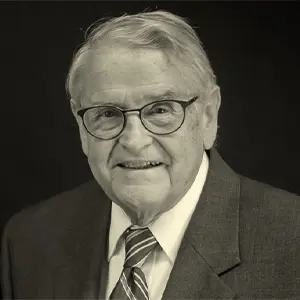
Tulsa Real Estate Entrepreneur, Associate Broker at McGraw Realtors
Owing his success to empathy, integrity, and service to others, real estate entrepreneur and McGraw Realtors associate Rodger Erker shares the story of how he came to discover real estate, the struggles he overcame throughout his life, and his advice for future generations.
Rodger Erker, a native of St. Louis, earned his Real Estate Broker’s License in the state of Missouri. After moving to Tulsa in 1966, he became a Sales Associate with Detrick Realtors. In 1975, Rodger became a partner with Joe McGraw and Harold Grimmer in the firm of McGraw Breckinridge Realtors.
Rodger Erker Realtors was formed in 1984 with the main office in Tulsa’s Midtown Brookside area, for over 25 years. Rodger sold his company to McGraw Realtors in 1992 while remaining with the firm.
His service to the real estate community includes numerous board memberships, including President of the Greater Tulsa Association of Realtors, President of the Oklahoma Association of Realtors, and being named Oklahoma Realtor of the year.
His service to the Tulsa community includes President of the Mental Health Association of Tulsa and the Mental Health Association of Oklahoma, and Chairman of the American Diabetes Association's Leadership Board of Tulsa.
Full Interview Transcript
Chapter 1 - Introduction
Announcer: Rodger Erker, a native of St. Louis, earned his Real Estate Broker’s License in the state of Missouri. After moving to Tulsa in 1966, he became a Sales Associate with Detrick Realtors. In 1975, Rodger became a partner with Joe McGraw and Harold Grimmer in the firm of McGraw Breckinridge Realtors.
Rodger Erker Realtors was formed in 1984 with the main office in Tulsa’s Midtown Brookside area, for over 25 years. Rodger sold his company to McGraw Realtors in 1992 while remaining with the firm.
In his oral history, Rodger talks about his time in a catholic seminary, the family carpet business, how he started selling houses, and how diabetes affected his family -- on the podcast and website VoicesOfOklahoma.com.
Chapter 2 - Family Business
John Erling (JE): Well, my name is John Erling, and today's date is October 28th, 2025. Sir Rodger, would you state your full name, please?
Rodger Erker (RE): Rodger Paul Erker.
JE: And your birth date and your present age.
RE: My birth date is April 24th, 1938, which makes me 87 years old.
JE: And we are recording this in the recording facilities of Voices of Oklahoma here in Tulsa. So where were you born?
RE: I was born in St. Louis, Missouri.
JE: Your mother's name, maiden name, and where she was born and her personality, what was she like?
RE: Oh, she was a gracious lady. She was born in September 27th, 1901 in Saint Louis, Missouri, raised five children. She does have a picture of me in a baptismal dress with a look on her face that says, "What the heck happened here?" But anyway, she was a native of Saint Louis and went to Webster College way back when, now it's Webster University, but she was a gracious lady. She was very talented at decorating. She used to do her fancy store—a store there called Jacker's—she would set tables in the store and put up fancy dishes and stuff like that, so she was elegant at that kind of a talent, but she was a very good decorator. She became a painter, an artist in her old age, and she never sold them. They were after the Post-Dispatch would send articles asking her to display her paintings, so she finally did at that same store, but they're all with the family now.
JE: Your father's name.
RE: His name is Eugene Alphonse Erker. He was born on June 25th, 1892. That sounds like a date in history, doesn’t it?
JE: And yes, and where did he come from? Where was that?
RE: That was in St. Louis.
JE: What was his—what did he do for a living and his personality?
RE: Well, his father and uncle opened an eyeglass store -- an optician’s store in -- typical of the Germans. He had a German background, and they opened up a store in those days that covered radios, weather instruments, hearing aids—I don't think they worked very well—all kinds of things like that, stereopticon's slides, photography, and they were the official photographers for the 1904 World's Fair in Saint Louis. So I have some books and stuff like that and these are pictures it'll say. And another interesting thing that I've sort of collected are postcards and if you go to an old—these antique stores around here—you can find postcards in Saint Louis and it'll say on the back "Printed for Erker Brothers Optical Company," and they did that and they're way old postcards from way back when, but they had a store on in downtown Saint Louis. I have a picture of my office of it with streetcars in front of the store, no cars, and some horse and buggies, the streetcar that was founded in 1879. So and my dad's father died when my father was only 6 years old, he had a heart attack. He was in his thirties. He had one sister. His mother was pregnant with her when her husband died. I happen to have this wedding band that I've got on has a date in it of September 2, 1891, so it's pretty old, and it was my dad's and his mother's wedding band. And since he died at a young age, it was putting—putting a velvet bag in a drawer for many, many years. So my older brother was an executive of the estate. He kind of sent it to me saying, "You might need this someday." So, but then Deborah and I had our name put in it too, the same script, but the script is beautiful. It's inside of it, and they took it to Moody's used to have our date put in and they said, "Well, we haven't seen anything like that in years." It has a lot of sentimental values.
JE: Absolutely. So it sounds like he was in business and as a personality. He was a salesman and...
RE: Well, he was—no, he wasn't a salesman. He was more of a tech, an optician. He was a technician, and he brought in my brothers. They did the business, but they built the business pretty big. They had stores all over St. Louis. And it's lasted all this time. It went to my brothers after he passed. They ran it and as things happen in families, they got into a big dispute, split the thing up, kind of created some real problems always in the families, but I'm still grateful, I'm always grateful to my mother for saying, "Don't get into the business. There's too many family members already." They built the business well and then my one brother Jack, his sons ran the business and now his sons run the business and they've grown it to be a lot bigger. It was big with all different kinds of products back then, but it kind of just strictly eyeglasses and sunglasses, and they manufactured—one of my first jobs was grinding lenses, sitting there with that thing going by, you would grind them so there's a dye that would match the lens you were putting in your glasses.
JE: So they had you working at an early age.
RE: Oh, very young, yeah. I had 3 older brothers and an older sister. My 3 brothers were 12, 11, and 10 years older than I, and then my sister was 6 years older. They're all gone now, which is a disadvantage of being the baby. And my sister was—I was obviously a surprise. I was born in April. That must have been a fun summer vacation or something. 3 of us were born in April. A couple of others born in September.
JE: So where was this? Where were you living? In Saint Louis?
RE: I grew up in Saint Louis, yeah.
JE: And then your education, your grade school, where did you begin that?
RE: I've had a complete Catholic education from day one. I went to Our Lady of Lourdes grade school. All my brothers did. My sisters did. The pastor of that church who baptized us—I happen to have a little card they gave out at his funeral. I still have it. He was born in 1868. Now can you imagine you know somebody that was born in 1860? Yeah, but anyway, he was quite elderly when he passed away, but amazing.
JE: That school then that took you through to where?
RE: 8th grade. That took me through to high school and then I went to graduate high school in St. Louis. It's the oldest high school west of the Mississippi River in St. Louis. It was founded in 1818. Still exists today.
JE: What's the name of that school?
RE: St. Louis University High School.
JE: Were you active in organizations or did you…?
RE: Well, yeah, I was active in some organizations and stuff. I was the business manager of a yearbook, worked on the newspaper, that kind of stuff, and then I was on the swimming team. I wasn't a big star, but I was on the team. It was a great school. There were only 200 in my class. The amazing thing about it, I can remember my father sweating paying the private tuition for that school because it was very expensive. Found a copy of the invoice of a semester in some old stuff I've got, and he was sweating paying that. His business had slowed down. He was in the retail business. He would go up and down. Tuition for that semester was $180. Can you believe it? That's hard to believe.
JE: Well, that was a good experience for you there though at that high school.
RE: Oh, it was great. Yeah.
JE: What year did you graduate?
RE: 1956.
Chapter 3 - Catholic Seminary
John Erling (JE): So then what?
Rodger Erker (RE): Then life came on. There were 200 in my class. They must have put something in the water. 26 of us went into the seminary. I was studying. I went to a Catholic seminary studying. I thought I had a vocation to the priesthood. And I spent 4 years at Kenrick Seminary, now Cardinal Glennon College is what it's called. It was a great, it was a great experience.
JE: Were you intending to be a priest?
RE: Totally, totally. I had every intention.
JE: So then after that seminary, did you finish there or did you go on?
RE: It was—it's an interesting story, but in the wisdom of the Holy Brothers of the Church, the bishop decided maybe I ought to take a little sabbatical. I finished 4 years. I didn't finish, I didn't graduate, but in March of my 4th year, several of us got in a little trouble. Today it wouldn't be much, but—
JE: Should I ask what the trouble was?
RE: Well, I can probably tell it. But we snuck out. We were cloistered, not all year long, but we were cloistered like any other school. You went to school, you got out for Thanksgiving, you got out for Christmas and Easter and that kind of stuff, but there was a movie in town at the High Point Theater. The word got out and we all wanted to go see it, so 5 of us snuck out. There was a cemetery next door. Cut through the cemetery. You got down to the street with a bus. We got on the bus, went down. We knew exactly where we're going, and we were going to see A Summer Place with Sandra Dee. And where we failed is the movie was not at the time we arrived, so we went to a little bar next door and had some beers. And then we picked up our phone and called or paid our quarters and called some of our friends that were—they were at Saint Louis University or other schools. And so pretty soon the word was out that we were out partying and here they all came. I have not really told this story much, but anyway, these guys showed up and so what we decided to do is go to the Tropicana Lanes and start bowling because it's open late at night, so we went to this bowling alley. We all bowled and goofed off. It was fun, but it was soon time to get back because we had morning prayers at 6 o'clock in the morning. We got back here. We had an inside job. We had a guy that had something called the lower ambulatory, and you walked down below and there were windows up here that were ground level, and I left a couple of those open and we were able to scoot down in there and go to—get up to our rooms and throw on a cassock over your old clothes and get—made it in time for church and we made it. We didn't get caught and nothing was smooth.
JE: But you didn't see the movie.
RE: No, we didn't. I've never seen the movie. (Laughing)
JE: You didn't get caught?
RE: I didn't get caught that day. But a few—closer to May, a couple of months later, we were at 6 o'clock morning prayers before morning mass, and when you live in a quiet place like that, you recognize anybody's footsteps, everything else. I mean, it's a lot of silence, so you know who it was walking down and they always started the morning prayer—the dean of discipline would start in the back. They always started with a Latin. We had a lot of Latin in those—they De profundis clamavi ad te, Domine—"Lord I cry out to you, Lord hear my voice." But anyway, that was every morning at that same time that same thing was said. This particular morning in May—I don't remember the date, but the guy walks up to the front. What the world's going on, it was months later. Turned around and asked for the 5 of us to stand up and said we were to go see -- meet the head honcho, the rector there who was pretty understanding, good friend of mine, but there was also dean of discipline. Anywho, these were young, pretty young priests, but I was a pretty young kid, but they went to school at Saint Louis University increasing their—getting their masters and all that stuff with the Jesuits. And the Vincentians, they all—they're all competitive orders and all that stuff. And when this guy went to Saint Louis U, the Jesuits had heard from all of our friends were at Saint Louis U that we had—that some had been out. And I don't know how they did it, but they did some heavy investigation, so they found out who we were. So it was months later, we were a month—I was probably a month graduating. So they recommended a suspension for one year. So, and I had a jillion hours of class already, but I took a year off, I went to Saint Louis University for a couple of other classes that I needed to graduate, and I can remember taking an additional philosophy class at Saint Louis University for this Jesuit who said, "I'm so tired of you fallout seminarians coming down here to get your degree." But anyway, we did it and we went back and I got my degree actually from the seminary, but anyway, that all got done.
JE: When did you decide that you were not going to be a priest?
RE: Probably within that year I decided I wasn't going to continue. And I was a lifeguard at the local country club, that might have had something to do with it. Oh, Lord. (Laughing)
JE: (Giggling) So then after you graduate?
RE: I graduated, moved back to my parent—with my parents' home. I had an older brother who was a very successful home builder. He had married into a family—his father-in-law was an extremely successful home builder, Charles Vatterott. They had big companies in Saint Louis, built lots of houses, so he had a lot of children. And he would set up his sons-in-law if they were interested in the building business. So that's what my older brother did. He built something—he'd take a neighborhood, just mow it down, put 200 houses that they all look pretty much the same. So anyway, I started working for him as a salesman, so I got pretty active in that and we were selling those houses. There were two different plans. One had one bath and one had a bath and a half, and they went from 13,990 to 15,990
JE: 15,000?
RE: Yeah and they had different elevations. Fronts were a little bit different, and they were all brick. They were very nice houses, and they still stand today and they still were selling for close to 200,000. It's unbelievable.
JE: So, we're talking the 60s here now.
RE: Yeah.
JE: But somewhere, I'm gonna ask you questions too about what's going on in the world. In 1960, I think you were 22 years old. John Kennedy was elected. In 1963, you were 25 or so and he was assassinated. What are your recollections of that day?
RE: I was married at the time, living in St. Louis. I was married, I married a Tulsa girl. Her sister was visiting us and—
JE: Her name was?
RE: Her name was Anne Sherry, and I want to tell you... Well, when that happened, everybody was just stunned. I mean, and it was a week of solid television. You didn't leave the house. You watched the television constantly. You saw it all.
JE: And of course John Kennedy was Catholic, so you were probably feeling close to him.
RE: Oh, we felt—yeah, we liked that.
JE: So when was it you met and how did you meet Anne Sherry?
RE: She went to school in Saint Louis at a Catholic school up there called Maryville. It was run by a very strict order of nuns in those days. Today it's a coed university. But anyway, I met her. I was actually dating another girl. They were friends, so I met her and dated her, and—that's kind of far back, but I did. I went into the military. We got married in 1963 and we were married at the time that Kennedy got shot, so that was pretty early in our marriage and we bought one of our 13,990 houses together and moved into that. It was an interesting experience for her. She grew up next door to Philbrook here, and when she bought that house, she lived next door to our bricklayer, who was the nicest man here, but she had never met a bricklayer, I promise you. So it's interesting. But anyway, we were married. We have 4 children, and I still have 2 daughters that I see very often.
JE: What are their names?
RE: My oldest son is Rodger Erker Jr. He has a very interesting career. He was just here last weekend, came to see Oktoberfest after all these years. He didn't have any intention to come to Thanksgiving or Christmas, but he wanted to come one more time and see Octoberfest. He was shocked. He hadn't seen it since it was small and we were all sponsors and all that. My second child is a girl named Molly -- Margaret Mary Erker. Her name is Molly. Rodger Jr. lives in Newport, Rhode Island at the moment, and I'll tell you about his career in a little bit. And then Molly lives in Saint Louis and my daughter Teresa lived in Saint Louis for a long time. She went to school there, stayed there. Got a job in admissions for Tulsa University. So, and she still works at Tulsa University. I spent the last football game—she works for them in development now. We had Joe McGraw and I went to the football game in the presidential suite. It's kind of a nice way to go. And then next—that's Teresa, who grew up—born here, grew up, went to school in St. Louis, and moved back here after being gone for 35 years. Her main reason for moving back was to take care of her mother, Anne, who is suffering from dementia. So she's out at Trinity Woods. So she's very helpful. And then she hadn't been here very long and then my wife died suddenly, so she was taking care of both of us back and forth.
JE: And then what did you name your other daughter…?
RE: Teresa. Molly and Teresa.
JE: Okay.
RE: Rodger, Molly, Teresa, and then I had a son named Billy, and he was my baby, probably everybody's favorite. He was a wonderful kid. Went to Loyola University in Chicago. Unfortunately he was diabetic and I got a call one day that he hadn't been to work in a few days after he graduated. So anyway, it was very—that was, I thought that'd be the most traumatic thing that ever happened to me in my life, lose a child. He was 30 years old. It happened in 2001.
JE: And he was diabetic?
RE: Uh-huh.
JE: Is that why he died?
RE: Yes. Had a heart attack, which is very common in diabetics. The statistic will go down as a heart problem, but the truth is that I got involved in diabetes work after that and learned that that's very common for people to have heart attacks. But he was diagnosed when he was about 14 and I had a great doctor here, Doctor Michael Indres at Saint Francis, that when your kid got that disease, the parents had to go to a class for maybe a week or so or something. He taught it. He was a gentleman's gentleman. One of the things he said—and I was in my 30s—he said, "You will probably outlive your children," and boy that was a shock, but he forewarned us. His mother didn't go, and she wouldn't go. I did, I went, but so I was forewarned. Which was helpful when it actually happened. I wasn't as shocked as I might have been, but at any rate, that was the hardest thing I did was—I was divorced from his mother at that time, and I had to drive, find her to her apartment, tell her about it that way.
JE: But then you got active in the diabetes association.
RE: I did.
JE: You did fundraising for him, I suppose, and…?
RE: Oh yeah, we did that; we did a lot of that.
Chapter 4 - Carpets to Houses
John Erling (JE): You mentioned the military. Where does that come in here?
Rodger Erker (RE): I was—the 60s, everybody was running to get into reserve or in the seminary for four years and then when I got out, I became the next guy on the list. I was going to get the phone call, you were going to go to active duty or go find somebody. So I went looking around at different reserve units and I ended up in a hospital unit. And we—I spent 6 months of training at Fort Leonard Wood, which was not fun at all. It'll wake you up and make you grow, I'll tell you that. And so 6 months of that, and then after that, we went down to Fort Sam Houston in San Antonio and got trained more in the medical unit. That's a huge army base down there called Fort Sam. That's where the big burn unit is. And after that I spent 6 years going to reserve meetings and 2 weeks of summer camp.
JE: I can relate to that because I went in the Army Reserve and went to Fort Leonard Wood, Missouri and I was attached to the 311th General Hospital.
RE: Really? Right. I'll be darned.
JE: That's—and I was in there for six years, got out in '70, '71.
RE: Uh-huh.
JE: So we have that in common.
RE: Yeah, I was at the 21st General Hospital. For six years.
JE: They said if you don't get this right now, you'll get it right in Vietnam.
RE: Yeah, and that's the truth.
JE: Right. And you and Anne were married here in Tulsa.
RE: At Christ the King.
JE: Did you stay in Tulsa then after you were married?
RE: No, no, we moved to Saint Louis. That's where I was from, and that's where we bought a house and all that stuff. So it wasn't long after that—her father, who was just a wonderful philanthropist and quite a very successful businessman here in Tulsa. He had 8 children. He and his wife were both single children, and they raised 8 kids. He had put in a lot of money into a business to help a son, one of their sons, and he had an alcoholic problem, so they then called—he called me. I was 28 years old and said, "I've got an opportunity for you," man, this is—you know, can you imagine it was a big investment. And I got here and I hated the job. I didn't know anything about it.
JE: What was it?
RE: It was a carpet business. It was a wholesale distributorship of carpeting. I know nothing about carpeting, and so you're dealing with these people in New York. We went to New York to the Trade Center, went to Chicago to the Trade Center, and we walked in with—we had a lot of credit, so we walked in with a lot of money—boy, they just—they knew that they came after, so we bought rolls and rolls of carpet and all of a sudden I had a warehouse. The first one was at 62421 East 7th Street down there now. That's—I eventually moved to 7th and Utica. There's those big warehouses back in there, and I think they're all where the bars are now and all that stuff, but we had trailers of things would come. I was driving a tow motor, putting rolls of carpet up on the shelves and all that stuff. And then they asked me to go around the states selling—you'd take samples of the carpet and take them into retail stores. That's what we sold, and I was in little dinky towns in Oklahoma. I'd never been there. I didn't know anything about Oklahoma. It was just extremely uncomfortable. It just never succeeded. Long story, but anyway, it went belly up.
JE: When you came here and you've been selling real estate in St. Louis, you had your license, didn't you?
RE: I got a broker's license in Missouri in 1964.
JE: All right, so you had that under your belt.
RE: I had it under my belt, yeah, that's where it led after that. We were looking for a job when that particular thing failed and Anne and I were still married and all that and it was—it created a lot of financial difficulties and all, so that's always problems to look back on. Anne's family were early members of Southern Hills. We were Southern Hills members at that time and boy, whenever I was looking for a job, here came the insurance guys, the stockbrokers, the real estate people. They wanted a young kid that had those connections. So I ended up going to work for Shel Dietrich of Dietrich Realtors. And that was probably about 1970. I had a good—a wife of one of my good friends, Steve Iverson, and she talked me into going into that place. So there weren't too many people working there at the time. There was Leigh Vandever, if you remember that name. She was quite the producer, and the first year I was there—and I've got the plaque on my wall somewhere—I was Rookie of the Year, having sold $2 million worth of real estate.
JE: In the 70s?
RE: In the 70s. They always make a big deal of who's—who's number one, two, three. I hate all of that, but anyway, it's still done. We still do it ourselves, but I was told by Shel that I sold more than she did, but she wouldn't be able to handle being number two, so he said, "I'm making her number one." I didn't care at all, but I've got old pictures that—who would put these things in the paper, full page ads. You wouldn't recognize me. But in the early 70s, one of my favorite sales was when I was a realtor with Shel. I was at a party at Joe McGraw's and his wife Belinda at that time, and it was a mansion on 18th Street that the McGraw family had owned for a jillion years, and I was in there. It was cold, and she was complaining about that house, big old—big old thing, and she was living—Joe and she were living on the 3rd floor because his mother still lived in the master bedroom. So I said, "Have you ever thought about selling this?" And Belinda's, "Absolutely." Anyway, I said, "Well, I've got somebody looking for something like this." I have a copy of the contract. It's a one-page contract. That's what they all were in those days. I sold that—it's an 11,000 square foot three-story mansion. It's a prairie style house on 18th Street between Peoria and Cincinnati, and I sold that—our very first sales—in 1972 for $85,000. $8.5 a square foot. I sold it to Dr. Kay Park. He still lives there, and I told him, "I can make you a little profit whenever you're ready," but it would probably sell today for, you know, who knows how much.
JE: So that was your first sale?
RE: Not my first, but one of them. My first sale was to Patrick Henry. That was a—I was showing a guy's property, a couple of some houses, and then I went out after showing them houses. I went out checking other houses, and all of a sudden I saw this—this open house, I went into it and it was listed with Tom Winrich way back with Town and Country Realtors and I called the people I had been showing. I said, "You got to get back over here, come over here." I had them come over and look and there were just people all over the house. It was a great little house, little house that today would sell for $400,000. There are some right neighbors right on the market now. I—the house was listed for $45,000 and I had told the guy, "If you want to buy this, you're going to have to pay over asking." That's probably one of the first houses that ever sold over asking. But he said, "It is not in my makeup to pay over asking." I said, "Well, do you want it?" I asked her. "Yeah, honey, I gotta have it." So he paid 46.5 for that house, and it's a great little house, had a pool, everything.
JE: So I guess you're realizing now that you like real estate and you want to pursue that. You didn't like the carpet business…
RE: But I hated the carpet business.
JE: I know, but you were beginning to feel good about real estate.
RE: Oh, absolutely, yeah. Oh yeah, I love it, and Shel Dietrich was the best trainer I could have ever had, and one of the things we don't do today that we did back in those days—I became a big trainer afterwards—but train people how to sell. Today I just tell, "Who do you know that they'll sell?" Here's the—of course the market got so easy for some. We have agents that we're growing now that—that, you know, are making a fortune, a fortune, and young kids.
JE: So these kids aren't getting trained the way you were training.
RE: Not at all, and they may train themselves. I don't know, but it's—it's totally a contact sport these days. You have to have a lot of contacts, which I fortunately had when I first got in the business. So I was only with Shel for a few years, for maybe 3 years, and in 1975 I became a partner with Joe McGraw at McGraw Breckenridge Realtors, and another man named Hank Grimmer had come here from Connecticut. All three of us were married to girls that grew up here in Tulsa. They were all like that, you know, so that was the connection there.
JE: Tulsa in the 60s, early 70s, what was it like in terms of real estate and how far south had Tulsa built and that type of thing?
RE: Oh boy, yeah, I can remember—when we first got here, we had a house on 22nd Place that we were going to be able to move into. It belonged to my wife's sister that we were going to buy, but she wasn't ready to sell it because she was rebuilding a different house. So we moved out to London Square. How many people said, "Why would you want to live way out there? 61st Street?" I mean, it was in those days, anybody that was going by on that street was going to Southern Hills. That was about it. There was a smoke shed that was a block away on the south of 71st/61st but it was very small. I've seen it grow from—well, I can remember holding houses open in Walnut Creek, which is now 71st, and they were 50,000. $50,000 houses, all those areas. They were—it's amazing because that was far out to people and probably Chimney Hills is out at 91st. I'll never forget I was showing houses. I did a lot of people, a lot of corporate transfers, particularly for Bank of Oklahoma, which was a livelihood.
JE: Corporate transfers, you mean people coming in?
RE: People coming in, yeah, I got to be pretty good at that. I had an old Mercedes I was driving people around in, and these people were very interested in buying a particular house that I'd shown them. I walked out and my car died, and I said, "I am way the hell out here." I know—they were gonna buy it the next day. I met them down at the hotel downtown where I used to pick them up at the Hyatt and show them around and all that, and I said, "Well, we're ready to go back out and look at that." And you know what? We thought we wanted to until you said, "What happened way out here?" So a big mistake. So they didn't buy out there, but yeah, that was considered way out. Now it's, you know, 151st. It's unbelievable.
JE: Did you specialize in any type of properties—residential, commercial?
RE: Mostly residential. Yeah, I saw one commercial—a house—one of those big mansions on 15th Street. I sold that, but that was my only real commercial project.
Chapter 5 - House Blew Away
John Erling (JE): We'll get into the internet and digital marketing, which I'm sure transformed your business, but before that it was just word of mouth and contacts.
Rodger Erker (RE): Oh yeah, fax machines. Well, when we first got into—we'd have offers that if a seller had moved away, we'd send them a telegram telling them what the offer was and they would telegram back whether they would take it or not, and that kind of thing. That was before faxes.
JE: Yeah, open houses—is that an effective tool back then and maybe even today?
RE: It was a very effective tool back then. That's where you got your customers. I mean, you'd hold open the house and you'd have people coming in and if nothing else, you'd hook them and you could show them houses. If they didn't like that house, you could show them other houses, but so those are still effective. And it's amazing to me that people hold open million dollar houses. Who would have ever thought you can go out and look through.
JE: Did you often sit in an open house and nobody came? You felt lonely?
RE: Well, one time I was in an open house in Williamsburg.
JE: Williamsburg is where?
RE: Williamsburg is on the north side of 71st, it's just south of Southern Hills. I can remember. They're very non-Tulsa, but I call them St. Louis-looking houses because they were colonial style and all that. But speaking of open houses when nobody came, you get a lesson: don't fib in this business because you're going to get caught. But I had this open house and some people came and showed up and I was asleep on the couch.
JE: (Laughing)
RE: I was hungover probably, but I was sound asleep and it scared me to death. And then I told the people, the sellers, "I really had a pretty good open house. I had quite a few people, it was a good open house." They said, "We were sitting across the street at our friend's house. You didn't have anybody."
JE: Oh, wow.
RE: Never tell a fib. Never tell a fib.
JE: Right, right. Did you find you were really selling to the female? More so than the male, or how does that work?
RE: That's interesting. I had a real good account with a company called PepsiCo. If you remember PepsiCo was here, and a man named Kayley was the head guy. He eventually went on to be president of Wilson Sporting Goods, which was all part of PepsiCo, but my deal with them was they bring a couple in to interview. I would take the wife and show her Tulsa. Sell her Tulsa—and they would take the man and take him down and interview him and in a typical corporate world, they had 5 vice presidents interview this guy. How many ever made decisions, I don't know, but and then our deal was we'd meet out at Southern Hills at 5:30 and I was invited to sit with the corporate people and have one cocktail and I was supposed to leave. But I was going to look over at you and I was gonna say to the wife, "Sally, if I offered Joe this job, would you be willing to move to Tulsa?" And he said, "You'll lose your job if the first one that ever says, 'I'm not coming here.'" And I looked at him and I can't believe I said this—and we became good friends—I said, "If I ever hear of another person coming to Tulsa looking for houses and you give them to somebody besides me, I'm through doing this for you." So it worked out well. I sold a lot of people at PepsiCo. In those days we sold them—they're all moving out to Park Plaza South out there 67th and Sheridan. So I even had one case where they couldn't decide between two clients, so they called me and said, "Well, who did you think?" I said, "Well, I can tell you the difference." I got a thank you note on that tissue paper that the airplanes had in those days. The guy wrote me a thank you note on the plane and put it in the mailbox when he got to his house. I can't remember where it was. I recommend he get the job and he got the job. Turned out he was a total phony and all of his resume was all false and they didn't check it out and they fired him later. Quite a story.
JE: Did you ever have deals—and maybe big deals—that fell through at the last minute?
RE: Well, they're always a big deal when you have 4 kids and weren't making a whole lot of money. Houses—your commissions weren't as big as they are today, but I had one interesting story. It was June 7th, '74. I had the property that was going to close on Monday. I can't really remember exactly the price, but it probably had to be $200,000 which was a big deal in those days. And it was out south. It was gonna close Monday. On Saturday, June 8th, 1974, that house blew away.
JE: Blew away?
RE: Blew away -- the tornado. Remember June 8th, 1974 tornado? And talking about how to lose a sale—”Honey, I think we're not going to have any money this month.” But anyway, just stuff like that. So that's a last minute deal that comes to mind.
JE: Were there times when you had these four children and the income was not meeting what you needed?
RE: For a long time, in the 80s, we went through some really tough times in the 80s. You could have—I remember having lots of listings in those days and nothing would sell and the interest rates went on up. I sold one for 22%. This is just on my moving here. And I assumed a loan when I moved after I got a divorce. I moved, bought this house at a 16% interest rate at 36th and Lewis, but it was a VA loan. You didn't have to put a penny down. You just took it over. So it turned out to be a good deal for me.
JE: Well, that was the oil bust then back then.
RE: Oh yeah. People moved out of Tulsa. It was just very sad.
JE: So what did you do then? I mean, you didn't have any income, did you, or very little.
RE: Very little. You suffered, believe me. Anybody that's halfway successful today, I look back and say, "Guys, you're going to go through this." It just was very, very tough. It was tough on our marriage. It was tough on income—was bad, bills that couldn't get paid. If you're behind on your house payment—Sooner Federal or Home Federal it was called back then. And what was sad is you knew everybody at Home Federal, you knew the president and all that stuff, but still, they would have to call you to make your payment and then they'd slap something on your front door. I got 3 months behind on my house payment. You couldn't go pay one. They wouldn't accept that. You had to pay all three for them to stop any foreclosure, so it was tough.
JE: Real—but they never did foreclose on your house.
RE: Never, but they came probably pretty close. But you know, I was always able to find steal money somewhere.
JE: But somewhere in the 70s, you became a partner with Joe McGraw and McGraw Breckenridge.
RE: And that lasted—Hank Grimmer. Joe is one of my dearest friends and has been since the day I moved here. Hank Grimmer moved here from Connecticut and he was in the real estate business up there. I was a salesman. I didn't know anything about running—being the broker, running the company—so he kind of did everything. When I was with McGraw at that time, we had 6 salespeople, and I became one of them in the new firm that we had. And I spent most of my time—I ended up selling. I had about 40% of the total volume for the next couple of years, which is not a very wise way to run it. And as partnerships like that go, it finally busted up. We had an office—we put an office in Owasso. Joe had an office right across from the south on the north side of La Fortune Park on Fifty-first. Oh, we put an office downtown. That was interesting—right across Williams Plaza Hotel.
JE: Was that effective?
RE: Well, the reason it was—there's so many of those transferees stayed down there, so he gave us some presence for the sign. That was 1973. Amazing. It was pretty effective, yeah.
JE: I interviewed Joe McGraw for Voices of Oklahoma and that name still remains prominent, of course, in this town in many, many ways. Let me ask you about Joe. What made him successful and you successful, both of you?
RE: Good old hard work, honesty, integrity in our operation. One of the main reasons I was willing to go with Joe is because I knew his integrity. I really did. Very, very proud of that. So the success was—I mean success was I was a good salesman, basically. I'll give Shel Dietrich credit. He trained me. They always say you just have to have a good personality. I said, "Well, there are some talents to it." And of course I also had a psychology degree from seminary, so that helped too.
JE: Well you've got to, you've got to first of all like people, don't you? You've got to want to be with them and talk to them and help them.
RE: Yeah, and I've seen so many successful realtors asked about what's so successful. "I just love people." Well, I love people, but I also love houses and architecture. But interestingly enough, when you first start to think—I remember I had an agent named Anne Nunley that came and worked for me and she said, "I just want to sell Midtown." I said, "Honey, you gotta sell. The number one product you gotta have when you're selling real estate is empathy.” If you tell me you want a Spanish-style house with little dull amber lights in it and tile floors, I need to get real excited when we walk into one of those. I have walk a mile in your shoes and they'd like this. If you only sell the kind of houses you like, you'd be finished in one minute, so you got to kind of have empathy with your buyers and it's not easy, but you got to do it.
JE: Went back then—and we're talking in the 70s and then we'll go into the 80s—it was mostly men, wasn't it, in real estate?
RE: 99% were men. Yeah, it was unusual to have women. There were one or two, but not many.
JE: So now here we are in 2025. Somewhere along the line, is it mostly women?
RE: Absolutely. But that's true of a lot of things that have happened—that the women have taken over, and they're good at it. They are fantastic at it.
JE: Why are they so good at it?
RE: Because I think they have empathy. It's the word I just used. I really do. And they also—they have a talent of decorating and things like that.
JE: Is that when they're talking to the wife, they connect with the wife and if those two have a—
RE: Yeah, and the wife makes the decision. It's rare that—occasionally you get some guy, but he says he's going to do whatever she wants.
Chapter 6 - Joe McGraw
John Erling (JE): So then you were with Joe for a number of years, but then you decided to go out on your own.
Rodger Erker (RE): Well, Joe asked to split us up. He wanted to get rid of me and Hank. He said, "I want my small company back." We had 120 agents at the time. We had 3 offices, so we met down at Patton Brooks—if you remember Patton Brooks on Brookside—and we had breakfast, and he said he wanted to go back to having his own. He had a carriage trade type company, so he kind of went back to that. At that particular time, we had joined a franchise called Better Homes and Gardens, and the company was then named McGraw, Breckenridge, Grimmer Erker, Better Homes and Gardens. "May I help you?" Can you imagine the poor lady? So it was our egos involved after we got so much production and so forth, made so much money, we got our names on the sign. Well, and Joe’s had a lot of partners over the years too. Now we’ve finally got wise. We got one named McGraw. It’s great. But anyway, Hank and I went off on our own and as partnerships like that happen, I then decided to go off on my own, and that was in 1984. So there were two companies in town, Grimmer Erker, Better Homes and Gardens, and Rodger Erker Realtors, and people would say, "Well, what company is that?" That’s my dad.
JE: Where was the main office for your first Rodger Erker real estate?
RE: Well, I got in the business—there was an agent at that time, a broker named Jack Braswell, who was very successful, worked out of his home, and sold a lot of big houses, had lots of contacts, lived over on Terwilleger. I thought, "I can do that. I don’t need an overhead and all that," so I started to work out of my house. I got up the first morning, had my jammies on, and I thought, "Well, now what do I do? Should I fix a Bloody Mary or what am I going to do?" I had nowhere to go. You’ve got to have some—I had to—and Jack worked out of his house, but then I had befriended a guy named Max Lee, who was a decorator in town. We had a little breakfast group met down at Queenie's and Max had a decorating office right across from—it was Charles Stonehorse then—it’s a cute little house that has since become a dental office a couple of times and most recently has been sold. The architect, prominent architect, tells us bought it now and will move there. I was offered to buy it for $125,000 back when I was in there. Max and I both were. Max and I worked very well together because I’d had these people moving from out of town. And then he could go with us and look at the house and he was a pretty renowned decorator, so that worked out really great.
JE: He could tell them what he envisioned for—
RE: Oh yeah, and then they could sit in that house and go through their stuff and all that. And so we were—
JE: He sold them dreams.
RE: Yeah, we were both kind of broke at the time and the reason he helped me move in there because he wasn’t making any money. That was in the 80s, of course, too. So it worked out for both of us. He moved out of his office, which was the master bedroom of the house. That was my office. And then eventually I had 2 agents that had stayed with Grimmer Erker that wanted to come over with me and two top producers, and they did. And the next thing you know, all of a sudden they’re asking questions. "How do I do this?" I was going to do this more easily. But then I ended up years later being the managing broker at McGraw with a jillion agents.
JE: But then wasn't—didn’t McGraw buy your firm?
RE: They did, yeah, and they—I had an office down there. My office in that little spot right there in Brookside, which I really wish I could have bought that space, but it’s real cute. Then my friend Peter Walter moved in next door and kind of fixed up a little bit fancy to what I had was right next door to where he is now. He’s still down there on 35th Street, yeah. But then I moved out to—it was all survival in those days. I then moved out to a fabulous building. I probably had 30 salespeople, 51st and Lewis, 26th and Oak. It was a corner one. It was built for Crouch Davis and Mulhall at that time or for Crouch Davis and Stewart. Bill Stewart built it. Fancy, really nice, well. The reason he was selling was because he was having some financial problems. He wasn’t selling it, but he was renting it out and he’d moved out of there. He had merged in with McGraw at that time. Anyway, that’s a lot of crazy history, but I moved in there and loved it, but then I couldn’t pay that rent. So I’m walking down Peoria one day and you got M.A. Doran over here and you’ve got other stuff here. You had Rich’s Furniture used to be right there if you remember that, but there was a brick walkway on Peoria right there at 35th, and it goes through and out to the back and it was mainly a cut-through. It was open. There were beautiful bay windows left over from when Rich's were there, they had furniture displays, but anyway, I got a hold of—I can’t remember who was managing that place at the time—but I said, "Is there any way you could make this into an office?" So I had—it was 13 feet wide, probably 60 feet long and you can cut through it right now. M.A. Doran took it over when I moved out of there. So I had an office there for a long time and it was just great. It was awesome. And then I opened an office at 101st and Yale and that’s the shop where the Shops at Seville are and The Bistro restaurant, it was fabulous up on the second floor. It was great too, and I put in the first office with flat screen TVs everywhere, glass tables. My wife and I put all that together ourselves, came home one night and found out that our house got broken into and torn to pieces at 36th & Lewis, and the police said it was an opportunity because they saw us pull out late and I had an alarm and I didn’t set it, you know, so anyway, that’s a whole long story. But anyway, I had those two offices and I was out there one day at the south office and Joe was at a gallery next door. I said, "Joe, come up and see this office," and he was pretty impressed with it. It was great. And then he turned to one of his people and said, "Go see if he’ll come join us again." The best thing that ever happened to me. Best thing that ever happened to me in my whole life.
JE: Oh, so did he buy your firm?
RE: Yeah, they did. Yeah.
JE: And then you stayed on then.
RE: Yeah, they paid me and they asked me to come on and be the managing broker. So, and I’m a partner in the company now as well, right, and John Woolman is really—there’s John Woolman and Joe and I would all sit in the same little area, each have a private office, but there was a time at which an agent came to us and said that she had looked at another company and they said that McGraw was stagnant and she decided to go to the other company.
JE: “Was stagnant?”
RE: Stagnant, stagnant. But this was probably 10 years ago, maybe 8 years ago, time goes fast, but so we looked at each other and said, "Well, maybe we are, we’re all white-haired old guys, you know." And so we at that time made a decision to try to find somebody to replace us in particular positions and I was the head broker, so we got a lovely lady who we said, "You’re going to be the head broker in 3 years." It was a 3-year plan. So she learned everything. She did a great job because Joe—there was no replacement for Joe, but John was the CEO, hired a younger guy named Bill McCullough as our new CEO. He was a former builder, pretty successful young man. He’s in his 40s. He’s taken McGraw from the few offices we had. We now have like 28 offices in 3 states with 800 salespeople and people in the building that walk by—"Hi Rodger"—I don’t have any idea who they are.
JE: But back then, how did you advertise? Was the newspaper the biggest way to advertise?
RE: It was the biggest way. It was what everybody wanted. I remember telling you back in the 80s when we had multitudes of listings and every seller wanted you to advertise. "I don’t see anything in the paper." So I finally said to people, "You know, number one, for me to advertise your house on Sunday for 400 and some odd dollars for a little ad that tells the world is like you putting a fishing pole in your swimming pool. It ain’t gonna happen, you know, there’s no fish in that pool. There’s no buyers in that deal." I finally told one guy, "If you’ll pay for the ad, I’ll be more than happy to hold the house open," and they’d pay for the ad, and I’d go sit there and nobody would come. Those were some real tough times. But so advertising in the newspaper was number one. That was what you did.
JE: But I thought you said it didn’t work.
RE: No, in those days when there were no buyers. But no, that’s the best way if you advertised open houses. And it was expensive. Today it’s fantastic to have the internet because it doesn’t cost.
Chapter 7 - Deborah
John Erling (JE): In 1991, what we called the World Wide Web was launched—the internet—so that obviously changed your business and the way you advertise. Is that true?
Rodger Erker (RE): I was on the National Board of Realtors at that time, and we’d go to those meetings and we had a guy that we didn't have any idea what he was talking about. He said "the tigers," that the "lion's coming over the hill." That was the internet. It was going to kill all of our business. We all thought, you know, people can just click on the internet and buy their houses, and we all thought that's going to be a killer. And people still think that, but you still need a salesman. Somebody needs to push you over the cliff -- I’m sorry. But the internet is fabulous now because you can do photographs—beautiful photos. I'm meeting somebody this afternoon to photograph a new listing I just got. The photographs will be beautiful, and that's 200 bucks. Spectacular stuff that'll be very clear and all that.
JE: So then maybe by the time somebody reaches out to you, they've already done some research and here's a house and they've already looked at it by pictures and you have that advantage.
RE: Oh, it's a big advantage. And if they call you about it and they say they like something about it, you’re not wasting your time. They like something about it. That's an exciting thing and the cost is really great now, of course. We spend a lot of money promoting the company on the internet with generic stuff, and so it's a fabulous tool. It's easy.
JE: So as we move along in the 2000s, the digital world is dominating, as you've been talking about, but in 2020, COVID hit. And how did that affect you and your business?
RE: We were still considered an essential business, so we weren't shut down like everybody else. You know, you wore a mask everywhere. It was so hard. You didn't want to really show many houses because everybody's sick. It definitely slowed us down and it definitely changed people's method of looking at houses.
JE: Were you able to sell any?
RE: Oh, sure, yeah, we sold some. I survived.
JE: But it drastically hurt your business.
RE: Oh, yeah. It really did. It was really bad. But it's like I say, anytime everybody's successful today, calm down. It could change tomorrow. Don't spend all your money right away, but it's tough. It really shut us off because, first of all, you felt like you needed to stay home, which I did a lot of that. When I got older, you just don't really want to go out.
JE: So then let's talk on a personal level. Your first marriage ended in divorce and then you remarried at some point. Who did you marry?
RE: I had about 14 years of research and I ended up marrying a girl that a friend of mine, a car dealer, was delivering a car to a place on Lewis to a secretary that had bought a Mustang from him. He said, "I want you to come in and meet this gal at the front desk. You might be interested." So I went in there, met her, and made some stupid wise remark and she had no desire to follow up on it. It was her girlfriend, her other friend that got the car. No, don't want to follow up on that. But anyway, then months later I was at the Bistro down on Peoria with my friend Ken Tieman, and we're sitting there having our usual evening cocktail and two ladies were sitting next to us. He knew one of them well and she says, "Well, come sit with us, you know." So I introduced myself and she, this blonde woman, says, "I've met you before," and she told me where. That was the gal I met at that deal. We got dating pretty fast after that.
JE: What was her name?
RE: Her name was Deborah Mahoney at the time. She was from Stillwater, Oklahoma. She had been married and gotten a divorce. She lived in Providence, Rhode Island at that time. She had one daughter who lives here, and that's why she moved back to Tulsa.
JE: So how long were you married?
RE: 26 years.
JE: This may be tough for you to talk about, but then something happened to Deborah.
RE: Well, very tragic. We moved—we lived at 36th and Lewis for a while. She moved into a house that I had lived in forever, so she finally said to me one day, "I'd really like to get our own house." I was 75 years old at the time. And I said okay, and I had a listing right around the corner at the time that was just really the house I've always loved. And so I took her over there and I said, "You know, we can fix this up." It was affordable to buy, but I started looking at it. We were standing there—there was a room like this with beautiful windows, maybe three times as many as that. The wind was blowing through there. It was so cold. I looked around. We can't afford to buy the house, but we can't change those windows, you know.
So I said, at my age, let's go look at condos. So we ended up looking at a bunch of places and we ended up at Esplanade, which is at 73rd and Lewis. They're one-story condos. Paid $220,000 for a condo. It was completely, pretty much redone. She said, "I don’t need a thing," but that's a woman's lie. But we bought it. We had a delightful marriage. She became the social director at that place and I became the realtor. Everybody loved her.
And I had been pretty sick for some reason. They think I had a tick bite, but at any rate, I was at Saint John's for two weeks and just came close to dying. A little lady doctor from Vietnam—she was about four feet tall, and I thought she was a grade schooler—she said, "I'm gonna start treating you differently." My other doctors had been there and all that and I was not getting well. I was just getting sicker. So she treated me for whatever they give me for a tick bite, and they did all these tests on what kind of a tick bite—there's all kinds of them. At any rate, I got home and I was recovering, and so one of my neighbors took us out to dinner. We went out to The Ridge Grill; it was their favorite place. It has nothing to do with The Ridge Grill, but I was sitting in a booth. She was sitting next to me on my right, and I looked over and I said, "Are you all right?" She said, "No, no." I don't know how I even knew she wasn't all right. And so I could tell, and I reached over, tried to do the Heimlich this way—you really can't do it like that.
So I got up and I turned to a man behind me, a young guy who was tall, and I said, "Can you do the Heimlich?" "Oh yeah," he jumps up. He was working on it. At a table over here, he had a doctor and four nurses sitting there. They got up and tried to do the Heimlich on her. It wasn't working. And it's just, you can't believe it, you know. Then they finally had her on the floor beating the daylights out of her and they took me away, kind of. I mean, I could still see it all. Finally the ambulance showed up. A full restaurant on a Saturday night and you just, you know, what a shock to have that going on. The crew's coming in and they tried, and then finally they came over to me and said, "We think we have a pulse," which I didn't think much of, you know, that doesn't mean she's well. But anyway, they said, "We need to take her to the hospital. Where do you want to go?" I said Saint Francis. They said, "Well, I think you need to go to Hillcrest. It's one mile away."
So they put her out and we went over to Hillcrest South. We sat there for quite a while, and by then I had called her daughter. She showed up. My daughter showed up. We had a group in a waiting room. It was stressful as all get out, but they wouldn't let us back to see her or anything. I called my doctor who was relatively new in Tulsa—he had just taken over Steve Galley's practice—Doctor Robert Todd. One of his first customers was Deborah, and then I went there and we were both his customers. We had taken the doctor and his wife out to the club the night before. So I called him and told him what was going on. He said, "I'll be there as fast as I can." It took him 45 minutes. Guess where he was? Edmond, Oklahoma. He hauled ass over here and this is 10 o'clock at night, you know.
At any rate, they said, "We're going to move her to the main hospital down on Utica. It's a big hospital and do surgery in the morning." It's just so tragic. My daughter took me down there. We went to the hospital and then they eventually sent us home. They came out and gave me a little bag with her jewelry that she had on and all that. They sent us home and it was like one o’clock, maybe. And we got in bed and next thing you know, I got a phone call from the hospital. They said, "We think you better come back down. We don't think she's going to make it." I said, "You've got to be kidding me." This was at two o'clock in the morning. So I got in the car and drove—you drive down Lewis—I mean, I probably went 100 miles an hour down Lewis. I was able to get there and hold her hand. Her eye opened up a sliver. I was able to tell her I loved her and she was gone.
Man, it was just … It's a shock like you can't believe. I thought when my son died that would be the worst thing to happen to me. They're totally different at a different time in my life and different relationships, but man, it just put me down. It was really hard, but I had great support from my company, great support from my friends, and great support from my neighbors where I live. It's just a fabulous place because they all knew her and they loved her too. Wow, I just—you don't really know. You never know.
JE: That was in 2023, wasn't it? About two years ago.
RE: Yeah, June 11th. I think of it every day. It's sure hard to go to bed and shut your eyes because you just see it again, you know.
JE: How old was she?
RE: She was 73 … No, she was 75. She's 11 years younger than I.
JE: What helped you as the months came on? Was it the fact that you did have work and you could kind of press on with real estate? Did that help?
RE: That helped a lot to have things like that and to have friends and support. I've got a daughter named Teresa that lives here and she stayed with me for a long time. Deborah's daughter Tiffany stayed with me, and certainly my faith kept me going, yeah.
JE: Right.
Chapter 8 - Commissions
John Erling (JE): Talk to me about commission rates. What were they like when you started and in the 70s, and how have they changed? Today it’s different. Talk to me about that.
Rodger Erker (RE): Well, when I first started, it was 7%. It was just normal like that. And then I had my small company, I was getting 7%. So anyway, the rates then went to 6% because the bigger offices started reducing their commissions, so the rest of us had to go if you were going to compete. So 6% became very, very common and in most cases you agreed—we had an agreement if you were a member of Multi-List and you showed one of our listings or vice versa. You agreed to split your commission 50/50, and you would put in the publication of the listing in the Multi-List what the commission would be to a buyer's broker.
So that commission stayed pretty much the same, but there's recently been a big change that you may have read about about the buyer-broker agreement you've got to have. Are you familiar with that?
JE: Why don’t you explain it to us.
RE: This, it's crazy, but if you want to go look at the houses with me this afternoon, I'd have to show you a three-page form that you'd have to sign saying that in the event that the seller wasn't going to pay a commission, you would agree to pay me a commission—and you probably wouldn't do that. But anyway, and if you say, "Well, I'll pay you 2%," and I said, "Well, okay, you cheapskate," I'd sign the papers.
But having a form like that today, if an agent has a buyer that says "I'll only pay 2%," if they go and show a house where the seller has agreed to pay 3%, and they still have this form that they're agreed with, they can only collect 2% from that seller. So it's just—you're working when you don't know whether you're getting paid or not, you know. You don't have to fill out a form to trust your doctor. You have to do none of this. You do it in advance. It's very odd, but it was a national change by the Association of Realtors. It's not a law. I was on the commission for many years; they all thought that was a commission rule. It’s not a commission rule. You won't get in trouble or lose your license if you don't do it, but you will lose your membership in most of it, which will put you out of business.
At any rate, I don't think it's made a whole lot of difference. Everybody's willing to sign the paper. Some people, if they don't—and they want to go look at one house—well, you'll have to fill out this paperwork. You say, "Okay, it's just going to be for a day only." That'll sit right on it: "This is only for the day if you end up not liking me because you've never met me before." So all you want to do is see that house that you've already seen on the internet and you know you like it. Most sellers, most good listing agents—and probably 99% of ours are—still do 6%. Seller paying 6. When we fill out the listing agreement, we inform the seller that we're going to give 3% of our commission to the buyer broker. So it really hasn't made much difference. We've had occasions where sellers say, "I'm not paying buyer-broker commission, nothing. I'll pay you 3%." Well, guess what? Nobody looks at the house. It's just they're never sure what they'll get.
JE: So they still do 6%?
RE: Oh yeah, it’s pretty much the standard.
JE: It still is?
RE: It’s not a requirement. It's a negotiable item. A lot of people think it's fixed. It's not fixed, and that's the complaint that the Department of Justice had when they put this rule in—that you had to have an agreement in advance with the buyers that kind of let them know it was negotiable. It's always been negotiable. At any rate, it's just confused it all, but I have not seen the commissions go down because of it.
JE: Okay. When selling a home, honesty comes into play not only on your part, but also on the seller's part and people who may not have fully disclosed some negative features about their house. Did you ever encounter that?
RE: Well, it was kind of interesting. I was president of the Oklahoma Association of Realtors back in '94, and that's when the rule went in that you had to have a written disclosure of the property condition. I can remember standing in the Senate over at the State and watching them argue this deal, and one guy stood up and he said, "You know what, if they come and look at my house and do inspections on it and they can't find it, that's too bad. I'm not telling them." That's the kind of attitude.
But I would say it is the one piece of paper that is mandated by the state. We hand it to you—we don't fill anything out on it—we hand it to you and you fill it out. You can ask questions, of course, because some of the questions are goofy. "Do you know the floodway of this area?" I don't know either, but one of the answers is "unknown." In flood zones you do know. It's a good form. Any lawsuits we have, or mediations that we go down to the City with, are over the nondisclosure. They move in and say, "You didn't tell me about what was behind that thing right there." That’s the most fights we have among buyers and sellers after the closing.
JE: What happens in those lawsuits generally when somebody says, "You didn't disclose this and you should have, and I'm going to sue you for that"? How does that generally work out?
RE: Well, it generally works out with a mediation. The buyer agrees in advance that he will not sue until they've gone to a mediation. That is generally a whole lot cheaper, particularly when the City had what they call the early settlement program—which the current mayor has done away with—but at any rate, they sit down and negotiate it out and it usually ends up favorably. It usually ends up a split. I've never seen one that's huge. We have one that goes back to my memory where people got the wrong house. The deed was to the house next door, not the one they were living in, so that was a mess. But anyway, it usually works out. But you don't want to cheat, that's for sure. You don't want to cheat on that form.
JE: What is the most common mistake that buyers or sellers make? Is there any major mistakes that they make?
RE: Buyers, I think buyers' major mistake is impulse. They get all excited, and if you've got a salesperson who's pushing the sale... those deals we've had, and this has happened over the last year particularly because the market was so hot. Those deals end up falling before they close. There’s the attitude of the younger buyers these days—I hate to admit that—but they act like they can get out of a contract. They don't take it as seriously as you and I always did. A contract was a contract. I mean, they think they can walk away. So the mistake is jumping out on impulse. Think about it. When Cities Service was moving here, you could sell houses in the dark with a lighter. It was half built and they'd say, "I will take it." I did that out at South Ridge Estates, but that's because the market was so crazy. That’s when they move out a lot of people from New York. Seller's mistakes are truly what you just talked about with nondisclosure or something. That's a huge mistake.
JE: How about when you are going to list a house... And I don’t know if I should use you as an example, but a salesman who does: are there some salesmen who will sell them the "pie in the sky"? If it's a house that's really worth $500,000 they say, "Well, you know what, you can get $800,000 for this house." Does that go on?
RE: It's going on right now. The problem is the market got so crazy. I was in a meeting yesterday with some agents at our south office and I said, "I can't believe these prices." I mean, a seasoned agent—it's just crazy what's happened to the price. Tulsa has never gone up like Dallas and New York and Austin, Texas. Yeah, there are people that will call—we call it "bidding for the listing"—and I'll bid for the listing and say I can get you this. That listing won't last very long when it doesn't sell.
JE: Right, but if your lending institution requires an appraisal—
RE: Which they all do.
JE: —and that's where the rubber meets the road.
RE: That's where the deal falls, yeah, definitely. That's what you tell the people when you list the house. You say, "You can ask that, but there's no comps to show." You always want to show people some comps.
JE: But why isn't there? Wouldn't there be comps?
RE: Well, not at the price that this other guy is telling you it's worth.
JE: Oh, I see. Yeah, at that level.
RE: And so what's going to happen—he's bidding for the listing, but he'll beat you down in price as soon as he gets it. There's only two things that a seller has control of. I tell people there's 5 things that go into residential real estate: location, condition, price, overall market conditions, and availability of financing. Anything else you talk about fits in those five things. It's the only two things that you, Mr. Seller, have control of. If your house isn't selling, it's not me, your "crummy salesman." It's either the price is too high or the condition is bad. You've got to change one or the other, and you can make it sell. It boils down to those five things.
Chapter 9 - Community Involvement
John Erling (JE): This is interesting because you are still working and you're 87 years old…
Rodger Erker (RE): That’s crazy.
JE: … and you have the energy to do that, so you can look back. How does the market compare? The best time—is it now? Was it in the 70s, 80s, 90s? When do you think the market was the best?
RE: Well, I think for me personally, the best time was in the 70s when Cities Service was moving here, and after that Hilti came here and State Farm came here. Those big company moves aren't happening as much lately, but those were some great times and houses would sell pretty fast. But then, of course, the 80s hit, the 2000s hit, and available financing could just totally destroy people's ability to buy. But I think we're headed to some good times coming up. I really do.
JE: I suppose there are sometimes you've had so many closings in a week that you can hardly make it from one office to another.
RE: Oh yeah, it's tough.
JE: (Laughing)
RE: We used to have closings in our office, but now they're all done at the title company.
JE: All right. Then I should mention that you've been an active member in the community. There's a long list of entities you've been involved with in the community: president of the Mental Health Association, member of the very first Tulsa Preservation Commission -- all of these -- board member of the Margaret Hudson Program, Tulsa Psychiatric Hospital, Newman Center, and Concours for the Cure of the American Diabetes Association—that would be because of your son.
RE: Exactly.
JE: You're a lector at the Church of Saint Mary, so you've been involved in our community. For me to read this long list, it would bore everybody.
RE: No, I'd be bored even hearing about it.
JE: Board member of Greater Tulsa Association of Realtors—I'll leave it at that, but you've been very involved in the business and in the community. We ought to be thanking you for that.
RE: Well, it's been fun. It's been a pleasure.
JE: What are you most proud of from your real estate career?
RE: Well, I was very proud to have served on the Real Estate Commission, Oklahoma Commission, for 12 years. No one stayed on it that long. I don't know why they kept—the governor reappointed me a couple of times. So I was proud of that. Served as chairman two different times. And then I'm very proud of what I did out of Greater Tulsa Association of Realtors. So, you know, when they told me I was going to be president of the state, I got elected to that and I thought, "I don't even know where the office is," you know. So you grow into stuff.
And thank God for all of those other deals you pointed out that I did. The executive directors of those are very important to the organizations. I could have never done the mental health work without David Bernstein there as director at the time, or Carolyn McQueen before that out at the Board of Realtors. There's a great staff out there, so that makes a lot of difference. But I've achieved about all you can achieve, being made a life member of this National and of the local. So I've got a big box full of plaques in the garage and my kids are going to pitch them.
JE: The honor lives on in your mind. So then what advice would you give to someone entering the real estate business?
RE: Well, the advice I give young people is stay abreast of the market. You know, a good stockbroker would sit there in the old days, if you remember watching those dumb tapes go by or this thing go by. I said, if you don't look at the daily new listings that come on the market every few hours—you can watch them about an hour now—you've got to stay abreast of what's going on. Because when you go to a party that night, people talk about real estate to me all the time. But you go to a party and they say, "Well, how much is that house for?" After a while, when you're 87, you don't have any idea.
But if you know, you might pick an area that you like to work and do that—get a farm. But I've always—you know, they always talked about "farms" of a neighborhood. I think you need a farm of a group of friends that support you, and you continue to tell them your success is what you're doing and all that stuff. Realtors brag way too much on the internet. Like, "Look when I closed today." You know, how would you like your doctor to say, "Well, I did this surgery today and his kidney's fine now"? They don't do that.
JE: Oh, so you're saying Facebook and all, they get on there and say, "Look what I did."
RE: Yeah, I find that distasteful, quite honestly.
JE: I suppose. But then some of them think, "Well, maybe that looks like I'm successful, so somebody else would want to come."
RE: There are so many publications in real estate now they'll put your picture on the front page of it, you know. You haven't sold squat, but it'll look like you have, and you'll pay for advertorials and all that stuff. But the truth is, just get a reputation for integrity, and there's nothing better than a referral from a previous client.
JE: How would you like to be remembered?
RE: Wow. As a great father.
JE: Yeah.
RE: I've got wonderful children, yeah, and they're spread around.
JE: How many grandchildren do you have now?
RE: I have three of my own. I have three step-grandchildren of Deborah's, so that's six altogether, and I'm about to be a step-great-grandfather in December. Deborah's favorite grandson is having a baby. I just wish she were here to celebrate.
JE: Nice. All right. Thank you, Rodger.
RE: My pleasure, John.
Gallery
Production Notes
Rodger Erker
Program Credits: Rodger Erker — Interviewee John Erling — Interviewer Mel Myers — Announcer
Notes: Recorded by John Erling in Tulsa, Oklahoma. Digital Audio Sound Recording, Non-Music.
Tags:Houses, Real Estate, Corporate transfers, Open Houses, Joe McGraw, Oklahoma Real Estate Commission, Greater Tulsa Association of Realtors, Commissions, Mortgage rates