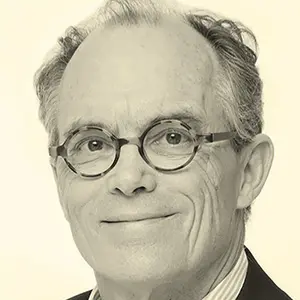
TulsaPeople founder Jim Langdon reflects on his life, family, publishing career -- including the individual who helped him launch the magazine -- and decades of celebrating and serving the people of Tulsa, Oklahoma.
Jim Langdon comes from an Oklahoma newspaper family. His parents, Francis and Gloria Langdon, published The Tonkawa News. After graduating from OU in 1974, Jim sold advertising for the Norman Transcript.
He was associate publisher for The Tonkawa News from 1977 to 1981, taught advertising at OU from 1981 to 1982, managed OPA’s Oklahoma Newspaper Advertising Bureau from 1982 to 1984, and was president of American Newspaper Representatives in New York from 1984 to 1986.
Jim founded Langdon Publishing Co. and established TulsaPeople Magazine in 1986. The company also publishes Ovations, TulsaPeople City Guide, Tulsa Guest Guide, and Vision Tulsa.
Full Interview Transcript
Chapter 1 - Introduction
Jim Langdon comes from an Oklahoma newspaper family. His parents, Francis and Gloria Langdon, published The Tonkawa News. After graduating from OU in 1974, Jim sold advertising for the Norman Transcript.
He was associate publisher for The Tonkawa News from 1977 to 1981, taught advertising at OU from 1981 to 1982, managed OPA’s Oklahoma Newspaper Advertising Bureau from 1982 to 1984, and was president of American Newspaper Representatives in New York from 1984 to 1986.
Jim founded Langdon Publishing Co. and established TulsaPeople Magazine in 1986. The company also publishes Ovations, TulsaPeople City Guide, Tulsa Guest Guide, and Vision Tulsa.
In his oral history, Jim talks about the individual who helped him launch TulsaPeople on the podcast and website VoicesOfOklahoma.com.
Chapter 2 - Sports Writing
John Erling (JE): Well, my name is John Erling, and today's date is October 3, 2025. So Jim, would you state your full name, please?
Jim Langdon (JL): My name is Jim Langdon.
JE: Is that as full as it gets?
JL: James Francis Langdon.
JE: OK. Your date of birth?
JL: December 10th, 1950.
JE: Your present age?
JL: I will be 75 in December.
JE: And where are we recording this interview?
JL: We're in the conference room at Langdon Publishing. We're in Tulsa.
JE: Where were you born?
JL: I was born in Henryetta, Oklahoma.
JE: Is that where you were raised?
JL: I was not. My parents were working on the newspaper in Henryetta, the Henryetta Daily Free-Lance. It was their first jobs out of college. My mother graduated from Oklahoma A&M, now OSU, with a degree in English. My father graduated from OU with a degree in journalism, and they met working at the Free-Lance in Henryetta. It was their first jobs out of college.
JE: OK, let's talk about your mother. Your mother's name?
JL: Gloria Barry Langdon.
JE: And where was she born and raised?
JL: Henryetta, Oklahoma.
JE: OK, you guys hung out over there, right?
JL: My grandparents were there. Yes.
JE: And so she was a writer from your early recollection of her.
JL: She was.
JE: What was her personality like?
JL: My mother was a wonderful, wonderful person, very interested in her community, very involved in the community and her church, the Methodist Church. She was named the National Mother of the Year one year in 1977. She represented Oklahoma, went to the Waldorf, and was selected as the National Mother of the Year, which was really exciting for our family. She much deserved that recognition.
JE: Did you ever wonder when she was reprimanding you -- “and you're the Mother of the Year?”
JL: Well, I was out of college in 1977, so kind of on my own by then, but I had younger sisters who were still at home.
JE: And then your father's name.
JL: My father's name was Francis Smith Langdon.
JE: And where was he born and grew up?
JL: He grew up in Northern California. His father was a Methodist minister who traveled around to various churches in his career. My dad and his brother, Ben, who was 10 years older, kind of did a reverse of The Grapes of Wrath. They had an uncle in Oklahoma City who was very successful in the insurance business. So at the time they finished high school, he invited them to come to Oklahoma, live with his family, and attend OU. So, my uncle Ben did it first and then 10 years later, my father followed him and both graduated from OU with journalism degrees.
JE: And so then he was a writer too when you were born and already in his profession.
JL: He was.
JE: And his personality, how would you describe that?
JL: He had a great personality, very warm, had a great sense of humor, was a great dad. Certainly, I had every opportunity. I feel blessed that I feel like I was born with a golden spoon in my mouth. It was just a great upbringing. I feel very fortunate. I feel like I was born standing on 3rd base.
JE: Yeah. Good. We'll talk about your education and so forth, but was writing of interest, did that sink into you at an early age or when did it begin to sink in for you?
JL: Probably when I was in junior high, I worked at the family newspaper writing sports in the summer, using a camera, taking photos at athletic events, and I just discovered that I really liked writing. I liked, at that time, sports writing. But I later discovered I liked feature writing about people. So it just all happened for me. And I'm thankful to my parents for giving me that opportunity and that experience where I could discover that journalism was something I really liked.
JE: Absolutely. So education then, your grade school experience, where was that?
JL: In Tonkawa, Oklahoma, which is a town of about 3,500 people in north central Oklahoma, about 20 miles from the Kansas border. My parents owned the newspaper there, a weekly newspaper, the Tonkawa News. And so I grew up in that, in a newspaper family. I liked their involvement in the community. I liked the fact that they were known in the community and were just great people for their town.
JE: So then junior high?
JL: I went to Tonkawa public schools in junior high and high school and graduated from high school in 1969.
JE: When you were in high school, did you do any writing? Did you have a school newspaper or anything like that?
JL: Not really. And I was involved in sports and so really the only thing I did in high school was use the camera, take photos, action photos at basketball games. I was playing football, so I wasn't able to do that.
JE: OK, so you played football.
JL: Loved the small town life, you could do everything. I regret that I didn't learn to play an instrument in the band because of that athletic stuff, but it was—it's kind of like Mayberry. It was just a great place to grow up.
JE: You said you were taking pictures and for where—where would they get published?
JL: In the local newspaper.
JE: OK. All right.
JL: Just action pictures of high school games, which was fun.
JE: I suppose you were notable in your class too that you were associated with the newspaper and gave you some standing and your peers.
JL: It was such a small town, people. Of course, they knew me my whole life. And I think they respected the fact that my parents owned the newspaper and they would—people in the community would get recognition for good things that they were doing and all the sports coverage of the high school and the junior high, it was just a wonderful time.
JE: Was—did your parents, when they owned the newspaper, they have an opinion section and so they would editorialize on issues?
JL: Not too much. My dad wrote a column, a front page column every issue where he could express his opinions about things and probably a softer way of approaching that. He served in the submarine service in World War II. So the heading on his column was "From the Conning Tower," and there was a kind of a graphic of a conning tower.
JE: What's that, a conning tower?
JL: On a submarine, the periscope.
JE: What you see...
JL: The periscope, seeing—seeing out his view.
JE: Oh, right.
JL: A summer ago my sisters and I and my wife visited his old submarine in Muskegon, Michigan. It's dry docked there.
JE: Really?
JL: So we were able to actually go on the sub that he served on during the war. It was a highly acclaimed submarine in World War II in the Pacific.
JE: When did your father die?
JL: 2003. My mother and father died within four days of each other.
JE: Oh, wow.
JL: They—my father, the week of Thanksgiving in 2003. But it was beautiful. We were able to have a joint funeral for them in our hometown. It was very fitting. Obviously it's hard to lose your parents that close together, but it meant something to us that they were able to go together.
JE: Absolutely. How old were they when they died?
JL: Dad was 80. My mother was a little bit younger, 77. And they've been in good health. My dad had diabetes—latent diabetes in his life, but he took really good care of himself. But it finally got him.
JE: But then your mother had health issues that they would die within days of each other? Was she having a health issue leading up to that?
JL: She was in poor health at the end of her life. She didn't smoke. She took good care of herself, but it was just her time. It was also very fitting that they would go together, that we would be able to have that joint service for them in that little, little small town, and... so it was meaningful.
JE: As well. Well, one did not have to be left behind, did they?
JL: True. Right, yeah.
Chapter 3 - New York
John Erling (JE): Out of high school, then you go on to college.
Jim Langdon (JL): I went to college. Tonkawa has a community college, Northern Oklahoma College. I attended that school mainly because I wanted to get experience in journalism. And in addition to my education, I was able to be the editor of the student newspaper my freshman year. My sophomore year, I was the advertising manager on the student newspaper, so I was able to get some hands-on experience that was valuable to me. After I graduated, I went to OU and as a result of that, that work as manager of the newspaper, as advertising manager of the student newspaper, I was able to get a job as an advertising salesperson on the student newspaper at OU called the Oklahoma Daily, and that was a great experience. So those two experiences were invaluable to me.
JE: So you did your final two years at OU and, then your degree was in…?
JL: Journalism.
JE: Of course.
JL: Advertising.
JE: Did writing really just flow for you, come easy for you? Because not everybody's a writer. We all think we're writers and some are and some aren't.
JL: Writing is hard. I enjoyed doing it, but I never felt like I was a really good writer. I could do the basics. I really liked advertising. I liked sales. I like meeting people. So I followed that path instead of the news communication side of journalism in the journalism school. I was on the advertising side.
JE: Really? Even though you've been writing since very young?
JL: Right. And there's writing and advertising, of course, too, copywriting, and I also felt like if I was destined to become a newspaper publisher, I would need that sales experience. I would need to know how to sell and make money.
JE: So what years are we talking about that? You graduated from OU when?
JL: 1977.
JE: 1977. So then what do you do?
JL: I interned at the Norman Transcript during my junior, the summer of my junior year at OU. At the end of that summer. They asked me if I would like to just stay on and work part-time my senior year and just continue to handle some advertising accounts and and just continue working, which was a—it was a wonderful thing. And so that's what I did. I worked as a student, my senior year at the Norman Transcript, and then they—they asked me to stay. After my senior year, and I stayed there another five years full-time.
I then felt, John, that since my parents owned a newspaper, that I would probably regret not working with them as an adult in journalism. And so I returned to Tonkawa. As the associate publisher of the paper worked with my mother worked on the newspaper as well and worked with them for a couple of years, enjoyed that experience and I would likely not have left there, but I got a call one day from an old professor at OU and asked if I would consider coming back to the university and teaching for a professor going on sabbatical leave for a year. I thought that sounded like fun and a new, a new experience. So I did that. I went there for a year. And that kind of changed my trajectory, my career trajectory.
Julie and I met in Oklahoma City when I was working at the state newspaper association. She was practicing law in Oklahoma City, and we met, married, and she continued her practice of law there while I worked for the state newspaper association. And then our lives changed. I was hired to manage American Newspaper Representatives in New York for the National Newspaper Association. So, Julie was expecting our first child, but we moved to New York. Our first child was born there.
JE: And her name?
JL: Emily. Julie stayed home with Emily for a couple of years that we were in New York. And then she was ready to resume her career as an attorney, and it just—I moved American Newspaper Representatives to Minneapolis, which was really where community newspapers were strongest in the Upper Midwest.
And Minnesota had a great state newspaper association, so we were able to move ANR into their offices. And instead of moving there, Julie and I came to Tulsa so she could resume her oil and gas law career, and her parents lived in Tulsa, and so it just made sense. I joined a friend, an OU friend, who we worked on the student newspaper together at OU who had a small ad agency here. His name is Ralph Sisney. Ralph invited me to join his agency, and that's what brought us to Tulsa.
JE: OK, let's go back, but wasn't it a dream for you and Julie to go to New York? I mean, that was your intention, wasn't it? You wanted to live there.
JL: We honeymooned in New York City and were smitten by the city. We thought it'd be wonderful to live here and experience it, not knowing that we would have that opportunity within a couple of years.
JE: Oh, all right. So that opportunity just popped up? You weren't seeking it; they reached out to you?
JL: I think I applied for the job when I knew that it was open, but had no thought that I would ever be hired.
JE: The National Newspaper Association?
JL: Because I was very young and basically the executive director of the Oklahoma Press Association was a man named Ben Blackstock who was legendary in newspaper association management. So it was really on his recommendation of me that I was hired.
JE: Well, that must have been a fun two years in New York.
JL: It was fun, but the job was very difficult. It was a nonprofit. It was a profit-making corporation owned by a nonprofit trade association, so you had lots of bosses. The company had not done well for years. They were trying to turn it around and it just didn't happen. So we moved it to Minneapolis and—and it stayed in business for a few more years and then ultimately died.
JE: Did you ever saunter over to the New York Times and say, "Hey, I'd like to have a job here"?
JL: No, but I had a friend who was from Oklahoma, who was working for the New York Post. And it was not a newspaper I wanted to work on, but I went over and visited him a few times and got a feel of that level of publishing. And I don't think Julie and I ever felt like New York was a place we wanted to stay with a small child. It was—it was exciting. Oklahoma has certainly held more promise for us.
JE: You mentioned Minneapolis. I grew up in North Dakota, Minnesota, and so the Minneapolis Star-Tribune, because they combined, I guess, at one time, didn't they?
JL: They did; yeah.
JE: It was a newspaper that was real important to us. So then again, it was Julie's father -- parents that lived here, which drew you to Tulsa.
JL: Right.
JE: All right. So then when you come to Tulsa, what do you say? "What do I want to do?" Julie knew what she wanted to do. What about you?
JL: Right. Well, again, my old college friend Ralph Sisney had a small ad agency here, and he was interested in growing it. And Ralph and I had kept in touch over the years, and so he invited me to join his firm.
JE: All right, you started with an ad agency, and what did you do?
JL: Well, we sought clients. Served those clients. The main client that we had during those couple of years was the David Walters campaign for governor, his first run at governor. And we handled all the print communication for him, for his campaign. And that was an exciting experience. I'd never been on that side of a campaign. And so that was fun.
Chapter 4 - TulsaPeople
Jim Langdon (JL): It was about that time that I realized that the ad agency business wasn't really what I wanted to do. And so we were able to—I was aware of a newspaper in Oklahoma City called Oklahoma City Friday, which was started by publisher Leland Gourley, that was greatly successful. And other publishers in Oklahoma, newspaper publishers, wanted to replicate his success, and Tulsa was really the only place that could be done. And none of them—I think a couple of them explored it—didn't pull the trigger, so. That was the basis of TulsaPeople.
John Erling (JE): OK. What was unique about that? You called it a newspaper. Was it a newspaper or a magazine?
JL: It was a newspaper. It's a broadsheet newspaper, still is. I just thought you can achieve so much more quality in a magazine. Actually, TulsaPeople started as a newspaper, as a tabloid newspaper, and then over the years, we changed it to what's called a slick magazine.
JE: But you said there were those who tried to replicate what they did in Oklahoma City and they just didn't pull the trigger on it. So what made you think you could do that here in Tulsa?
JL: Well, I knew how to—I felt like I knew how to do it. I had lots of professional friends in the state that were in the newspaper business that I consulted with. The best thing I had going for me, John, was my time in Norman. One of the advertising accounts that I had at the Norman Transcript was Harold's clothing stores. And Harold was a legendary retailer in Norman. And not only Norman, but Oklahoma City. At one time, he had 16 stores around the country. And it was just wildly successful and he was including Tulsa...
JE: Including Tulsa.
JL: He had two stores in Tulsa at the time, at the Farm and Utica Square. And so I reached out to Harold, shared with him what I—kind of what I've been doing and what I wanted to do in Tulsa. And he invited me to Norman to have lunch. I said, "I have a prototype of the publication I hope to start." And he said, "Bring me the prototype." So I did. And he was very supportive of that. He said, "I’m not satisfied with the advertising opportunities I have in Tulsa. I would be very interested in helping you start a publication that would reach the audience I want to reach in Tulsa.” And, so, he did a couple of other things. He said, “Jim, if you will start this publication, I will take the back cover of the publication. And I will pay my first year's advertising in advance."
JE: Wow.
JL: Which was a great thing for someone who's undercapitalized. And he really made it happen. He was a great friend. And was our back cover advertiser and still until he'd retired, but his stores finally closed—but great man.
JE: Yeah. How did you determine how much money that should be or did he determine it?
JL: He said, "I'll pay my first year's advertising in advance." We had an advertising rate card. We knew what the cost of the full page was, and I think at the time it was about $15,000. It's my recollection.
JE: So he paid that up front?
JL: He paid that up front, really helped us gain traction and at least print that first issue.
JE: What was your budget—do you recall—for that first issue when you first started?
JL: The advertising revenue?
JE: The budget. How much money were you having to meet expenses for the first?
JL: My memory is not really clear, but I'm thinking it was probably $15,000 to $20,000 to have it printed and to hire some staff. And...
JE: Was that Harold's money, the 15,000, or was it in addition to it?
JL: That was really Harold's money. My mother and father-in-law put a little money into the business, but we pretty much started on the proverbial shoestring and just kind of grew it from there.
JE: Are we talking, let's see, about 1988?
JL: 1986.
JE: And 1986 is your first publication.
JL: November of 1986.
JE: All right. And we have right over here your first TulsaPeople. November 13th, 1986, “...the biweekly newspaper advancing the interests of successful Tulsans.” And we have Dick Crawford.
JL: Mayor Crawford.
JE: …former mayor, Ray Siegfried II, Marsha Manhart…
JL: Phil Britt…
JE: … and Rick Weddle.
JL: Rick Weddle worked for the chamber at the time.
JE: Here we have "Turning Point" headline. "Does Tulsa forge ahead seeking a new identity, or do we accept a default position prepared by the [unintelligible] of chance? City leaders voice their views." And these are all your ideas?
JL: Well, I had a staff. I had an editor, and that was just the first cover story that we published. Yeah.
JE: That's a good question. How many staff members did you hire to start this?
JL: Oh, I can't really remember, John, probably five or six.
JE: OK, yeah. And then we have "Doo-Wop Dining, an old tradition on the restless ribbon now has its complement in a new form." Pennington's, the restaurant at Loehmann's Plaza. "Waitress for Animals—it's late afternoon and Lorraine Miller's customers, about 90 of them, are getting hungry. It's time to serve up their supper." These are great, aren't they, huh? "Smokers' rights—a solution to the heated controversy between smokers and non-smokers." "Aversion to sweat—a closer look at Tulsa's state of the art fitness facilities," and that's framed, and I'm reading off it here that you've kept in your office.
JL: The inaugural issue.
JE: The original mission or vision then for the magazine, how would you declare it? How would you say it?
JL: I think we really just wanted to celebrate Tulsa and Tulsans. Tulsa is such a great community, and there's so much pride here. There's strong leadership here and we wanted to capture that in the publication. Shine the spotlight on people doing good things, hence the name TulsaPeople.
JE: Somewhere in here, you had another child born.
JL: Our son John was born in 1988 after we moved to Tulsa. '86—early '86—two children.
JE: Did your children show writing ability or weren't they interested in it?
JL: They weren't that interested in it. My daughter owns a pet store in Tulsa called Dog Dish, and she's been a pet-crazy person all her life. So she owns that store and is very successful doing that. Our son works with her, but he's a musician. He plays in a couple of local bands, loves music. They're both great kids. They're both happy, and I have one granddaughter who will be eight in December and she's the light of our life.
JE: Her name?
JL: Her name is Zoey, Zoey Bollinger.
JE: All right. Where does this music and your son John come from? Has it come from you?
JL: Not from me. My mother was very musical. My dad sang in the church choir, so they were musically inclined. But my mother had a beautiful voice, did a lot of singing as an adult, and played the piano.
JE: All right. When you started the magazine, did you charge for it, or were you just giving it away like you've done?
JL: We didn't charge for it. It's always been free, distributed on our own racks throughout the community.
JE: So you were modeling some of this on other city magazines. I would imagine you knew some of the success of them and you got some ideas from them.
JL: That's true. I started looking at other magazines, city magazines around the country, talking to other publishers, learning, getting ideas. So that's kind of been the ride—always trying to improve it, make it more interesting. I've been very fortunate that we've had a great team of people working on the magazine over the years.
JE: Well, Tulsa didn't have a city magazine. So was it kind of like the community had to catch on to what you were doing because it looked like a newspaper? Were you trying to compete with the Tulsa World or—I mean, they're probably wondering—did you go through some of that?
JL: Not really. There was a magazine in Tulsa at the time we started TulsaPeople called Tulsaite. You may remember Tulsaite magazine. It actually folded the August before we started in November, but it had been kind of a city magazine for years. That really wasn't a factor in what we wanted to do, but obviously, when it went away, it helped us. We kind of filled that niche.
JE: Was there ever a time that you thought you couldn't make it? You're celebrating 40 years. So in that span, was there ever a time you didn't think you'd make it?
JL: I don't recall that, John, but I will say that because my wife was a practicing attorney—was immediately hired by a good law firm in Tulsa when we moved here—that really, she provided the income that we needed. At the start of the publication when we weren't making much money, so I credit her with enabling us to start it and operate it in some very lean years until it really caught on.
JE: Right. And then later on she came to work with you, didn't she?
JL: She did. I recruited her into our business after about year 10 because I needed her. And so Julie—Julie Roffers is her name—she's the president of our company and really concentrated on the business side of our publishing company and enabled me to spend more time in sales. So that enabled us to grow again.
JE: So can husbands and wives really work together?
JL: You'll have to ask her that. She's such a wonderful person and is very supportive of me, and I certainly couldn't have done what I've done without her. She's provided so much support, encouragement.
JE: Well, the role she played could have been hired by somebody else, but it's nothing like having family running it. I think there's an extra advantage you have there.
JL: We just kind of shared a common goal to grow this business and not be satisfied with what it is—always be reaching a little higher level. I feel that that's a real key to our success that we just always tried to improve. Always tried to enhance the publication. Print on better paper, print more in color, kind of enhance the quality, and, fortunately, the community responded to that.
JE: TulsaPeople, the name of it—was that a no-brainer? You just knew you were going to call it that?
JL: It really wasn't. There was a publication in Dallas at the time called Park Cities People, which was in the Highland Park University Park areas. It was actually Harold Powell who suggested that we call the publication TulsaPeople.
JE: Oh, really?
JL: He liked that publication in Dallas. He felt like what we were trying to do in Tulsa was close to what they were doing in Dallas, even though it was a newspaper. He felt like that was a good name.
Chapter 5 - Magazine Covers
John Erling (JE): The Tulsa World, are they interacting with you at all? They're seeing what you're doing? Are they curious, and then let me go into advertising as well. Are you going after the same clients and… talk about that.
Jim Langdon (JL): I can't speak for the World and what they viewed us as back in those early days. I kind of feel like maybe they saw us as a pea floating in their ocean and didn't pay much attention. Publications come and go. Most of them go. They don't stick around. And I don't think they probably knew my history and the staying power that I might have represented at that time. And all the good things that lined up for me. I think maybe they didn't pay too much attention in the early days until...
JE: They thought you were a startup that'll go away.
JL: I think there were a lot of other publications that probably come and go over the years.
JE: So were you contacting the same advertisers as they were?
JL: Sure. Renberg’s was a great client for us. Harold did another thing that was really important to us. He said, "Who do you need to advertise in this publication to be successful?" And I said, "Well, the major advertisers in Tulsa at that time were Miss Jackson's." A great women's clothing store. And Renberg's, which was a locally owned department store with, at that time, maybe five stores. And he said, "OK, you call Bill Fisher who owned Miss Jackson's. You call Bob Renberg and tell him we want to come see him." I did that and just based on his name, we set up—I was able to get appointments. Harold drove over from Norman, participated in those meetings. Those gentlemen didn't know me from Adam, of course, and they all knew him and respected his success. So that really enabled us to get those advertisers initially. The other thing he did, he called Hans Helmerich of Helmerich and Payne. Helmerich and Payne owned Utica Square, still does, arranged for me to meet with Hans. So, based on that interaction, we were able to secure Utica Square as an advertiser, Renberg's and Miss Jackson's. There were a lot of followers to their leads. So that really enabled us to start rolling.
JE: So how do you sell advertising for a newspaper that's never published, and how do they know what kind of readers are going to get or who's going to look at it? You can't give them numbers. So they're just betting on the come, as we say.
JL: We defined the audience that we wanted to reach in Tulsa, and then all our distribution was based on racks in stores. And based on the type of store it was, people knew what kind of customers were attracted to those stores and what kind of readers we would have for the publication, and it just kind of developed in that way.
JE: Where would you set up your initially—your first racks? What stores?
JL: I'll tell you the store that really was the best for us was Petty's.
JE: Petty's Fine Foods.
JL: In Utica Square. And that was perfect for us because it was really the target audience we were seeking. Fortunately, people liked the publication. They picked it up and it just started rolling from there. We were able to secure other distribution points that were meaningful to retailers and it just grew.
JE: Well, you must have been called several times. "You got to come and refill here because they're taking them." Is that true?
JL: It was because the publication was free, right?
JE: And particularly there at Petty's, you're saying it probably was as they walked out or something and they picked it up. And now how many distribution points do you have?
JL: Golly, I would think we have at least 100 stores, restaurants. Of course, people know the publication now. They know where to pick it up, so it really enabled us to grow.
JE: Let me just jump in here and talk about your location. Where were you when you first published the magazine?
JL: First, because it started within the ad agency, we were in the offices of the ad agency, which was in the Parkland Plaza Building on Lewis. We were there for our first one or two years and then moved to an office building on Cheyenne at about 9th and Cheyenne. We needed more space. We were there for four or five years. That building is no longer standing. It was torn down a few years ago. We then moved to Brookside. We're in an office development there. We're there for five years—almost five years. And I felt like I needed to look at buying a building that—we were paying a lot of rent for quite a bit of space. So I contacted a friend of mine who was in the commercial real estate business and asked him if he could find a building we could buy. And he found this building at 1603 South Boulder. Which was an ugly duckling at the time we purchased it, but we've improved it over the years and it's been a great part of our success.
JE: Right? What was in this building, do you recall?
JL: Well, there was an ad agency here. A man named John Stevenson operated a small ad agency. So this was his building. I purchased it from him. He was at the time kind of phasing out of his business, and so it was good timing for him. So we purchased it in 1993. And it's been a great—a great thing for us.
JE: Yeah, when you drive by the front, you really don't realize how big this building is. It goes back quite a ways.
JL: It’s been a wonderful thing.
JE: Who does the actual printing for you?
JL: We printed in Nowata for our first 10 or 12 years at Nowata Printing Company and a company owned by Ed Bladdy. Like me, he was the son of a newspaper publisher. His father published the newspaper in Nowata. Ed was more interested in the printing side of the business than the news side or the advertising side. So he was operating a printing company. So we printed in Nowata for the first 10 or 12 years. It was at that time that we wanted to enhance the quality. It was a newsprint product and we wanted to really turn it into more of a magazine product, slick magazine. Now, today we print at a printing company in Fulton, Missouri. They do a really nice job for us, and we've been there for probably the last 10 years.
JE: So when did you become a magazine?
JL: We became a magazine in about—there was kind of a gradual change to that. We first put a slick cover on the newsprint product. And then we enlarged the format. Then in the early 2000s, we started printing a true magazine, probably 2003.
JE: Well, covers are really important, aren't they?
JL: Yes.
JE: And they probably influence your readership. And when a cover is there, you'll notice more people are picking it up because of a certain cover. Is that true?
JL: Yes. You know, the cover story is important, especially when we utilize rack distribution—our own rack distribution—for people to see what's on the cover and be attracted to that cover story. Fortunately, over the years, people have learned what the magazine is about. We're less dependent on what the cover is. They know what the content is, but the cover is still important. We have talented people here. We've always had talented people—photographers, graphic designers who are so skilled in creating a great looking product both on the cover and on the inside pages that it all just kind of comes together and makes for a great product.
JE: It so happens that I have the New York Times. And one of those stories was this morning—despite—and it was about the top 25 magazine covers. It wasn't just a Times thing, it was Time magazine and all others, and they wrote: "Despite all the groaning that print is dead, many people seem captivated by magazines lately. When Anna Wintour relinquished her editorship in June of Vogue, which she's overseen 37 years, that was a big story. And even if magazines don't hold the same cultural sway or profits or attention spans they once did, it's undeniable that the people who make them and the stories and images they've made still have much to show us, not just about how we read and see, but about how we live.” That must really resonate with you as I read that, and then they go on to say this has been true for nearly two centuries. Popular magazines like Scientific American and The Atlantic both been continuous in publishing since the mid-1800s.
JL: Magazines appeal to the special interests of people. And if you're interested in boating, you buy a boating magazine. If you're interested in books, you buy a magazine that has a great book section. Our magazine is a city magazine, so it's all about our community. And there are lots of city magazines out there that are really, really good. Bestselling cover on most city magazines—paid circulation city magazines—is food. People love to read about food and restaurants, so that's a big part of our content. Our magazine is all about Tulsa and people who live in Tulsa are interested in what's happening in their community. They're interested in the restaurants. They're interested in the arts. That's kind of the package that we publish and present.
JE: By the way, this New York Times, they listed the top 25 covers. The number one cover was a Muhammad Ali on Esquire, and they had put arrows attached to him. So when you looked at him, it was like all these arrows were being shot at him, and they proclaimed that was the number one for Esquire magazine. Well, I have to say that fortunately, I was on one of your covers. Along with my dog Remington, and you've given me another copy of it over here. And then we did a repeat with you with Bergen, my dog, you put that on there. So probably animal issues are probably pretty popular as well.
JL: Well, pets are so important to people. Most people have a pet. They love their animals. One of my favorite issues of TulsaPeople was the issue a couple of years ago when we had Winston, who was the national champion dog at the Westminster Dog Show in New York. He was from Bixby. His trainer—handler is what he calls himself—Perry Payson, lives in Bixby, trains dogs. That was one of my favorite issues. He was just a great looking dog, a French bulldog, a Frenchie. I loved that particular issue of the magazine.
JE: Because you are in the people naming business, I would imagine when people see their friend's name in your magazine, they will say, "Hey, I saw your name in TulsaPeople." "Where?" "TulsaPeople." "Oh, I got to get some extra copies." So I'm not going to call it selling, but what you're doing is selling. So then people say, "Oh, I need to get a bunch of copies of that." So it starts a big round robin going here.
JL: It does. And fortunately, people, after all these years, they know what we're about. And so it's not a problem getting people to pick up the 25,000 copies we print each month. Because we celebrate Tulsa and we celebrate Tulsans. And we celebrate those things that are really good here. People like that, fortunately.
Chapter 6 - Roger Wheeler Murder
John Erling (JE): I know you wouldn't set out to feature anything controversial, but was there any story or anything in all these years that caused some blowback that people will say, "Well, why did you do a story on that?" or "Why did you feature that person?"
Jim Langdon (JL): Not really, John. I guess maybe the one that would—it wasn't controversial, but that maybe people wondered about—was our July 2001 cover story of the murder of Roger Wheeler in the parking lot at Southern Hills Country Club. Terrible event.
JE: You have it there. Why don't you hand it to me so I can see it? Yeah, it says Tulsa: Justice Denied, the Roger Wheeler murder case, a disturbing 20-year odyssey, and there's a picture of him and then Sergeant Mike Huff.
JL: Mike Huff was on that case for 20 years trying to solve it. And finally, he was instrumental in solving that. People may remember the name Whitey Bulger, who was from the Boston area. He was in a Boston gang, the underworld, was on the lam for—but it was his—the Winter Hill gang was his gang. So Mike Huff was on the case for 20 years and was, again, instrumental in solving it finally.
JE: He sure was.
JL: And so what happened, we wanted to do that story on the anniversary of the terrible event and I reached out to a publisher friend in Boston, at Boston Magazine, shared with him the story that we wanted to do—a story on it and kind of update people on what has happened. And feature Mike Huff, Detective Huff. And so he said, "I have a writer that I could recommend to you to do that story. And he's just written a book about the case. And I'll give you his name and number," and he did, and his name was Ralph Ranalli. And he was a journalist in the Boston area. And we hired Ralph to write that story for us. He did a great job and that cover story earned TulsaPeople the top award presented by the City and Regional Magazine Association that year as the top cover story—and a little TulsaPeople in Tulsa, Oklahoma competing with the Chicagos and the Atlantas and the LAs and the Bostons, but that story earned us the top award that year in feature writing, which made us proud.
JE: OK, two questions then. What made you think you should do that story?
JL: Well, as the cover said, it was a disturbing 20-year odyssey. And it was probably the most horrific crime in Tulsa history, at least in my view. It was unsolved. And so we wanted to focus on that. We felt like we had to reach out to where Whitey Bulger lived and where his underworld exists. And we needed someone who had unique insight into that. So that's kind of how the story unfolded for us.
JE: I've interviewed Sergeant Mike Huff for Voices of Oklahoma. He tells a story, but it was that Whitey Bulger did not want to kill Roger Wheeler. He sent two men here, but he said, "We're going to be in trouble for this one because Roger Wheeler is a high profile person. It'll get a lot of attention." If they offed some lowlife somewhere, it wouldn't, but he knew this would do them in. And of course, it led to that, his arrest.
JL: Yeah, Roger Wheeler engaged as a businessman engaged in—it's called jai alai. It was a sport that was popular in Florida. He determined after buying that business that the underworld was involved. They were skimming profits. It had to stop. And so he started working to stop it, and that's what placed him in the view of the underworld. They didn't want him around making trouble for their crimes.
JE: I'm not a member of Southern Hills, but when I'm invited out there, I can't help but think of him and exactly where his car was parked, and that whole story will stick with us for the rest of our lives. So were there some people who wondered, questioned why you did that?
JL: I don't think so, but it was a departure from what we normally were doing. But it's a great—it's a great story, and it's a Tulsa story. And even though it was sad, we just felt like it was a City magazine story on the anniversary of the crime, the unsolved crime. So we did it.
JE: Yeah, and look at the recognition you received from doing that. You've had other recognitions too. I'll talk about, but you enjoy going to events and taking pictures. I've seen you in many, many places and you enjoy doing that, apparently, now you've talked about it because you did that when you're a young person.
JL: We like supporting the nonprofit work that happens in Tulsa. And Tulsa is so rich in that. So we like to recognize people who are doing good things in the community and raising money that make good things happen. That's always been a part of the publication.
JE: There have been celebrities you have met and were interested in because of your work. Can you tell us about one?
JL: It's been a joy to attend events for those types of celebrities and people of great accomplishment. Paul Harvey was coming to Tulsa as a guest of the Salvation Army for their annual dinner. He was going to speak, of course. Paul Harvey grew up in Tulsa. He's a native Tulsan—Tulsa Central High School. KVOO got its start here. We called his office in Chicago and asked if we could arrange an interview with him over the phone to publish that story in the month that he was coming to Tulsa to be honored. And so one day, our office manager came into my office during the lunch hour and said, "Jim, Paul Harvey's on the phone. And he's ready to be interviewed." Well, I wasn't really a news guy or a journalist, but there was no one else to do the interview. And so I picked up the phone and fortunately, Paul Harvey was so—such a professional—he basically interviewed himself for me. And I just took notes, asked him a few questions, but it was a really fun thing to do. He loved Tulsa, remembered Tulsa, even though his father was a police officer and was killed in the line of duty here—tremendously sad. He was proud to be a Tulsan and to come back, and so that was a real fun thing to do.
JE: I went back to 1988 to see Roger Randall, who was the mayor at the time. And there was an economic recovery from the oil bust of the early 1980s. Did that affect your business any?
JL: Well, it did because as people have less money to spend, advertising is not as effective as you hope it would be. And so, yeah, those kinds of events hurt everyone. And we're really dependent on the retail community. And as they prosper, we prosper. We're very supportive of our local business community here and trying to share news and information about that community and without that, we can't continue. And so we've been fortunate over the years.
JE: Imagine you must have clients who say, "I started advertising in TulsaPeople and I can show you direct results as a result of it." Is that true?
JL: Yes, it's a little hard now to do that because of digital communications. People are really investing in a lot of different types of communication. It used to be that newspaper, television, and radio were about it, but now there's so many channels that can be used and utilized, and it's a little harder to trace.
JE: Well, you had to navigate from print only to the digital platform. Did you embrace that immediately, or did you come late to the dance or how did you?
JL: No, I think we were early adopters of digital communication. You know, the development of our website, the development of a digital edition of TulsaPeople. I know we were one of the early magazines to create a digital edition, and that made sense for us because because we were not a paid circulation publication, it wasn't going to negatively impact the readership of the magazine. It complemented what we were doing. So that enabled us to expand our audience digitally. We published a digital edition of TulsaPeople that people can read online in its entirety. We did that early on from a quality standpoint, really, to look for the company who could best create that for us. It would be a good experience for the reader. And we've just grown it from there.
JE: I see you featuring things on Facebook too.
JL: We have a great team, not only on the print product, but our digital edition, our digital products, newsletters. I'm very fortunate over the years we just had a lot of talent in this building. People that love what they do, are good at what they do.
JE: I'll compliment you because you probably won't compliment yourself, but these talented people are coming to a place they know is a solid company and respects creativity, so, you know, that all works in your favor.
JL: Thank you.
Chapter 7 - Tulsan of the Year
John Erling (JE): Some of the features I think that you enjoy doing and selecting like Tulsan of the Year. Talk to me about that. That must be one of your favorites and how you might—we're sitting in your boardroom here. I imagine your team is sitting around this table and "Who are we going to name as Tulsan of the Year?" Talk to us about that.
Jim Langdon (JL): We do that every year. It’s our joy to recognize a Tulsan of the Year in our January issue. Of TulsaPeople every year we just seek a person who deserves recognition for the good things that they're doing that impact others, impact our community. It's not always easy. Some years a person really stands out that has done great things and, but other times there's several people in a city our size that deserve that spotlight. About this time in the fall we start our conversation about who we think deserves that recognition and it's always fun. It's not without a little bit of stress but there's so many people here that are doing great work, great nonprofit work, great service as a public servant, and so it's our joy to... to recognize. Sometimes it's more than one person. When they had the vote to build the BOK Center and our Tulsan of the Year, we had kind of a mirror on the cover was an actual mirror, but it was designed to look like a mirror and our Tulsan of the Year was you—the people of Tulsa who voted for those improvements. That was a great idea. That was a graphic approach, but it was such a significant thing for our city and so we just decided to honor everyone.
JE: That's great.
JL: Magazines are fun. They're lasting, and we're just able to recognize people, recognize events, organizations that make a difference, and that's a joy.
JE: All right, I'm holding your current issue. TulsaPeople stories upon stories. And I found that very interesting in how you put some of those major buildings and actually identify them. But as I was going through this, I think somebody new in town ought to have a copy of this because it really gives you a flavor of the city, not only the stories you featured, but even the advertisers to know that these people are here. We used to have a welcome wagon, well, this should be in every hand of new people coming to town.
JL: We publish an annual downtown issue and that's in October. So that's our downtown issue, the most recent one, and we have a great downtown in Tulsa. It's a part of our city to be proud of and it's interesting and historic and so it's our joy to spotlight downtown every year in October.
JE: Most memorable people, you've conducted interviews and written it. I know you're mostly on the advertising side, aren't you? Are you writing occasionally?
JL: The only time I write is our editor writes a publication—an editor column in each issue, and on occasion she will ask me to write that column. Oftentimes it's in our January issue when we recognize a Tulsan of the Year. We also have an annual feature called "Lives Well Lived" that's published in January. And we recognize those Tulsans who've passed away during the previous year and offer information about them and their life and the significance as a Tulsan. We really liked that annual feature and it's a lot of work. It's important work to—to recognize people who've been great Tulsans for a variety of reasons that we've lost.
JE: Must make you feel good because now you've earned this reputation about becoming part of the fabric of the community. You're very much part of what this city stands for. You set out to do that, I suppose.
JL: Well, I didn't know if it was going to happen. Obviously it's really developed, and I think it's from being involved in the city, from supporting those organizations and events that are important to Tulsa. So I think that educates people, but it also makes them happy that they live in a community in a city that has people who serve in such important beneficial ways. So it's our joy to shine the light on those things and those people, and that's what we're all about.
JE: How—what do you see as the future of local journalism in this day and age? Across the country, there's some major newspapers, the print version no longer exists. And we've got the Tulsa World, of course, and they're probably wondering about themselves. And so some of the print versions go away and they have the electronic version. You may have a comment on that, but the model you have, you will always have a print version. Because of the model you have, you're giving it away, supported by advertising, so magazines will always stand regardless of a local newspaper.
JL: Well, hopefully. I worry about the newspaper industry, frankly. People have so many options now, so many digital options, broadcast options that they feel less dependent on newspapers, which I worry about because newspapers do a different thing than broadcast. There's more depth to newspapers, depth of coverage, and I really worry about the demise of print journalism. And it's happening. Hopefully, it won't happen to where there's nothing left because newspapers are important. I mean, newspapers, the Tulsa World is covering City Hall, they're covering state government. They're doing the work that won't be done without newspapers. I'm concerned that we seem to be following that path, the demise of local journalism.
JE: Your hopes for TulsaPeople over the next, say, 10, 15 years? You must—you've been so forward-thinking along the way ever since 1983 that you probably are projecting ahead for your news magazine. What are your thoughts?
JL: Well, I hope it continues forever. I won't be here for that, but I think the publication has established people like it. They appreciate it. I think magazines are different and the quality is different. The types of information that we provide is different. And so I think there's a bright future for magazines as long as we're able to sell subscriptions and sell advertising. Magazines aren't going away. They're portable. You can lay it down and come back to it, unlike television or broadcast. And so I'm optimistic. What we've been able to do in Tulsa, it's been a joy for me, and I—I so appreciate—appreciate all the talent that we've had working on the magazine over these 40 years. It's been immense. I feel just totally blessed at what I—what I've been doing in my life, my professional life. And I think, as I mentioned to you, I feel like I was born standing on third base. I mean, it's been a magical thing for me.
Chapter 8 - Publications
John Erling (JE): If you could give advice to the next generation of local publishers, what would it be?
Jim Langdon (JL): Well, our world is changing so much, it's hard to project. I think there will always be a place for magazines because they really appeal to the special interests of people. They're not broad, they're focused. And so I think people will continue to want to read magazines of a variety of types. I'm not sure about newspapers. Although I love newspapers, that's my family's history, but it's a changing landscape. Getting people to pay for things is more difficult now. And yet it's so important that we support newspapers and magazines because of the important role they play in the dissemination of news that we all need for it.
JE: It would be pretty difficult for a magazine to start up today, wouldn't it?
JL: It's hard to answer that question. I think if you have a direction, a focus that's important and people like and want to know more about, like your community, I think there's always a place for that. Magazines are largely appealed to the special interests of people. And I think that's a pretty safe place to be, whether it's sports or history or whatever, but you've got to have a focus. And it's got to be a focus that people value and hopefully want to support.
JE: Yeah. How many magazines do you publish now? You do more than TulsaPeople.
JL: We do. We published a few other publications. One is called Vision Tulsa. It's an annual and we published this for the city, the city council primarily and the chamber, and it's a publication that they use in attracting businesses to Tulsa. It really captures Tulsa in a variety of ways from healthcare to education to energy to manufacturing and it just educates people about Tulsa and so we're really proud of this publication. It's an annual and it comes out in February of each year. We also publish the in-room hotel book for Tulsa called the Tulsa Guest Guide, and this publication is placed in-room in our major hotels in Tulsa. It educates visitors to Tulsa about Tulsa, and we're really proud to do this publication every year because it showcases all the great things about our city.
JE: And those are supported by advertising?
JL: Advertising totally, right. We like doing special publications. I'm holding one that we did for Cain's Ballroom celebrating their 100th anniversary. This publication is all about Cain's history. We love doing this because Cain's is such a popular and respected place and people are proud of it because it's nationally known and appreciated. We also do some special publishing. I'm holding a publication that we created for the 100th anniversary of our United Way presented by TulsaPeople and it just enabled us to capture the great things about our great United Way. This was included in TulsaPeople and then we overprinted it and provided the Tulsa Area United Way individual copies that they could use in their communication. Here's one we did celebrating the 100th anniversary of Helmerich and Payne, and this also was in the magazine and we overprinted it and it just shares the story of that major company in Tulsa and so we like doing that. It really enables us.
JE: Those are fun, aren't they?
JL: They are, they're fun and we take pride in doing work like that. Here's a magazine that we publish and this actually is a performing arts magazine for the McKnight Center on the campus of Oklahoma State University. This is the publication that people receive when they walk into that facility in Stillwater and it talks about all the upcoming events that are happening there. We published Intermission magazine for the PAC for 25 years until the decision was made to pull that publication in-house, not have an outside publisher create it. So that's what kind of led us to publishing Ovations in Stillwater.
JE: You guys have been busy people. It's not just TulsaPeople. Wow, your staff can handle all that work.
JL: Great staff. We've always had just a great team here, people who are really committed to journalism and committed to storytelling and take a lot of pride in what they do and what they're writing about.
JE: Well, you followed your father's footsteps. You were inducted into the Oklahoma Journalism Hall of Fame in 2006. That had to make you feel good.
JL: I felt honored, that was a real highlight for me, and I appreciate that recognition.
JE: Yeah. You're also in the Tulsa Hall of Fame.
JL: Yeah, my wife Julie and I were inducted into the Tulsa Hall of Fame a few years ago, and that was a great honor.
JE: You've served many nonprofit boards, co-chaired multiple fundraising events. Julie had an idea, Cooking for a Cause. What’s that?
JL: Cooking for a Cause is an event that we created. It'll celebrate its 25th anniversary next year. And it's a fundraiser for Iron Gate, which started at Trinity Episcopal Church, which happens to be our church, and it serves the hungry and the homeless. We take great pride in Cooking for a Cause and raising money to support Iron Gate.
JE: And TulsaPeople is a recipient of the very prestigious Pillar Award presented by the local chapter of the Association of Fundraising Professionals. It's been presented only in the years the organization believes an individual or company has earned the honor. So it's not an automatic. It's when somebody earns it. And so there you have it.
JL: That was great recognition that we appreciated.
JE: Anything else you want to say about TulsaPeople and your work?
JL: Only that I just feel so fortunate that this has been my work, and I feel fortunate to live in Tulsa. John, when I was growing up in Tonkawa, it was not easy to get to Tulsa. And I probably had been in Tulsa maybe one time in my life. Tonkawa is located on I-35, so it was an easy shot to Oklahoma City. It was an easy shot to Wichita, Kansas. So, Tulsa was just not a place that I visited. So I feel very fortunate that this is where my professional life has been spent and doing my journalism thing, I just feel very lucky that this has been my professional life.
JE: How would you like to be remembered?
JL: As just a good guy that worked hard like a lot of people do, and cared about our publication and tried to create a publication of as much quality as we could possibly do. And a lot of that is the people who've worked on the magazine over the years, just greatly talented people who just have done great work and love what they do and it shows and so I'm very blessed.
JE: Well, if I was in the room picking the Person of the Year, I would name you. And I know you would never allow that to happen, but I would name you. So, I admire you and your business and your TulsaPeople and how you've got involved in this community. And thank you for sharing your story here with Voices of Oklahoma.
JL: Thank you, John.
JE: You bet.
JL: It's been fun.
Gallery
Production Notes
Jim Langdon
Program Credits: Jim Langdon — Interviewee John Erling — Interviewer Mel Myers — Announcer
Notes: Recorded by John Erling in Tulsa, Oklahoma. Digital Audio Sound Recording, Non-Music.
Tags:Journalism, Oklahoma Press Association, David Walters, Norman Transcript, National Newspaper Association, Magazines, Newspapers, Harold Powell, Roger Wheeler, Tulsan of the Year
Jim Langdon. "Jim Langdon: Publisher, Journalist, Founder of TulsaPeople" Voices of Oklahoma, February 19, 2026, https://www.voicesofoklahoma.com/interviews/langdon-jim/, Accessed April 4, 2026