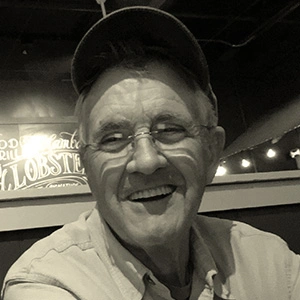
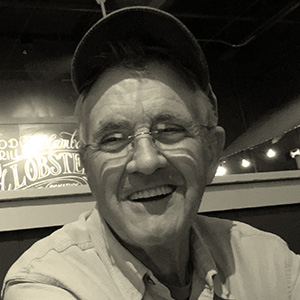
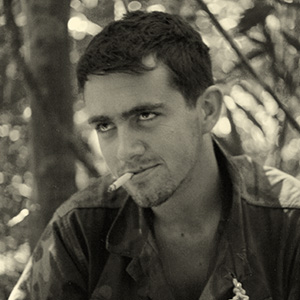
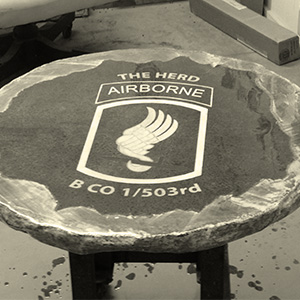
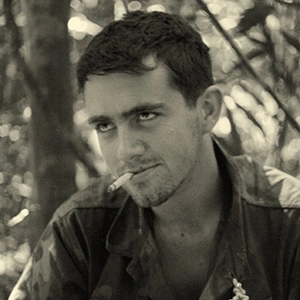
Rick Ogden, a Vietnam veteran from Pryor, Oklahoma, shares the incredible story of his life, his heroic experiences in Vietnam, and the lasting impact of war.
Vietnam veteran, Rick Ogden, was born and raised in Pryor, Oklahoma. Rick worked in the family business, Chouteau Lime Company, which was started by Rick’s grandfather when he discovered limestone leading to a quarry in Chouteau.
Coming from a military family, Rick joined the Army in 1966 during the Vietnam War. As a U.S. Army paratrooper, his first mission was to stop the Detroit Riot in 1967, which lasted for five days. In September 1967, he arrived in Phan Rang, Vietnam, home of the 101st Division headquarters.
While on patrol, along the Cambodian border, he was wounded, an injury that marked the beginning of a long journey of healing. While Rick’s wounds eventually mended, the emotional impact of war stayed with him. But he found a path forward, and Voices of Oklahoma is honored to preserve and share his oral history for future generations.
Full Interview Transcript
Chapter 1 - Introduction
Vietnam veteran, Rick Ogden, was born and raised in Pryor, Oklahoma. Rick worked in the family business, Chouteau Lime Company, which was started by Rick’s grandfather when he discovered limestone leading to a quarry in Chouteau.
Coming from a military family, Rick joined the Army in 1966 during the Vietnam War. As a U.S. Army paratrooper, his first mission was to stop the Detroit Riot in 1967, which lasted for five days. In September 1967, he arrived in Phan Rang, Vietnam, home of the 101st Division headquarters.
While on patrol, along the Cambodian border, he was wounded, an injury that marked the beginning of a long journey of healing. While Rick’s wounds eventually mended, the emotional impact of war stayed with him. But he found a path forward, and Voices of Oklahoma is honored to preserve and share his oral history for future generations.
Listen to Rick talk about his face-to-face encounter with the Viet Cong, including the day he suffered a major wound, on the podcast and website VoicesOfOklahoma.com.
Chapter 2 - Military Family
John Erling (JE): Well, my name is John Erling. And today's date is September 23, 2025. So, Rick, would you state your full name, please?
Rick Ogden (RO): James R. Ogden.
JE: You go by Rick, though, don't you?
RO: Rick, yes.
JE: So that's where the R is, James R.
RO: Yes. It's actually Richard. I asked my dad one time why they called me Rick instead of Dick, and he said, "I don't even remember." So…
JE: So you've never gone by James. It's just always Rick. And we're recording this interview in the facilities of Voices of Oklahoma. Your birth date.
RO: The 5th of August 1946.
JE: Making your present age...
RO: 79.
JE: All right, where were you born?
RO: I was born in Pryor, Oklahoma.
JE: OK, let's talk about your mother, your mother's name, where she was from, and that type of thing.
RO: My mother's maiden name was Strasser, Patricia Strasser. She was from Des Moines, Iowa.
JE: What was her personality like?
RO: She was a very proper woman. And her mother was very proper. My grandfather was actually born in Germany, and he was a union carpenter in Des Moines. And my grandmother was a Canadian, so both of them were immigrants. I'm not exactly sure if my grandmother ever went through the process to become a citizen.
JE: Right, we laugh because we're going through all that today...
RO: Yeah. It’s a different world today.
JE: Right. When you say she was proper, what does that mean?
RO: Well, I mean, you were polite. You set a table with two forks. And when we barely had two forks, but you didn't slouch at the table, and you didn't ever wear a hat inside, things like that. Just the old, just being polite.
JE: And at the time, it probably seemed weird to you guys, but now that you think about it, you were glad.
RO: Yeah. And of course, since I grew up with it, it didn't seem that weird. Now, my neighbors weren't like that a lot. Most of them, you know, my mother, plastic plates and spoons, but there were still two forks.
JE: So your father's name?
RO: His name was James Clinton Ogden. He went by Clinton. He was an Air Force veteran, spent some time in a prisoner of war camp during World War II and remained in the Air Force Reserve until 1968. He was a pilot.
JE: Wow. So he set an example for you then?
RO: Yes and I had an uncle that was a three-war vet, and so a military atmosphere my whole life.
JE: Where was your father born?
RO: He was born in Rogers, Arkansas.
JE: And his personality, what was he like?
RO: He was a serious guy. Now, you talk to his old high school friends, he wasn't as serious then as he was later, and he was a worker. And I suspect, and this is just because this has all come up in the last 20 years, I suspect my father had a little bit of PTSD. He saw quite a bit, spent a year in prisoner war camp in Germany. That was a different perspective. He very seldom talked about it. He then did something similar to this and they put a book out on him, and that was very hard for him to do and to tell his story. He did have one friend that was in his plane when it blew up. It blew up over the English Channel and there were 10 in the plane, 5 survived. I only ever met one guy, and he was a crackerjack. Stories -- he would tell stories that happened in 1946 that really happened in 1941. So you never knew where he was coming from, but he was a funny guy. And he would drop by unannounced every now and then, spend a couple of weeks, and be gone again. So my mother did not like him. He was not proper.
JE: No, no, no, no. So did your father, did you try to ask him questions about his service and then he wouldn't talk or what?
RO: Because I worked alongside my father from as early as I can remember, I would hear things. And so I probably knew the story pretty well. My father was the type of guy, if he wanted you to know the story, he'd tell it to you. My dad and I had kind of more of a work relationship. We worked together, and we worked hard, and I think that's the one thing he really appreciated in me, that I would work hard and not complain.
JE: Did you have brothers or sisters?
RO: I have two sisters, and I had a brother that died 3 days after birth. My one sister's gone and the other sister; she is at my house right now visiting from Florida, and she has a very serious heart condition. She actually checked out of the Mayo Clinic for the weekend and ran up here with my cousins.
JE: And what's her name?
RO: Linda.
JE: And then your other sister was?
RO: Barri.
JE: ...and the brother that...
RO: John Charles.
JE: Didn't your father though, did he receive a Purple Heart for his... I want to talk about that family business, but let's talk about you. And your education, your grade school, where did you begin that?
RO: Pryor. All my education was in Pryor.
JE: Grade school, junior high, and high school?
RO: Everything.
JE: What year did you graduate from high school?
RO: 1964.
JE: Any activities in high school that you participated in?
RO: I worked.
JE: You worked.
RO: I went to work before school and I went to work. My dad worked it where I could get out at noon and come to work.
JE: So was that work in the family business?
RO: Yes.
JE: And what was that business?
RO: It was an agricultural supply business, Shoto Lime Company. It required, in those days, a lot of manual labor. Everything was bagged. You handled them one at a time. And so it was a work business.
JE: So how did that business get started?
RO: My grandfather was a driller in Arkansas, and he came to this area and drilled some water wells for quite a few of the Amish around the Yoders and the Millers. If you work for the Amish and they trust you, then you work for all of them. So he was busy. And then in the early stages of World War II, the city of Shoto talked my grandfather into laying the natural gas lines through the city. While he was doing this, there was a little rock crusher. In fact, it's still there right under old 33 that goes through Shoto and under the railroad track right there. You can still go over the gate I used to climb over. And they started busting up rocks and crushing them and spreading the limestone on the pastures, and it would raise the pH and help the production.
JE: But that was a discovery, wasn't it?
RO: Kind of, it was a new deal, you know, it was…
JE: …nobody had been doing that.
RO: No.
JE: And he fell -- well, not fell into it -- but he did discover that.
RO: It was kind of a discovery that was happening all over where there was good limestone. Of course, there's not good limestone, but we happen to have some of the best limestone that crushes the best and does the best job with raising the pH in the soil.
JE: Is that how that is done today, raising the pH in soil? They use a mixture of limestone?
RO: Yes.
JE: … or it comes in bags, and...
RO: Yeah, and you can have the railroad at a dump yard dump some, and you haul it, or you can haul it in by trucks, and there are many crushers in the area now. They make... we have some of the very best rock for making concrete in the country.
JE: In the Shoto area?
RO: Yeah, and really in this area of the United States.
Chapter 3 - West Point
John Erling (JE): Did you go to college?
Rick Ogden (RO): Yes, I started college right after high school. I went 3 semesters and saw that that wasn't... I wasn't failing or anything. It just wasn't... I wanted to go to the army. I wanted to be in the army. Vietnam was going. I felt an obligation there. My dad actually tried to talk me out of it. I can remember the conversation. I told him I'm joining the army. And he said, "What about Vietnam?" I said, well, I think maybe I ought to do that. He said, “Well, I think maybe it's kind of a mess”. And this was in '65 when there were still a lot of people that thought the war was a good thing or a needed thing, but he kind of saw it as confusion. And he was still a pilot in the Air Force at the time.
JE: National Guard?
RO: Yeah. It had changed from the reserve to the National Guard, his unit. He was flying C-119s, which is a little split-tailed two-engine job, jump paratroopers, and ironically, I was a paratrooper and we just never set it up where I could have jumped out of his plane. I wish we had.
JE: Oh, yeah. But we should also say that Vietnam was very controversial. They kept calling it a conflict for a long time, but eventually I guess called it a war.
RO: Yeah. Well, when I was talking to my dad about it in the Christmas of '65 and he was shadowing me about, hey, look at it closely. I couldn't have pointed to a map and shown you where Vietnam was. The way I knew Indochina was Terry and the Pirates out of the newspaper. That was my...
JE: Right, right. So then you joined the army when?
RO: I joined the army in January of '66.
JE: And where did you go? Where was your basic training?
RO: I went to basic training at Fort Bliss, and they hadn't had basic training at Fort Bliss for 40 something years. Even during World War II it was not used as a basic training. And we actually... my basic training, we rebuilt the barracks, and about the time we were to graduate, we had them rebuild them …
JE: For the next group?
RO: For the next group.
JE: Right, right. That's in El Paso, Texas. Then what did you do after basic?
RO: I went to Fort Dix, New Jersey. It was kind of an advanced infantry training for people that were going to go to jump school.
JE: Why did you choose jump school? Were you assigned to that or did you volunteer?
RO: I volunteered when I went to see the recruiter in Stillwater, and he was talking about it. He said, well, because I was going in unassigned, I wasn't trying to sign up for this. He said, you should be a paratrooper. And I said, why should I be a paratrooper? He said, because everything is the same except you make $55 more a month, which basic pay was $60 a month. And he said, just be a paratrooper. He said, you get the same training. And it was really good advice.
JE: Yeah. How old were you now at that time?
RO: I was 19.
JE: So this is at Fort Dix, New Jersey. Then what happens?
RO: In the interim, my aunt, who we just had a memorial for this weekend, she died, she was 102. But anyway, her husband, he was a lieutenant colonel. And she thought I should go to West Point. There's a way you can go to West Point through the Army and you have to take the test and then you spend a year at Fort Belvoir, Virginia, and then you go to West Point. Well, I was reluctant, but I took all the tests and everything. And when I was at Fort Dix, I got the appointment. As luck would have it, my uncle was coming back from Italy. He had spent 2 years in Italy going to Vietnam. And he took me to dinner. He knew the camp commandant, who was a brigadier general. And we were just talking and I said, well, I'd sure like to go on to jump school while I'm waiting. He said, "You'll be there in the morning." So it's good to know people. So I went to jump school, and while I was at jump school, I wrote the first sergeant at West Point and told him I would decline. You're a 19-year-old kid, that set me up for 11 years of commitment, and that seemed like a long time. And when you're 19, that's... so I did. It was hard for me to process that and I really didn't want to go to West Point. And you really need to want to go.
JE: But it's a nice compliment to you that you could have gone.
RO: Yeah, yeah. I had the appointment, but I just... and my aunt never really forgave me for that.
JE: You had training at Fort Benning? In Georgia?
RO: Georgia. I went from Fort Dix to Fort Benning to jump school. And then from jump school, I went to Fort Campbell, Kentucky, which is the head of the 101st Airborne Division. And that's where I was.
Chapter 4 - Detroit Riot
John Erling (JE): But didn't you get into some riot control training?
Rick Ogden (RO): In the spring of '67, there had been in '65 the Los Angeles riots, and there had been some unrest in other cities in '60, so they saw the army, the government saw what was coming. And so instead of training for Vietnam and combat, we trained for riot control. Then when Detroit had their riot in late July and the first of August. Romney was governor.
JE: Governor George Romney.
RO: Yeah. Johnson was president and Johnson sent us in, but Romney wouldn't. They were tearing the city, burning it down, but we were sitting out in the fairgrounds because Romney didn't want Johnson to take control. But Romney sent some tanks in there and they killed 30 some people. And all of a sudden, Johnson executive order or something. Anyway, we went in and we had it stopped in the afternoon.
JE: You know, I think it's good for us to review this. That riot in Detroit, it lasted 5 days. Detroit, Michigan, 12th Street, now Rosa Parks Boulevard. A police raid on an after-hours club, crowd confrontation, and there were 43 deaths, 1,189 injuries, 7,200 arrests, property damage of $40 to $45 million. And then the National Guard and US Army troops were deployed, and the main cause was housing segregation, job discrimination, police brutality, and frustration over slow civil rights progress.
RO: Same thing as now.
JE: Exactly. We're reminded of that Detroit riot, which obviously became a big part of America's history.
RO: Just, as a note, I'm glad... they gave us, we had ammunition in our M-sixteens and I was very happy that I never had to use that. The army sent us up there as a unit, but our battalion commander got us all before we loaded to go. He said, “If anybody is from that area and you do not want to be in this situation, you stay here, no questions asked.” And there were about 7 or 8 guys that did. They just didn't want to go shoot at their uncle.
JE: But you didn't have to shoot, did you?
RO: Well, no, we never did. We stopped that thing so quick. We were organized. We went through the streets, that 12th Street you're talking about. We went down it and cleared it in 45 minutes. I mean, there was a shame. That's a tough situation to send tanks into. Tanks are not very specific, so it was a political deal that cost lives.
JE: So Governor Romney obviously shouldn't have done that.
RO: No. I mean, like I said, that's what we had trained for. We knew just exactly what to do, how to do it, and there were 700 of us.
JE: So President Johnson overrode Governor Romney. We have the same situation going on today, as the Trump administration is going in to protect citizens…
RO: I guess that's what we think.
JE: … in Washington DC. And he says, but can he override the governors? And that's a big question yet.
RO: Yeah.
JE: That's to be decided. But I suppose under that circumstance, Johnson could override anything because...
RO: … he also had the approval of Congress.
JE: OK, that was the difference.
RO: Yeah.
JE: Right, right.
Chapter 5 - Vietnam
John Erling (JE): So, after that riot, then what do you do?
Rick Ogden (RO): Then I got my orders for the Republic of Vietnam.
JE: Which you knew would be coming.
RO: Yes.
JE: And when was that?
RO: That was in August. I got my orders in August and I had to be there the 27th of September.
JE: All right. And what division were you then?
RO: I was assigned to the 101st Airborne, but when I got there in the barracks before we were going to specific units, the guy that had been my hand-to-hand combat instructor in Ranger school was there, and he asked me, he saw I had a Ranger tab on my shoulder. We didn't know each other personally until that time. And he said, hey, they're forming... Westmoreland is forming a long-range patrol unit, that company that we need to get into. He said, that's what we're trained to do. And so I volunteered for it. And basically because I was a ranger, I was accepted immediately.
JE: Westmoreland, General William Westmoreland, and he was commanding US military operations during the Vietnam War from '64 to '68. He actually remains a controversial figure.
RO: Always was.
JE: Some viewed him as a capable commander who was constrained by political limits, while others blamed him for pursuing a costly war that failed to achieve its goals.
RO: Looking back, it's easy to go over things, but I met him a couple of times. He would come... we were kind of his baby there for a little while. And I actually had a guy that was in our platoon that was born on the same block as Westmoreland up in the Boston area, so they would come talk for a couple of hours. And this is just a personal... I don't know what you call it, but I never was impressed with Westmoreland. He never just seemed... in fact, my platoon sergeant got in a very big argument with him one time over what we were doing and how we were doing it. And that was kind of something, to see an E7 dressing down the general of the army. But he was behind. What I mean is he saw things later that he should have seen earlier, like the Tet Offensive of '68, which was a complete train wreck. We were going to the field and our teams were finding these huge base camps. Nobody was in them. Before that, you'd find a group of VC or something, but these were NVA guys that had on khakis, straw hats. Every one of them had AKs. It is quite a bit different. Khe Sanh was happening and the Marines were surrounded, but the Marines are always surrounded. He committed to Khe Sanh. And the rest of the country... it was obvious. It wasn't that big of a surprise to everyone but the top command. I asked... I can’t remember his name… we had a lieutenant general, he came and talked to us one time, and I asked him about that. I said, “How could you not... you know, we were sending all this intelligence back.” And this is a quote. He said, "Sergeant, you do your job, we'll do ours." And that was his explanation. Now boy, we got caught off guard. We didn't see... just. And at that point in time in my life, I realized this was kind of a futile deal, if that's how they're addressing it, not listening to the guy that's out there getting what they wanted him to do.
JE: But that special unit that Westmoreland set up, was it a 6-man...
RO: We had 4 platoons. Each platoon had 6 teams that had 6 men in them. And that's how we went out, 6 men together.
JE: And when you say you went out, what does that mean?
RO: Going out like we go out into the A Shau Valley or somewhere and we have a specific mission. Find this, find that, do this, do that. And at the start of it, it was all intelligence. Then we started making combat raids, which is not... that's another thing. You know, 6 guys, in spite of John Wayne, are just 6 guys. And when we were running into these units that had 1,200 NVA soldiers, we were getting put in harm's way pretty quick.
JE: Tell us what you were thinking immediately when you just landed in Vietnam. Was it just…?
Chapter 6 - Shot in the Chest
John Erling (JE): What's going through your mind? The smells or whatever that's...
Rick Ogden (RO): Exactly. I came into a receiving airport at Bien Hoa, which is right outside of Saigon. It was blistering hot and we taxied in, we taxied around... there was an officer's club in Bien Hoa, and here's a swimming pool and everything. I'm coming into a combat zone, you know, and I see the swimming pool in there. I don't know, it was strange. And then they assigned us to barracks to be processed. And I remember a guy that I never saw again and I were walking to the mess hall and there was a young girl picking the lice out of an old woman's hair, an old mama-san, and eating them. And I thought, you know, this ain't Pryor, Oklahoma. You know, the culture was much different, of course. You come to find out they're really good people and put in terrible situations, you know, got to please the North Vietnamese at night and got to please us in the day, and both units can be reckless and brutal. So, I don't know. I felt... and you felt for them. I don't think you could help it. They were in such a terrible situation and that was always the way it was. And of course, I think that's probably the way the people in Iran or Palestine feel the same way, you know, they're in a terrible situation.
JE: There was a special patrol you went on along the Cambodian border during the monsoon season.
RO: Yeah, well, we operated in Cambodia quite a bit. And because that's where the Ho Chi Minh Trail went, we operated in Laos quite a bit. We'd go in, get around the trail, which was just inside the borders of these countries. And of course, you never knew where you were as far as Cambodia or Vietnam. On the mission I got hit, we were in Cambodia. It is during the monsoons, driving rain, and there's just something about a driving rain all the time in the jungle. And I didn't allow... and on my team, you couldn't carry a poncho because in those days the army ponchos were noisy. You could hear them from here to Pryor.
JE: When you just move.
RO: Yeah. So you just had your fatigues and you were soaked. We set up on a little knoll with no way to get to us but one little trail, and it wasn't even a trail, it was just an area we had made going up it. And it quit raining. That just, you know, it just relaxed you. And I had a guy from Boston. I put him down there to watch that little area, the only place they could get to us, and he fell asleep.
We had… when we'd come in on the helicopters 3 days before that, they had 2 watchers, Vietnamese watchers, watching that helipad or landing zone because it was the only one in the area where a helicopter could come in. And it was all booby trapped. The only time I went in on a landing zone that had trees pulled over where they'd snap up and hit the rotors. They didn't hit any of ours, and he made it in and out fine. But those guys had a presence there, and we were right. In fact, when I got my orders for this mission, where we were going, I said, “Why are you sending us up there? They're there. They're behind every bush there.” And no real explanation, other than this is at the time when our mission had kind of changed to combat, to these attack squads. And they were just not a well-thought-out deal. And we were looking for body count.
JE: Body count?
RO: Body count's about how many people you kill. That was how the war was being judged at the time. That's how Westmoreland judged the war. Body count -- won't work when everybody in that country will die. That's just not a good concept.
JE: No.
RO: He fell asleep. To make a long story short, Vietnamese walked up, literally straddled him, shot him through the neck as he was kind of laying on his side. And incredibly, it didn't hit anything in his neck that was vital, but it went through his shoulder and it just blew it up completely. Well, he was screaming, and in the same burst, I got shot in the chest. The guy got very lucky, very lucky to shoot us like that. I'm talking to the guy that shot me was from here to that chair there, not very far. And I'm talking with my radio man trying to get communications. We had lost communications and that's terrible. And that's why I was turned to the side and didn't... and it's a tough situation.
Ended up, he was screaming and yelling. I don't know if you've ever seen the movie Platoon, you know, that one scene where the guy is screaming and yelling and Tom Berenger goes up to him saying, "Take the pain, take the pain," you can't make that much noise. And that's basically... it was just a replay. And I was very mad at the guy for falling asleep and getting me shot. But I looked at his neck, had an entry and exit, but he was talking, screaming, yelling, but his left shoulder was a mess.
JE: But you were wounded yourself.
RO: Yeah, I got shot through the right lung.
JE: And you were trying to help him.
RO: Oh yeah. It knocked me down when I got hit, and I noticed there was nobody firing. So I just laid there and fired a couple of magazines into the air just to let the people out there know that, hey, we're still here, you're gonna have to come in and get us. But I had to get Morrow shut up. He was just... you know. And I didn't really realize at the time that I was shot as hard as I was. It knocked me down, but I was also probably pumping a pint of adrenaline per minute. So I got Morrow shut up. I wrapped my shirt around his shoulder because he was losing some blood and it was blown up so bad. I just couldn't get it stopped with 3-by-5 patches and stuff like that. But anyway, I gave him a shot of morphine. We finally got communication with a little artillery outpost and they relayed for us.
And here's the most amazing thing probably that ever happened in my life. The day before, I'd had my point man, who was a Vietnamese ranger, and they'd made me take him. I had always refused that, but I took this guy and he was great. He didn't miss a thing. Well, he had slipped and run a punji stake through his leg. And it was the only time, I'd been there 11 months, and it was the only time I had been in fresh punji stakes, just cut. They were just right in front of us, from me to that car that just backed in.
JE: A punji stake would be what?
RO: Bamboo stake. And they take a machete and cut it real tight and it just makes it razor sharp, and then they stick it in the mud pointing toward you. And they were right in front of us. We're in heavy jungle, we can't see them, but that's just right there. And he slipped and sat down. And I had another Vietnamese with me and the guy that sat down was my point man, couldn't speak English, but the other guy could. And he said, hey, pull up his breeches. So I pulled it up and I saw the base of that punji stake right by his ankle. And I couldn't figure out what the deal was. And then I pulled the pant leg on up. Now, this guy is not murmuring. He's not screaming or yelling or anything. And the point of that is out his kneecap. And I go, “Oh, God!” I couldn't believe it. I'd have been rolling up and down the hill screaming. So the other guy said he wants you to pull it out. So I just grabbed it. I couldn't budge it. So I end up having to put my foot up next to his foot and just start jerking that. Oh, God.
JE: He didn't scream?
RO: Never said -- never a murmur. So I called a helicopter and a medevac. And he came out and got him and I made a critical mistake right then. I should have taken my whole team out just right then because we were completely compromised. But at the time, they probably wouldn't have taken me out. They would have been upset that I didn't have a body count. The war had changed. And after Tet of '68, it just changed.
Fast forward to the next day, I get shot. And we call in and the medevac won't fly because it's raining and socked in, and the gunships wouldn't fly to protect them. Well, all of a sudden, 10 minutes later, my radio man says they're on their way. What happened is the guy that came out, he was an Air Force captain, to get my man with the punji stake, had gone off flight status that day. He was walking through the communications tent and heard the predicament we were in and saw that nobody would fly. He went out on the tarmac, jumped in a helicopter -- unauthorized without a co-pilot -- and came out and got us. Now he missed his flight back to the United States. He came in that night when I was in a MASH unit and told me that story, and I thought, holy cow. Because I don't know about me, but I know Morrow would have bled to death. He was just losing buckets of blood.
JE: Let's go back and talk about your wound, and you didn't feel pain at first, but must have... the pain caught up to you, didn't it?
RO: You know, it really didn't. When I got shot, it was like somebody hit me with a ball bat. Just the force, that just... and knocked me down. I had what they call a second chest wound. Initially it didn't bleed. Like I said, I was pumping so much adrenaline at the time. You're just going on fumes.
JE: Then, so tell us again, it went into your...
RO: It went in under my arm, from about 15 feet, AK-47, and as it came into my lung, the bullet... they're old cheap Russian bullets, not very good at all. They're made out of steel and it shattered. I still got a pretty good sized piece in my right lung, and it shattered all through my chest. Nothing hit my heart. It just... impossible to do. I still get, when they take an X-ray of me, like tomorrow they will, the technician will come out and say something's wrong with the film. I got all these spots on it. I say, “Well, that's just bullets.” He says, “How could that happen?” But I was very lucky.
Chapter 7 - Packed Mud
John Erling (JE): OK, then you get in. Tell us the MASH unit. What was that about?
Rick Ogden (RO): Well, it was a little 7-bed unit that was... and they had a hospital there, a field hospital. They operated on me. Must have done a pretty good job because here it is, you know, 67 years later. And I was really upset. I was 20 years old at the time, or 21 now. I had all these scars on me. I had this great big scar right down the front of me and my doctor, who was a great big Black fella, didn’t get any of these guys’ names. I wish I had them. And he said, "Don’t worry. It won’t show a bit in 40 years." And he thought... he was wrong. It still shows.
And then later, as I was in that MASH unit, and the MASH unit consists of, like I said, 7 beds crammed together. I’ve got an NVA, an old NVA soldier on one side of me that died that night. And then I’ve got a little Vietnamese baby on the other side in the other bed, and she died. The little baby died that night. I had a guy come in about 1 o’clock, drunk and shot just like I was, only a guy in the American had shot him. And he was drunk, pulling out his tubes. Had one nurse. And when everything settled down, it was about 2 in the morning. And I'm in the bed after the guy died, I'm in the bed right by her little desk, and she’s crying. Things have quieted down. She’s sitting in the bed crying and I said, “What’s wrong?” She said, “This is my first day in Vietnam.” She said, “I got all this…” She said, “I got no... you know, right out of nursing school, first day in Vietnam, guys coming in.”
It... I would, you know, and I’d really... those nurses, what they did was just, in my experience, and I saw a lot of them after that, went to Japan for a little while. The nurses were just incredible. They’re just the most devoted, skilled, brave people I ever was around, those nurses.
JE: But I’m still interested in that wound. Wasn't it so large and you didn’t have any bandages to cover it up?
RO: Yeah, we had a field bandage, a 3-by-5-inch, and I tried... and what it had done when the bullet had gone in, it had split me and just kind of laid me open. I was like this handing a map to my radio man. So it hit me right here and it just laid me open. And when the lung collapsed, then I started really bleeding. And I tried to get a 3-by-5 patch in it and it just swallowed it. And I was bleeding quite... I said, well, “Shoot, I’m gonna bleed to death here.” So I laid down in the mud and just started packing mud in there. It worked. You do what you need to do. And that’s the only way I could think of it because I had my shirt wrapped around Morrow’s shoulder and I didn’t want to get him fired up again. And you think, “Gosh, wouldn’t you be cold?” And no, it was hot. You didn’t miss the shirt temperature-wise.
JE: So that mud packing kept the blood from coming out and that got you to the MASH unit, is that...
RO: Well, again, this is when the helicopter pilot came out and got us. There was no place to land, so they have these pulleys that come down, kind of like a submarine, only it’s a pulley and you sit on that pulley and hold the cable. And he’s got to hover right over all this action, and he’s got no armament. He doesn’t even have a co-pilot. He’d just done this on his own, could have got court-martialed easily. And I can just hear going up that pulley, those small arms hitting that helicopter. And I’m thinking, holy cow, that JP-4... when helicopters blow up, it’s a nasty deal. And... but we made it. And all because he did that on his own.
JE: So you have this wound and then you’re being pulled up and thinking that you could be hit by the bullet.
RO: That’s the only time during the whole ordeal that I was scared. Because there’s no way to protect yourself. You’re... oh my God.
JE: So he got you into the helicopter...
RO: ...and took us, and we were about 45 miles from the field hospital.
JE: What was his name?
RO: I don’t know. Gosh, I...
JE: One of the names you’d like to...
RO: Well, because definitely without him, Morrow and I both are dead. No questions asked. And my other guys probably get overrun.
JE: What about the guys who were left behind in?
RO: He came back and got them.
JE: Did the officers realize what he had done?
RO: You know, like I said, all he got was trouble for taking that helicopter unauthorized.
JE: So they did give him trouble.
RO: He told me... when he came in that night and told me the story, and that he had come and got us the day before, got my Vietnamese guy, he said, “I need to get out of here. Because I took that helicopter without permission, without gunships, and you just can’t do that.” He said, “But I figured I needed to.” He said, “I’ll make it.”
JE: Did the officers then punish him? Was he ever...
RO: I don’t know. I don’t know. He was leaving to go back to the United States. I believe it was probably an unreported incident.
JE: (Chuckling) You know, what a hero.
RO: Oh...
JE: But so are you. You people are heroes, but he was a hero too. He saved your life.
RO: All of us. Every one of us. Just disregarded his safety. Nine out of ten wouldn’t have flown in without the gunship protection. He just jumped in, and he’s going home. It’s not like he’s gonna be there for... this is his last day.
JE: And then he went back to the United States and nobody knows what...
RO: Nobody knows. He went back, mowed his yard and… (Laughing)
JE: (Laughing) But I’m hoping he told that story to somebody.
RO: Oh, I told it to everybody I could. I’m sure... I would bet you he may have told a few buddies of his. He said, “Boy, you should have seen the last day in Vietnam,” you know, or something like that. But I’m sure he got no recognition.
JE: I was just gonna say he should have gotten every medal that the army had.
RO: Yeah, you bet. He should have got the Congressional Medal of Honor just because he put himself... those medals, like I say, they can’t fly without armament protection.
Chapter 8 - Medals
John Erling (JE): How many medals did you get?
Rick Ogden (RO): I'll tell you a little story. We had an executive officer that wasn't a very popular guy. He just was aggravating and a real smart-aleck, and had no combat time. We went out as a platoon one time, all 6 teams, and just to kind of... we'd come right out of a recondo school that the special force and we went out as a platoon. The army pays you on the 1st of the month. I don't care the situation. They come pay and at the time they paid in cash. Well, he flew a helicopter out the 1st of November 1967 and paid us. That was one of his jobs and one that he could barely handle. And as they left on the helicopter, there were two women with rice bundles come down and he shot them and killed them. This is the type of guy he is, you know, just because he could. These are women just carrying rice and…
So, unbeknownst to us, he puts himself in for the Silver Star for killing those two women. Well, not too much longer. We, another team leader and I caught a ride back to An Khe to pick up the mail. We had a couple of days and we just... and lo and behold, they're having an award ceremony at the company. And we, we seek the captain out there. There's 3 guys getting, and one guy should have got 10 Silver Stars. I mean, Medal of Honors, but he got the Silver Star. He got the Bronze Star with a V for valor for killing those two women. He wrote it up different, of course. We just looked at each other. We're team leaders. Well, we had a meeting that night. And this is just 2 months in, and we said no medals. It disrespected the medal system so bad.
JE: I thought that when a medal was awarded, you had to have witnesses beyond the soldier who wrote it up. So what witnesses did he have?
RO: Were some of his buddies.
JE: Oh, and they verified?
RO: Sure.
JE: Oh, wow…
RO: Our company commander verified it. He's the one that read the citation.
JE: But then you and your friends wrote later.
RO: Yeah, we just didn't write people up.
JE: But it already had been awarded.
RO: Yeah. Now there's a couple of times I'd like to give some guys medals because they just did unbelievable and crazy things that you just... And one guy especially, his name is Ray Clark. He's from New York, and I've looked for Ray and looked for him. His name was Ray E. Clark. There's 1600 of them in Manhattan. So I've never found him. It was his last mission. In fact, I had tried to talk the S2 operations into not letting him go on this mission because he only had 4 days left. But no, they wouldn't do it.
JE: So again, what medals did you receive?
RO: Well, we made a command and we weren't putting anybody in for a valor. I got the Air Medal because I made... you got to make 16 combat assaults. And that's just coming off the helicopter going on there, you know, it's no big deal. I got the Purple Heart. Then I got 3 or 4 service ribbons from Vietnam. And then the one I'm most proud of is a Combat Infantryman's Badge. You have to have proof of being in combat, and that's...
JE: These two women, Vietnamese women, but wasn't a time though that you didn't know who the Viet Cong was?
RO: These were women carrying rice.
JE: And they didn't try to use women in combat.
RO: Oh yeah, that they did, but this was a blatant case.
JE: It was obvious?
RO: Yeah. These women were no threat. They had been to the river to wash their rice.
JE: So you carry some scars in addition to the scars on your body.
RO: Oh, yeah.
JE: These soldiers that you saw, they were mangled. Crying out for help. Burned. Were you, were you introduced to napalm at that point?
RO: My first combat, I was leading a team and we came in. It was a late evening infill where you go in late in the evening -- which we all hated because here you are in the jungle trying to find a place to sit down and get down for the night. Anyway, we go in and my point man is a guy named Gigliotti who later became a Florida highway patrolman and then later became a televangelist. All of a sudden he's in front of me, he's just gone. And he's fallen in a foxhole. There's a little foxhole covered with a rice pad or a little rice mat. And we're right in the middle, and this is before Tet of '68, right before it. And we're right in the middle of a big NVA base camp. Well, it's still just light enough. I pulled him out of there. And I have an observer with me who actually was part of the cadre of Ranger school, and his name is Avilla. And here's an unlucky guy. He's been in World War 2. He's been in the Korean War. He only has to go out in the field one time the whole year he's with me, and we sat down and in a minute he's in the middle of a huge base camp of NVA soldiers, you know, not a very lucky guy.
So we get to look and then there's a thatched hut right in front of us from here to that other wall. And right next to it, there's 6 AKs leaned up against this tree. And all of a sudden the 6 NVA come out. And another 6 go in and it's a mess, they're eating. A guy came out and threw up some rice and I mean we're... of course it's night, it's a jungle, and they're just right there. I'm thinking, “What!?” I can't go on into the base camp so I decide that I just tell all my guys we're gonna put 2 magazines in the hut, 2 magazines apiece, and then we're going up the hill, get out of here. So I went over to... and you know, you're just a kid and I went over to Sergeant Avilla who's realizing I'm sure in his mind, “Of course this happens…”
And I said, “Sergeant Avilla, since we're Rangers, I think we ought to get on line and attack this whole camp.” And of course, I was just kidding. He didn't think it was funny because he thought I was serious, but you just do that kind of stuff when you're a kid. But anyway, we put two magazines in there and...
JE: You know you fired into that hut?
RO: Yeah, each guy, each one of my men put 2 magazines and we're in line and we're... those guys, we bust them up and you never know.
JE: So you had a lot of body count from that.
RO: Well, you know, now they want to count 100 when you tell them and I tell them, I also say, you know, “We might not have killed any…” but it was impossible for us. But that was just the start. So we start up the hill. All of a sudden, boy, they have a reaction for us, here they come. And so I'm on the phone. I've got an Air Force guy above me and a little bird dog, and they called us in. I said, “Hey, I've got to have something in here quick.” He says, “All I've got is fast movers…” and that's an F-100 and all they carry is napalm. And he said, “I want you to get out in that clearing where we came in on the helicopter and stand there with the strobe light for a minute.”
I said, “What did you say? Stand there with the strobe light in the middle of…?!”
He said, “That's the only way we can get it.”
And I could hear the F-100 coming around and I stood there and he said, “Get up that hill.”
So we're going hard as we can and that napalm hit them. It was probably 50 meters, maybe, maybe not. And it was incredible. It just is like a big wind just sucking that oxygen out of that jungle, going to that fire. And those poor guys, and you could hear them screaming, and I... that was... I put it in my mind that I wouldn't call napalm in again just by the chance of getting hit with it.
And incidentally, when I went from Vietnam to Japan on a big... where they take all the wounded and we're 6 high, you know, a C-141, it holds 1100 guys or something. Well, there's 12 guys from the 101st that got in a napalm and they were burnt. Six of them died on the way to Japan. And you suffer, you know, nothing stops a burn pain. That napalm is a horrible weapon.
JE: What is it? Explain napalm.
RO: It’s plus-plus gasoline. It's gasoline with igniters in it that makes it just somehow burn hotter than gasoline, but that's what it's carried in. It's a big 1000-pound bomb with gasoline and whatever the... and I mean, it just... the flashpoint on it is incredible. And it just... it's a horrible weapon. Effective, really effective. But it's horrible.
JE: Of what you've just talked about. The losses, the sacrifices, these stories stay with you. I'm bringing them up to you today and you think about it. I don't know, it probably doesn't... you don't think about it every day. But you may be reminded of it. Did you have dreams about what happened to you and even after you were separated from the army...nightmares?
RO: When I first got out of the army, I couldn't sleep. It kind of surprised me, but I just couldn't sleep and I wasn't having nightmares or flashbacks or anything. But I just couldn't sleep. That lingers to this day.
JE: Not being able to sleep?
RO: Yeah, just... if it weren't for the psychotropic sleep medicine that they have now, Ambien and Seroquel and all those things, I wouldn't sleep much. I don't know whether my mind just shuts down or what it is, but it surprised me. And when you got out in '68, the Veterans Administration was a very scary spot. I mean, you were risking a lot to take...It's completely different now. It's the best medicine I'm around and...
JE: But you weren't getting proper care back then?
RO: In '68… Like I had malaria in April of '68, I had malaria. Well, I had a relapse when I got home at Thanksgiving and I, so I went to the Veterans Administration in Muskogee. And I had to sit the doctor down and tell him the treatment. He had no idea. He was... he actually was a pretty good doctor, but one of only two in that whole hospital. He was an alcoholic. He came in every day and he had a pint of Old Crow, carrying it, you know, he didn't hide anything. He operated on me once. Under my arm I had a piece of shrapnel get caught in a lymph node and they had to take that out.
JE: Do you think he had alcohol in him when he did that?
RO: I'm sure he did. I'm sure it was dripping off his chin.
JE: Wow…
RO: But he... you know, of course he's overwhelmed. He's one of 2 doctors in that whole hospital, so that's not many -- in the receiving area. Now, I don't know how many are in the treatments area, but he did -- only 2.
Chapter 9 - PTSD
John Erling (JE): Are there any colleagues that you've been in touch with over the years?
Rick Ogden (RO): Yeah, there's one guy especially. We became good friends. He was in his 3rd tour of Vietnam. And really knew what he was doing. He was kind of a mentor to a lot of us. He was a calm guy. Like I say, this is his 3rd tour. In fact, he got out in '67 and went and fought with Israel in the Seven-Day War and then came back. And came back to our company. And I said, “Ben, what are you doing back?” He said, "Oh, it's boring," you know. But he's still alive. He lives in Asheville, North Carolina. Been a loner his whole life. He lived in Alaska for a while. But a great patriot, you know.
JE: Well, I'm just looking at you thinking about what a great patriot you are. And I know you probably don't want to be considered a hero, but you were and are a hero. What was the experience when you came back to the United States for you?
RO: I came back to Fort Sam Houston in San Antonio. It's a medical hospital. I had a doctor, a psychologist in the VA, ask me one time. She wanted to know about me getting shot and I told her all that and she says, “Well, that's probably where you got PTSD.” I said, “No, I got PTSD... if there is such a thing as PTSD I got it at Fort Sam Houston because I got in on a Wednesday from Japan. And that Friday, I had a three-hour pass to go downtown to San Antonio. And so I went to check out at the day room and they wouldn't check me out because I was in uniform and they said, ‘You can't go downtown in uniform, you'll get in a fight.’” And I thought, “Do what?” He said, “No, you can't go.” And I hadn't bought any civilian clothes. And that was my first taste of... you know, it was hard for your mind to process. You've just gone through a year and you've done your thing, you know, and all of a sudden I can't go downtown in San Antonio because I'm getting in a fight and I couldn't risk it because I had a big hole in my chest.
JE: So when you were in combat and all, you didn't realize then that America was very divided about this.
RO: Yeah, we kind of did. You know, Martin Luther King was killed while I was there, and we had a pretty good Black presence in our company. Bobby Kennedy...
JE: But you knew of the unrest, but I'm talking about over Vietnam because America was not united on this war at all.
RO: No, no, it wasn't.
JE: And so that's why they were treating you -- calling you baby killers and all sorts of names. Your own country that you were fighting for, had to be tough to process that.
RO: It was, but on the other hand, it was kind of like Barack Obama. Here's a country that voted for a president that was a Black man with a Muslim name. It's kind of a great place, you know, when you stop and think about it. How did that happen, you know. Now we got a guy that's completely unqualified, dangerous, and... but we elected him, and he'd probably get it. Even as much unrest as there is now. I think we give him enough time. I think he's going to try to be president again. That's the one thing that's disappointed me about the Trump administration, besides what they do. But the way people are taking it, you know. Look at Oklahoma's representatives in Congress. Gosh, you know, that really upsets me, you know. We have all this, and it's America, and that's why we're America. But we have a guy assaulting us now, our president, and there's no... but they're starting to be though. Don't get me wrong, there's... of course, the Democrats are all jumping up and down, but there's a few Republicans starting to go, hey, this is... we still like to talk. And, you know, they reinstated Jimmy Kimmel. So they had to... we're coming around a little.
JE: Right. And as we sit here on this date, September 23, 2025, Jimmy Kimmel was a talk show host in the evening and he said things that the FCC chairman didn't like, nor did President Trump, took him off and now, as we sit here today, he's coming back tonight. I think you alluded to this. The division in America over Vietnam is not nearly what it is today. Isn't that what you're really saying?
RO: Yeah.
JE: The division is stronger and deeper. And you could have had arguments about Vietnam, whether it was right to be there or not.
RO: But Vietnam, to me, the split there, John, is that Vietnam was still... you were fighting about the war. Now it's different. We're fighting about democracy.
JE: Right. And today, families can be estranged from each other over the issue of today.
RO: Yes.
JE: Probably didn't happen back then.
RO: No.
JE: I said, OK, you don't think we should be there, you should be there. And so it went...
RO: “Now let’s go play golf.”
JE: Exactly, right, right. Yeah. But Japan, how long were you in Japan?
RO: I went to Japan for a medical rehabilitation and I have a big scar. They opened me up. A couple of weeks after I got shot, I had some blood clots go into my lung. So they sent me to Japan to have an operation and to... they took a rib out. It was funny. We was going in there and like I say, it's a different time. The guy asked me, he said, “Hey,” he said, “I could…” the anesthesiologist, he's just a kid, and he said, “I can kind of make it where you can watch 'em cut your rib out.”
I said, “You know, I don't need that…” but I do wish I'd have kept the rib. Oh, I wish I'd have kept it.
JE: (Laughing)
RO: But, so I had the operation. I actually had the operation in Vietnam at a hospital that was a nice hospital. And there were nice hospitals in Vietnam, brick and mortar, you know. Then, when I went to Japan, they scarred this whole thing. Got infected and opened up. Well, I was... in fact, I had just been to rehab and I was walking in the ward and the guy said, “Hey, sergeant, you're all open.” And you know, you could actually split this scar up and look and see my lung pumping.
JE: Oh, my God…”
RO: And there’s something really upsetting about that. So they sent me to the United States. There was not anything else. I kind of regret that too because I'd like to stay in Japan a little bit longer.
JE: OK, what hospital did they send you to in the United States?
RO: Fort Sam Houston.
JE: And then?
RO: Then I got out of the army.
JE: But how long are you there at Fort Sam Houston?
RO: I got there on Labor Day and got out of the army the 28th of October.
Chapter 10 - Tet Offensive
John Erling (JE): When you got out of the army, you still had medical issues going on, didn't you? I mean, you weren't completely healed.
Rick Ogden (RO): No, you could still see my lung breathing. You know, they sent me home like that.
JE: So then when you came home, you said “they sent me home,” and you were, but you were separated from the army. What hospital? Where did you go to fill it?
RO: I just went back to Pryor. They gave me some little cultures to put over the hole where you could see my lung, so debris wouldn't get in my chest. Like I said, the Veterans Administration, a pretty scary place at the time. And, but I was a hit at the bars, showing people my lung breathing.
JE: OK, I'm still consumed with that. So then when did that begin to heal or what? Well, you can show it to me now. So something happened.
RO: It... yeah, it haired over and healed up. And gosh, I was playing basketball when I played basketball early on, just pickup games. A guy hit me once in the rib, right there where I guess with the perfect elbow, and knocked me out, which is strange. But I woke up laying on the ground, and the guy that hit me never even stopped. It's still tender still yet.
JE: This must be painful even for you now, but didn't you go for a long time and you didn’t want to talk about it?
RO: Oh, well, quickly, very quickly, you learned that people didn't want to talk about Vietnam. Nobody wanted to hear your story. That was it. I mean, it was just... you know, this is after Tet of '68, things started folding up for the war in Vietnam. People got to where they just didn't want to hear it. I went back to Stillwater to school and ended up graduating from the School of Agronomy, but I lived with a guy that was a Vietnam vet and we didn't mention it but twice in 2.5 years. We never talked about it. Just didn’t talk about it. He had a different experience than I did. He drove a truck, was in a convoy all the time. Just a completely different... there wasn't much we could talk about anyway as far as our experience in Vietnam, but we just... he’s still a good friend. He lives in Wisconsin.
JE: Let me just bring you back to the Tet Offensive. Why don't you explain what that was?
RO: The Tet of every year, the Vietnamese have... it's a ceremonial religious thing. It's kind of a mixture between July 4th and Easter. They have a big celebration. The country just stops and celebrates for 3 days. They used that, the Vietnamese, the North Vietnamese used that as a... and like I say again, we knew they were coming in. It was just the top guys that just couldn't believe what we were... I mean, all over the country, not just my team, but every long-range patrol team was the same thing. They just didn't believe that the North Vietnamese could do what they did. And the top brass... so we were unprepared, weren't alerted, you know, weren't even on high alert and caught us with our pants down.
Now, it was a terrible defeat militarily. We had a field day because they exposed themselves to all our firepower, which was always the problem. They could hide from our fire, but they exposed themselves. So we... body count, the big deal, we slaughtered them. But in the New York Times, it was a mess and it was a mess. It was a mess. So it changed the war. The war was over at that point. The media... and I sure don't blame the media. I give more credence to poor military leadership than I do political business. We had the upper hand. Now, would Vietnam ever have been a victory? No. The country, most of the Vietnamese, North and South, were going to end up dispelling us. They just... you don't like a rope around your neck from anybody. But we didn't have to suffer the losses. Our military leadership, the upper leadership, was kind of behind the times because mainly of General Westmoreland. But it was a non-winnable deal.
JE: Well, the North Vietnamese lost a lot of people, but you lost people as well.
RO: Oh yeah, that was... I had a real good friend killed, two of them actually, in May of '68, which was the... I think the most killed month, that or more. Yeah, they got us too. They just were inside the wire. Now, you know, when you get caught with your pants down, you're in trouble. But we reacted real well, but we did... we lost a lot of people. And probably, I read those numbers, probably a lot more than was officially published. I think in May of '68 it was a total train wreck. You know, you just shook a leaf and four or five Vietnamese, North Vietnamese, fell out of it with AKs and they were everywhere.
JE: OK. Wasn't that Secretary of State Robert McNamara who admitted later on in his life that he wasn't telling the truth during that war?
RO: And probably, he was probably more at fault than almost any American about that war. He encouraged... he had encouraged Kennedy. But he really... you know, Johnson, I don't think, really wanted to go out. You know, you hear him saying, “I don't want to see American boys…” And he knew what a mess that was going to be. But McNamara kept giving him numbers, numbers. “We can do this with numbers.” And it just didn't work out.
JE: But then in his life, as I said, he did admit.
RO: Yeah.
JE: Did he admit to knowing he was wrong when he was giving numbers?
RO: Sure.
JE: And he did it anyway. And then, so that's why you're saying he's more at fault than any of them.
RO: Just almost anybody, if you're really... and you know, I've kind of gone back into it. And when I first really... when I was assigned to go to Vietnam, I had about 3 weeks at Fort Campbell, and I just went to the library and I got this one book and I still have it, in fact. It said The Two Vietnams. And I think if everybody would have read that book—it was a great big thick book—there would have never been a war.
JE: So after the 88 days with Eli Lily, what do you do then?
RO: I got it. I had an old '52 Chevrolet coupe, and now I'm having troubles, you know, dealing with this. I'm just having troubles. I just got in my car one day and headed south. Just drove and slept beside the road, had no destination whatsoever. Ended up, woke up one morning in Saint Petersburg, Florida. I had never been... I was in Florida in Ranger school, the last 3 weeks in Ranger school, but other than that, I'd never been to Florida. And on every corner, literally on every corner, there were signs: “Help wanted, any trade.” So, because I get up early, I went out to a job site. And the concrete people were there. They're always the first ones on the job. And so that's why I spent 52 years in the concrete business.
JE: Oh, really?
RO: It was just wide open. It was just... you know, the first crew I was on, there were 10 of us. There was only me and another guy that didn't carry a gun. You know, it was exciting. And it kind of brought me out of it.
And within 3 months, I had contracted for a set of 11 apartment buildings and a recreational building, and I had never poured concrete. So I thought, well, I signed that contract. I don't have anything to lose and I was a hard worker and labor was easy to find in Saint Pete. They had what they call a break corner. You just pull up there and there's 4 or 500 guys standing there and you just yell, I need 3 concrete people. It just all rolled around. But Florida, and still is, it turns on and off. And about 2 years later, it just turned off. Just everything quit. So I came back to Oklahoma and I worked for a guy for about 5 months and I started working for myself.
JE: Your own concrete company?
RO: Yeah.
JE: Did that flourish?
RO: Yeah, did it for 52 years. The last 20 years I specialized in decorative concrete -- stamping, staining, making concrete pretty. Just because I get up early. That's why I'm in the concrete business.
Chapter 11 - Killing Good Soldiers
John Erling (JE): This is a war story, and I don't think you've talked about this: 6 men going on patrol?
Rick Ogden (RO): We were coming on it in the mountains, coming up a hill, got to the trail, and then when it's wet, and you come to a two-foot-wide trail and it's hard packed, there's a lot of people going down that trail. And so we're coming up, we get up on the trail and there's a little stream going across it, and there's a wet footprint on a rock. Well, you know, it's pretty imminent right then. So I took my team, had them go up the trail a little, up the hill a little bit, and this is heavy jungle, heavy jungle. And I got down on that trail and did everything I could to disguise that we had been on it.
But so I went up and sat up straight up above the trail and this indigenous... they call them mountain yards, indigenous person, came walking down the trail and he had a crossbow in his hand and the AK strung across his back, and he hesitated right where we went off the trail. I knew he knew. The jungle is so heavy, we're heavily camouflaged. He was smart enough to just kind of see where we went off but kept going. And a few minutes later, I hear the Vietnamese talk, they're coming back down the trail. And he's got what I think were probably a platoon leader and a platoon sergeant with him to show him where we went off the trail. And not thinking that we would still be there.
They're looking where we went off the trail and this platoon leader, and this is a thing that I live with every day, he looked up at me. Our eyes met. He got through the jungle and could see me and of course I could see him through a gun sight. And I shot him right here… (Gesturing)
JE: Between the eyes.
RO: Right between the eyes and just made a little spot. And of course... but there was a second there, John, a split second. That he was dead. He was alive, but he knew he was dead. And there's a look in his face. I see him. I just... that look.
JE: Does it haunt you?
RO: It doesn't haunt me because I know I could have been in that same situation. And you know, and that's another... if you're a good soldier, you're killing good soldiers. And by the end of the war, that was... you know, I was a good soldier. That had an effect on me. When we shot him, we shot the little mountain yard, we shot him and another guy. There was... I had another guy sitting right with me. They were just in our sights, no way to avoid being killed.
As we got... I got to move my team up the hill and get the hell out of there, they had us flanked just inadvertently. They were in a perfect ambush position. All of a sudden, just this wave of green tracers... we got a little berm, just a little berm between us, and I got these two new guys and I have them set back toward the back. I had kind of before we went out and explained this, and I said, “The main thing you gotta do in a firefight is not shoot me. You'll be behind me.” I said, “Don't get excited and shoot me.” And being real serious.
Anyway, we are flanked and I got my radio man down trying to get some gunships in there to get these people off of us and I'm holding up over this berm. And this Ray Clark, and Ray was my assistant team leader, and we've been together a long time, but Ray had never shown any John Wayne type stuff. He never... he was very cautious and didn't eat. If we went out for 5 days, he never ate. He was too nervous to eat.
And he jumped up on that berm and started firing. Well, that's just... you're killing yourself. There's no way. And those tracers are just going through him and I'm thinking, God almighty. But he got about 3 magazines, maybe 4 out, and it suppressed their fire. And we got up the hill.
Well, I grabbed Ray because I knew I was going to have to drag him. And I said, “Where you hit, Ray?” And his eyes were that big (Gesturing) and he said, “I'm not.” And he did not -- the odds of that are phenomenal because they were right there and probably 7 or 8 guys firing heavily to a target 10 feet away.
JE: Do we call that a miracle?
RO: Yeah, you know, it just... it has to be something.
JE: Whatever happened to Ray?
RO: Ray... that was his last. He had two days later, he was leaving Vietnam. I saw him in the tent. “Hi, Ray, see you later.” And like I say, I looked for him. I've looked for him.
JE: Oh, he's the one you've been looking for.
RO: And... but see, he should have got...
JE: Yup.
RO: … and I wanted to put him in, but he would... I would have put him in. I would have defied all the team leaders, but he was gone. And I'd love to find Ray.
He was a Black guy, real refined. He had been the New York State fencing champion when he was in high school. Just a really interesting guy who thought Okies were Okies, you know.
The whole time I was in there, we constantly ran into the Vietnamese being outfitted in American stuff. Like they'd have... when we first got to Vietnam, we were authorized a special uniform, a special camouflage. It was Woodland, and that was the first time Woodland camouflage had been given. But we couldn't get them. But we were killing North Vietnamese that had them on. Our supply sergeants were selling them downtown. And then the people, the Vietnamese or the supply sergeants directly, were selling them to the North Vietnamese or the Viet Cong.
We had that happen. We had a shipment of... we were authorized, because we were a long-range patrol team, each team leader, myself, was authorized a little Pen EE half-frame camera. And our supply sergeant got caught selling 200 of them to a guy downtown. And you just introduce money into anything and not much oversight.
In Clinton, Oklahoma, they made jungle boots for a while. It was kind of disconcerting to shoot somebody that had on boots, jungle boots made in Clinton, Oklahoma.
JE: And the fatigues.
RO: Yeah, you know, and they were really nice, still are. They still use them. They were heavy duty and the heavy duty nice thing is the briars and stuff going through the jungle.
JE: Whatever happened to that supply sergeant?
RO: He did get caught and he was gone. I don't know what happened to him, but this was a very common deal.
Chapter 12 - My Lai
John Erling (JE): OK, my brain now is beginning to spin My Lai.
Rick Ogden (RO): My Lai happened.
JE: And what was it?
RO: It was a slaughter. And what it was, incidentally, my uncle, the colonel, when they had the Calley... the Captain Calley... when they had his court martial, my uncle was in charge of security. All my uncle ever said about him was that he was kind of a punk. You know, this is a line unit, which means you got an infantry unit that has maybe 150 guys in it, trolling through the jungle, making all kinds of noise, regularly gets ambushed, little ambushes, and regularly can't... when they fire at somebody, they can't see them. And it's frustrating. You get frustrated. Now, I'm not... I'm in no way excusing what they did, but that was not the only incident like that in the war. People just get frustrated and they haven't done anything and they go in the village and that's just exactly what happened. They took the village and they had been in a little ambush and lost a few guys before and they just put everybody... were checking the hooches and put the people that were left in a ditch to stay in the ditch while they're going through the village looking for stuff. And somebody starts shooting and then everybody starts shooting and all of a sudden everybody's dead.
JE: But Captain Calley was responsible for that.
RO: Exactly.
JE: He ordered it.
RO: Yes. “Shoot ‘em.”
JE: And “shoot ‘em,” and they were helpless down in a ditch.
RO: The kids and women.
JE: Yeah, and of course that was a major story here in the United States.
RO: And should have been.
JE: Right.
RO: Should have been.
JE: And then he... what happened? He was in prison then…
RO: Yeah.
JE: … for I don't know how long but...
RO: I think he's out. I think he's out now.
JE: Right.
RO: You know, and again, I'm not... it could be very frustrating. You know, because our mission most of the time was not to kill people. Only when I got shot -- that was the only time I was ever fired on first. And that guy that pulls the trigger first has a big advantage. And that was the only time, and that was just a soldier's error.
JE: But you kind of understood what happened there, the mentality of it.
RO: Yeah, yeah.
JE: But then you said that was My Lai, but there were many My Lais you're saying.
RO: Many, many, many My Lais. You know, maybe not 126 people in a ditch, maybe 4, like the two mama-sans that Captain Lee… I mean, just stuff like that that you think will go unpunished. Of course, most of the guys that were involved in killing, nothing at all happened to them. It was Calley that took the heat, but they lived miserable lives. I'll guarantee you that.
JE: Yes, for what they did. How could they live with themselves?
RO: Yeah, I don't care what kind of... you know, because there's a code of honor in the Army and the Marines and Air Force, and that... you don't do things like that. You know, you got an enemy, you fight that enemy. In a lot of cases, you know, a little kid runs up and hands you a fish and it blows up and kills two people. You know, you end up making -- victimizing -- everybody. That's leadership. Again, that's leadership.
JE: But Calley ordered that, and these men followed the order.
RO: Yeah.
JE: Even so, it still must have bothered them that they were killing these helpless people.
RO: Oh, sure.
JE: They could have gone against his order.
RO: Yeah. And then when you do that, it's all kinds of... of course. In his case, he couldn't have prosecuted anybody, or they get up in the tribunal and say, “Hey, he told us to kill those innocent women and children. I'm not going to do it.” You're going to get off of that. It's just an individual choice. And like I say, there's a real code of honor there.
JE: You said you had PTSD. Does that still bother you? Are you still bothered by that today?
RO: You know, when they first started talking about PTSD, not soon after the Vietnam War, when they were trying to put a label on... there's an effect, John. There just has to be. Some people are affected by the same thing different, you know, you just are. Like I said, the thing that affected me most was that when I couldn't go up to the city of San Antonio because I had a uniform on. And another thing, when I was in Japan, by this time of my wound, I'm feeling real sorry for myself. I come in late one night and the first sergeant, he said, you got PT in the morning at 10 o'clock. Well, I just dismissed that in my head. I went... well, they came and got me. And what it was, the PT area was a gymnasium at this Air Force base. And I opened the door, walked in, and there's two of those big tables similar to this. And the quadriplegics are on it. The guys that's lost all their arms and legs and they're smoking cigarettes, helping each other smoke and laughing and joking.
I thought, “I'm feeling sorry for myself? And these guys are…” the enormity of it hit me then: “Here's probably 1000 guys in this and just... this is one place.”
And then the next morning I went to breakfast and the cafeteria was the basement. Probably held 300, big area. And to sit there and eat breakfast was challenging because guys with half of their head gone and everything. And I thought... that was the first time I ever had like an anti-war thing. I thought, “You know, I bet you if all those senators were sitting here eating breakfast with me, they might think something a little different.”
You're just a kid trying to get through.
JE: Do you think any soldiers in battle for a while, in depression and all that, they just gave themselves up for fire and actually committed suicide?
RO: You know, there were situations like Khe Sanh where they were surrounded and just bombardment all the time. But I don't know... well, now, I'll take that back. We had a guy named Strohmeyer, got out. He was a two-tour vet in our company and he got out. He went home. He lived in Santa Rosa, California. His brother had spent all his money. And he had a big fight with his dad and his wife had left him. And so he came back. On the next mission, ironically, he was an assistant team leader. In fact, I had the guy saying... I finally got this real story out of one of the guys that were on the team. He wrote it out. He said, “I don't feel any better writing it out, but you want it, here you have it.”
Well, they were going down this trail. Big wide trail. I mean, they shouldn't have been walking on it in the first place -- but anyway. And they hear Vietnamese. They hear them -- “da da da” -- so they get off the trail. And a couple of Vietnamese come walking down the trail. Well, you got to make a decision there. Do you want to engage these guys or do you want to let them go on by and get the hell out of there because you know you're in the... well, Strohmeyer, the guy that had come back, just jumped up. And ran down to the trail and ran into the Vietnamese. Well, he was shot dead.
This guy that wrote this story out had his team... the team leader, Ross, the guy's name was Ross, sent him down there to get the weapon. And when he... you don't want to have the weapon, you don't want to lose the weapon at all costs. So they ran down there in heavy fire and he said Strohmeyer was leaning up against a tree. And he said, “Hell, I thought he was OK. But I grabbed him. When he turned, the left side of his face was all gone. He was dead.” And he... he killed himself. I mean, there's no way you run into an NVA base camp. You know, you just... you…
So that was an instance where he just gave it up and killed himself. He was a good guy too. But that happened. Again, human nature. You know, people spending all your money, your wife leaving you, you know, you're 19, 20 years old, your wife... it's hard for a young woman or a young man to sit for a year and write letters and all your friends are going out. And those are tough situations in the Army. And all the services have put up with that for years.
Chapter 13 - How To Be Remembered
John Erling (JE): So I guess the question is, how has that made you, this experience, the man you are sitting here today?
Rick Ogden (RO): You know, it's made me a little more introspective. I think I'm a lot more... I give people the benefit of the doubt. Because I don't know what's happened to them, and Vietnam is not the only place you can get PTSD. My wife now, her first husband beat her, and she got PTSD from that. So I just... look, I may... it's not look a little deeper, but think a little more before I really get on somebody. It's fun to make fun of politicians because it's such a joke. But even a guy like Trump, you know, I kind of... all his life, he's probably never had a friend. You know, his whole life, he's probably never had a friend like you and I have.
JE: You mentioned your wife, and you're married today. And what's her name?
RO: Her name is Reta, R-E-T-A.
JE: Did you have children?
RO: No. Rita and I were high school sweethearts. And then she... I'm just a couple of years older than her. And then when I went into the Army, she went to college, she got married. And I got a divorce. She got a divorce. We had no contact all the time, and she had heard that I got a divorce, and she called me, said, “Hey, why don't we go eat lunch?” So we did and we went right back together. She has a son. I have two. All of them good kids.
JE: Yeah. So we think about future generations listening to this. You know, we're going to have wars and wars and wars. We've got several wars going on in the world right now. And when that's all said and done, 50 years from now, there are going to be more wars. I don't know what you can say to future generations about this. You can't tell them not to have wars because there will be.
RO: Yeah.
JE: So I don't know what you have to say to a future generation listening to this.
RO: Well, you know, most of the money that America spends is to have those wars. AI... we're finding that they can fly F-100 better than any pilot. So war is going to be a little different, but it's going to be war. People are going to be laying there on the floor dead. I don't know how you prepare people for that. There is a group of people, myself included, that are drawn to the military, drawn to that, have a strange patriotic vein or whatever it is. So I don't think you'll ever have trouble because they won't be large units and stuff. I don't think there’ll ever be trouble getting people to come. I look at the insanity of Iraq, you know, and that type of war just scares me to death. I don't know if I could do that, kick those doors open and... but people adapt to it.
JE: So how would you like to be remembered?
RO: I don't know. I want to be remembered as a good person. That's the main thing. I don't want to be remembered as a military guy or a concrete finisher. Just a person that'll help people. Now you... people that work with me and ready-mix truck drivers think I'm the craziest guy in the world. I get pretty hot pretty quick. But basically, I just want to be remembered as a good guy.
JE: So thank you for telling this story. And now we can preserve it for many, many years to come. It's my honor to talk to you. Thank you, Rick.
RO: OK.
JE: Thank you, as we shake hands.
Gallery
Production Notes
Rick Ogden
Program Credits: Rick Ogden — Interviewee John Erling — Interviewer Mel Myers — Announcer
Rick Ogden. "Rick Ogden: Vietnam Veteran, Purple Heart Recipient" Voices of Oklahoma, December 10, 2025, https://www.voicesofoklahoma.com/interviews/ogden-rick/, Accessed April 3, 2026