The Only Inpatient Pediatric Rehabilitation Hospital in Oklahoma
Albert Gray tells the story of Bethany Children’s Health Center, Oklahoma's only inpatient pediatric rehabilitation hospital, and the incredible impact it continues to make within state and its special needs community.
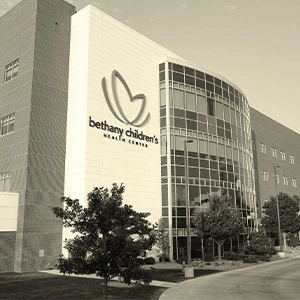
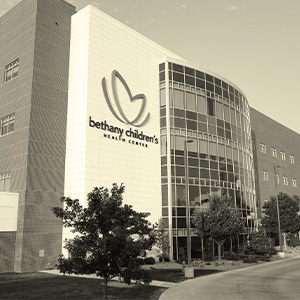
Bethany Children’s Health Center is a private, nonprofit pediatric hospital and rehabilitation center in Bethany, Oklahoma, west of Oklahoma City. It specializes in caring for children with serious medical conditions, disabilities, injuries, and complex rehabilitation needs.
What makes it unusual is that it is the only inpatient pediatric rehabilitation facility in Oklahoma.
It began in 1898 as an orphanage, founded by Mattie Mallory. It evolved over more than a century into a specialized children’s hospital and was known for many years as The Children’s Center Rehabilitation Hospital. In 2022, it adopted the name Bethany Children’s Health Center.
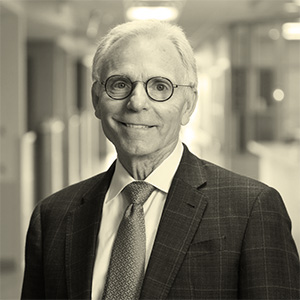
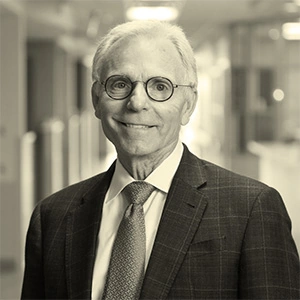
Alpert Gray is Executive Director, Chairman of the Board of The Bethany Health Center. Hired originally to close the Center due to its poor financial performance, Gray instead turned the organization around, leading it to become one of Oklahoma’s foremost healthcare providers for children with disabilities.
Its mission emphasizes that every child has equal worth and should be helped to reach his or her greatest potential.
Full Interview Transcript
Chapter 1 - Introduction
Bethany Children’s Health Center is a private, nonprofit pediatric hospital and rehabilitation center in Bethany, Oklahoma, west of Oklahoma City. It specializes in caring for children with serious medical conditions, disabilities, injuries, and complex rehabilitation needs.
What makes it unusual is that it is the only inpatient pediatric rehabilitation facility in Oklahoma.
It began in 1898 as an orphanage, founded by Mattie Mallory. It evolved over more than a century into a specialized children’s hospital and was known for many years as The Children’s Center Rehabilitation Hospital. In 2022, it adopted the name Bethany Children’s Health Center.
Albert Gray is Executive Director, Chairman of the Board of The Bethany Health Center. Hired originally to close the Center due to its poor financial performance, Gray instead turned the organization around, leading it to become one of Oklahoma’s foremost healthcare providers for children with disabilities.
Its mission emphasizes that every child has equal worth and should be helped to reach his or her greatest potential.
Listen to Albert Gray talk about the children who benefit from the health center and a major donation on the podcast and website VoicesOfOklahoma.com.
Chapter 2 - The Grays
John Erling (JE): Well, my name is John Erling. And today's date is October 21, 2025. So, Albert, would you state your full name, please?
Albert Gray (AG): My name is Albert Dean Gray.
JE: Is there a significance to the names in your life, “Albert Dean”?
AG: Yeah, Dean lived behind my mom and dad, and I received that name, and it's from Dean Ingram. And what's famous about Dean Ingram is that he was great friends with Johnny Bench. And so he was a banker. And so if you go to the Oklahoma City and you talk to the First National Bank people, Dean was part of that group early on in his career from the same small town that I was from, Lookeba. So Dean is still alive. He's about 90 years of age today. He brought Johnny to the children's center not too long ago. And of course I know that you interviewed Johnny, and that was a great interview that you had with him, not far back.
JE: All right. And Albert?
AG: And Albert comes from a preacher. There was this young youth preacher that used to come to our church. And my mom and dad really liked Albert as a youth pastor, and he's still alive. He lives out in Amarillo. And I was named after a preacher. They always said that I was going to be a preacher. And when you get a bunch of people praying that you're going to be a preacher, you kind of worry about that a little bit. But I think that -- I didn't… I'm not a preacher, but I sure do love telling the story of the Lord.
JE: Your birthday?
AG: July the 19th, 1953.
JE: Your present age?
AG: 72.
JE: And we are recording this interview in the facilities of Voices of Oklahoma here in Tulsa. Where were you born?
AG: I was born in Anadarko, Caddo County.
JE: Your mother's name, maiden name, and where she came from?
AG: Helen Bussell. They lived in Oklahoma. They lived in South Oklahoma, but they moved to Lookeba early on in their life, and Faxon or someplace like that south of Oklahoma City. They came to Oklahoma City.
JE: What was her personality like?
AG: My mom was very energetic. She was very smart. She did the bookkeeping for my—the Gray Oil Company—and all my dad's interest that he had in Western Oklahoma, and self-taught. She had—she started out with a 6th grade education. She likes to always point out, “I went ahead and got my—I went back and got my studies, so I got a certificate as I graduated”—but basically, she went through the 6th grade, a wonderful, hardworking lady.
One interesting thing about her is when they started, in their young marriage life, they weren't sharecroppers. They worked for sharecroppers, so they were actually—she picked cotton—and so my younger brothers had that opportunity to pick cotton alongside them. So they said they were dirt poor, and where were they picking cotton—they was picking cotton in Caddo County. And my dad was working, changing oil and filling station type work—working at a station.
JE: So then your father's name?
AG: His name is Alvin Arton Gray. And so they called him AA Gray, “Shorty” Gray.
JE: All right. So then where did he grow up?
AG: He grew up basically in the same area, in the Caddo County area.
JE: And then his personality, what was he like?
AG: Storyteller, you would like him because he was a very big storyteller. He was a very generous person, along with my mom. They were very generous and they were a very hardworking couple.
JE: What did he—you've alluded to it—but what did he do for a living?
AG: Well, at the beginning, he had a higher ed—not a higher education. I say that tongue in cheek. He had a 3rd grade education. So Dad was born in 1911. And so, look at 53, he's 40, I'm 42 when I was born, and I'll go through that family history when you ask me those questions, but Dad was just a hardworking guy, and pivotal moment—I've heard you talk about the time, a place and time that changed his life. He gave his heart to Christ after my oldest brother, who was born in 1935, was born. And when he did that, he wanted to learn how to read the Bible. And that's how he learned how to read.
And so he has an incredibly rich history for us to all—to look up, for me anyway, for us as a family to look up to. And then he—learned how to read—this filling station that he was working in, he eventually bought that filling station. The farms that my mom was picking cotton from, he eventually bought those farms. And then he kept the oil royalties. He was just an entrepreneur second to none.
JE: Second, so they—discovered oil in that land?
AG: They discovered oil, and he has many acres of land all over Caddo County, which is the Anadarko Basin.
JE: And he came up with his money through that gas station?
AG: He came up with his money through the hard work. And then he accumulated different properties and things. Not the -- oil did not create his wealth. His hard work created his wealth and not spending more than you make. And so, that's how they achieved the accomplishments financially, but he never did feel that financial was the—a measure of someone's success, it's how that you treat people and how do you serve others was his philosophy.
JE: Would you say he became wealthy?
AG: I'd say he—yeah, he never would say that—but he made a substantial amount of money just this last year that he owned some of the oil royalties that he gave to all of his kids, and I've given all my oil royalties that he gave me to a charitable foundation. And which goes mostly to the children's center, and all—there's 5—there's 6 of us, but 5 of us is putting all of our money that he helped us have -- make -- is to charity, and that's what he would want. So all of our oil royalties are going to be transferred into a charitable organization.
JE: But he's no longer living, is he?
AG: No, no, he died in 1999, so that's 20-some-odd years ago.
JE: And then you had brothers, sisters?
AG: Yes, there's 6 of us in the family. And so remember I'm 1953 and I have a brother that was born in 1935 and he's still alive. Our family never did emphasize going to college, but they emphasized hard work. My brother -- 1935 model, if you will -- he was taking a friend of his to OCU, Oklahoma City University. And he wasn't planning on going to college.
I mean, we—at that time, the oil—we were delivering fuel through farmers all over the place. We owned a few stations. I teased with the Love family when I used to run into them, I said, "Well, if I'd have stayed in the family business, I've been one of your competition." I don't think that really worried you.
JE: Love?
AG: Love—the stations all over.
Well, he had a few stations in Caddo County, and he grew that business selling propane and gasoline and diesels to farmers all over Caddo County.
JE: Did you ever think about wanting to be in that business?
AG: I thought about it quite a bit. I was—one of the guys that used to deliver fuel to us, this guy Clyde Evans, he's from Mangum, Oklahoma. He has a foundation in Oklahoma City that he gives to, and he's passed away at this time too, but he used to come in with his big semi trucks and fill in some of our storage places in Hinton and Lookeba areas that we had. And so I always thought I was going to be in the trucking business, and so we were driving trucks when we were 10 years of age on the peanut farms, so that was just kind of a natural ambition that I had early on.
Chapter 3 - Career Path
John Erling (JE): Let's talk about your education, grade school. Where did you start?
Albert Gray (AG): Lookeba. Now, Lookeba consolidated with Sickles. Now, Lookeba is L-O-O-K-E-B-A. Some people say "Lookabaw," but I'm teaching you, John, it's “Low-Keeba”. And then Sickles, S-I-C-K-L-E-S, that was about 5 miles west of Lookeba, and they consolidated on their own, and they became Lookeba-Sickles, and it's still a school district today. So my graduating class—I graduated from Lookeba-Sickles. Started at Lookeba, and our graduating class had about 30 members in our class.
JE: In grade school?
AG: In grade school we had about 20.
JE: OK, so then you're talking junior high, and you're talking when you graduated from high school.
AG: Yeah.
JE: What year did you graduate?
AG: 1971 is when I started college, so—right there, in 1971.
JE: In high school, were you active in certain programs, or…?
AG: Not really. Owning several farms—my brother, who was back in—one of my, my second brother was born in 1940, he came back and farmed all Dad's farm, and Dad never did technically really farm, even though he had many farms. And he would rent these farms out that sharecroppers wanted to rent it. And then my brother came in and he started farming all these farms. So I had the opportunity—I guess it's an opportunity—to get up at my 6 o'clock hour and work with my brother and drive the tractor at a very fairly early age, and I think Dad was very proud of that because he wanted to make sure we all knew how to work hard.
JE: So you graduate in '71.
AG: Graduated in '71.
JE: Then you go to college.
AG: I go to college. Activities that you talk about—the reason I said not a whole lot of activities in my high school years because we would, anytime we'd have an excuse to work in the field, we—you could get out at noon back in those days, or they, during harvest, they would let out school, right? So that we could go run the combines and things. And so, I wasn't really—I mean, I was that C student that just never read a book and just showed up to class every, every day and made it through high school.
But yes, now college. I went to Southwestern College in Weatherford, Oklahoma, Southwestern University, and I graduated with a chemistry degree there.
JE: Why chemistry?
AG: Well, I picked my career by looking at a list of how much money people were making in different fields. And so I remember looking at this list, doctors makes X, a pharmacist made, I don't know, about 36,000 or whatever it was back in that day.
And so I looked at all these different career paths, and I said—not even applying myself in school, in high school, right? Or even grade school. Of course, grade school, they make you apply yourself. I didn't apply myself in going to school. I was involved in music, so we had a band, a gospel band with a group of guys, and we were singing in different churches and things. And that was—I was very active doing things, but not academically.
And so that's when I looked at that career path that I could go into, and I said, "I think I'll be a pharmacist." And raised up in our family, there was nothing that we didn't think that we couldn't achieve if we set our mind to it with God's help. Now, that's the caveat. That's just our background, and that's how we were raised up. And so I thought, well, pharmacy, I'll go to—how do you do that? You have to go to college, and you have to take these chemistry classes. And so I enrolled at Southwestern, told them I wanted to be a pharmacist, and they started me in my chemistry courses.
JE: I'm shaking my head because chemistry is so difficult for me. It was—if you said you were a C student in high school, how you mastered chemistry in college is amazing.
AG: I did know how to read. I often say I read on a 3rd grade level. I did not read very well. I read the Bible as a youth. I was very interested in God's word also because we was raised up in a house going to church. I think you were raised up basically the same way, as some of the things I read—going to church all the time, eating with the people. So I wanted—I read the Bible, but I didn't read any—I never read a book, you know, and I never was forced to.
But going to college, I had to apply myself because now I'm in college. Now, I didn't make the A's like Don Pray. I think he was the top of his class at OU Law School. Of course, Don is a mutual friend that both of us had. But when I went to college, I applied myself and I worked hard. I worked—I had a 300 mile paper route on the weekends. I worked the fields at home. My dad didn't give—I hadn't money when I started college because I just had money, because I worked all my life, and my folks paid me pretty good, but they made us feel like we earned that money. They didn't just give you money. And so when I went to college, I had some cows that my dad gave us, and I could take care of these cows, sell these cows, and he told me how we could do that. And so I came out of college with more money in my pocket than I did when I started college, because I continued to work.
Going into pharmacy school, I was accepted into pharmacy school, which was a big milestone. And during that time—I don't remember if it was 1 or 2 years—you had to go have all your chemistry classes, and then you make an application for pharmacy school. Well, I did that. I got accepted into pharmacy school, and I'm probably—I don't know, but this is my guess—there's probably not a lot of people that got accepted into pharmacy school with that C and B average like I did. But I think the teachers and the people at the college knew that I was not only going to college, I was working, and I would have all my classes over with by noon. I would go to summer school. I went to night school. When I had a chance, I took some classes in Oklahoma City. So I really dedicated myself to get through this education in a quick—in a very short period of time, and I basically did all my education within 4 years.
JE: Well, that's remarkable in this day and age too, isn't it? But then did you become a pharmacist?
AG: No, I became an intern, so I had my license to work in a pharmacy after I got into pharmacy school, and I got a job in Hydro, Oklahoma, in their pharmacy, and I was filling prescriptions. Those are the days that you had Valium and all those different drugs—some of them were kind of new on the market at that time—and I was filling these prescriptions, and I said to my friends, "I don't think I'm going to be able to be behind this counter and be a pharmacist." So I wanted to change my path. And so I talked to my counselor at the school, and I said, "How can I get a chemistry degree?" And they said, "Yes"—this pharmacognosy that you took, the medicinal chemistry and all these different things I took in pharmacy school, they applied it towards my chemistry degree, and so it didn't really slow me down from getting a chemistry degree, because they applied some of my pharmacy studies for the chemistry degree.
JE: Why didn't you think you could be behind the counter?
AG: It was restrictive for me.
JE: The routine, counting pills?
AG: The routine. And so I looked at the FBI, and I thought, well, if I have a chemistry degree, I wanted to be an agent. I didn't want to be a chemist for the FBI, but I wanted to be an agent. So I visited with the FBI agent out of Clinton, Oklahoma—see, I'm in Weatherford, so I visited with the agent there and talked about being an agent for the FBI. So we filled out paperwork, they did a background check and different things, and they were really encouraging me. But they said, well, you're not old enough to be an agent. “And, but you possibly”—then I wasn't officially offered this, but this is the agent—”possibly you could be a chemist in Washington, DC. And then after doing that for a couple of years, then you might apply to be an agent.”
JE: So what—how old are you right about now, then?
AG: OK, I'm 18, actually. I started college when I was 17, because I started that summer before my July birthday. So I'm 18, 19, 20—I'm 20, 21 years of age.
JE: OK. So did you go to Washington?
AG: No, I looked at the expense of living in Washington. We knew about balance sheets—I did all my life, because my mom was doing bookkeeping, and my dad even set my little brother and I up with—we owned a filling station ourselves when we were 15 or 16 and worked the station, so I knew about balance sheets. I knew about finances a little bit at a very early age. I remember one of the test questions in my pharmacy class said, "What is OTC?" That was a test question. Over the counter—over the counter drugs, that's an OTC. My answer was, "the Oklahoma Tax Commissioner," and the professor gave me credit for it. So I was thinking business-like rather than pharmacy-like.
I went to college. I didn't go with the FBI, and then I went to church one Sunday and had a friend that worked for the Oklahoma State Bureau of Investigation, and he was a chemist, and I said, "I like that." So I made an application to be a forensic chemist for the Oklahoma State Bureau of Investigation, and I was accepted right out of college.
JE: How long did you do that?
AG: I did that for about 7 years. So I worked for OSBI. I started out in Lawton, Oklahoma.
JE: Give us a few interesting cases that you might have had.
AG: Well, I was there during the time of the Girl Scouts murders up here in --
JE: In Locust Grove.
AG: Yeah, in Locust Grove. I did not work that case, but I was in the laboratory watching that case go on. There was a Sirloin Stockade killing in Oklahoma City. I was there during that time.
Chapter 4 - Bethany Children’s Health Center
Albert Gray (AG): So I'm a forensic chemist, and most of the things I was doing is drug analysis. Had the opportunity to come to Tulsa a few times when they closed down a few drug labs, help get all the equipment that they were making the drugs from, make sure that we safely tore it down. So I had those kinds of experiences, but mostly I'm in the laboratory doing drug cases.
John Erling (JE): But the Girl Scout murders—
AG: That was a different division of the Oklahoma State Bureau of Investigation, but it was still in our laboratory.
JE: So you did some—
AG: I didn't do anything officially with that case, but our lab partner right next to me was working that case. So—but you're still talking about those cases. You're really stretching my mind here, but those were some of the big standout type cases that was coming across our desk at that time.
JE: I never even thought about the forensics, like in the Girl Scout murders, because we've dealt with that in Voices of Oklahoma. So what would those chemists be doing in those cases?
AG: Well, you'd be doing blood analysis. You would do hair analysis. They didn't have DNA analysis back then, so you had experts that would do different testing, microscopic testing, and then just working with the agents that was actually working the cases.
JE: Right. So you did that for 7 years.
AG: I did that for 7 years, and at the end of that career—and I'm saying 7 years, but maybe 6 years for OSBI—and then I was hired by the Oklahoma City Police Department to set up their forensic laboratory. And so that was a job that I could come and go and help them set up their laboratory. I wasn't working that many drug cases at that time. And that was the whole transition of me…
…I don't want to overcomplicate this, but at the same time I was doing that—being an entrepreneur background—I was buying property in Oklahoma City. I owned a few rent houses. I bought some commercial property at the same time I was working for the government. And when I was about 23, I started making an application to build the largest nursing home in the state of Oklahoma. It ended up being that way—South Park Healthcare Center. And so I had an application to build a nursing home, which they called it a certificate of need. Had a certificate of need, and we built a nursing home in Oklahoma City. So I had to go back to school and get a nursing home license, but at the same time I was doing all that, I was working for the Oklahoma State Bureau of Investigation or the Oklahoma City Police Department.
JE: So your money wasn't necessarily coming from the OSBI. It was from money as a youngster, and your father, and you kind of grew into money. Because you must have had more money?
AG: Yes, I mean—
JE: —not every agent could do what you did.
AG: No, I was very fortunate to have my mom and dad—I have my 3rd grade education and my 6th grade education mom and dad—that taught us working principles back in the day. And I'm not telling you that I own a bunch of Texas Instruments, but I remember being in the laboratory with one of my other buddies, and I remember Texas Instrument was a big stock that was at during that time. And so we were buying a little bit of stock. But how much money did I make? I don't know. And I do know that God blessed me when I built that nursing home, and it was like—I'm making this number up—and I think I borrowed $2 million on that particular project. And not every 23 or 24 year old guy could do that.
JE: And how did you do that?
AG: I did that because I had accumulated cash, and I also—Dad gave away some of his farms to all of his kids. So I had a farm, right, that you could mortgage—
JE: Collateral. Yeah.
AG: —and so I had collateral. I had a house when I was—16 years of age when I went to college, had my house. So, it's a little bit different life than what your typical 16, 17 year old—
JE: Well, your parents gave you—
AG: They gave me a great opportunity.
JE: Yeah, they did. So you built the nursing home.
AG: Yes.
JE: And how long did you have that?
AG: When I built that nursing home, that takes us to what I really like to talk about. I mean, I don't mind talking about the education, the chemistry, and I often wondered, did I really receive a chemistry degree from Southwestern? Well, they gave me the Alumni of the Year award one year, and I walked across the stage and I asked the professor, "Did I really do that? Did I really—" Well, I guess I really did. And I know that I did. I didn't go to my own graduation though, because I was too busy working on other things, and I didn't know what the student union hardly looked like, because I was going to college to get a degree.
JE: You were too busy.
AG: I was too busy.
JE: The nursing home—did you keep it for a while? Did you sell it, or how did you—
AG: OK, I had the nursing home, and then the Children's Center came into play during the same time, in 1978. Now I have better recollection since 1978, so I'm building nursing homes, owning some property, and the Children's Center, which is the Bethany Children's Health Center in Bethany, Oklahoma, which started in 1898. Now, this is what I like talking about. They were getting ready to close the Children's Center, and my sister was already there.
JE: Let me just bring you back. Let's talk about the lady who started that orphanage, Maddie M. Mallory.
AG: Maddie Mallory, she came through Oklahoma in 1897. And when she came through, she saw orphans in the street. She was coming from Ardmore, going to Canada to work in a mission field. So when she saw these orphans—now, where did the orphans come from? They came from the orphan train.
JE: The orphan train.
AG: Yeah, there's an orphans—historically, there's a train that brought orphans from Boston, New York, different places to the Midwest so that they could work in the fields. And it's historical—there's books written about the orphan train. So she saw orphans that was not being picked up by families, because we're not even in a statehood in 1897. And so she had a heart and a passion for those orphans.
And then in 1898, she came back because she felt she was being called by God to help these orphans. So she started an orphanage in 1898—Maddie Mallory did. And she followed after the footsteps of George Mueller, who was in Europe, who did orphanages all over Europe and different places around the world.
When she moved out to Bethany, Oklahoma in about 1907, somewhere around there, she named the streets in Bethany. And what did we become statehood, in 1907, right? So she names the streets in Bethany, and the street that she named was Mueller Street. So right by our hospital is Mueller Street, after George Mueller. He died in 1898. So then she helped Bethany name the town when it became a town, and she named it Bethany. She was instrumental in that, and she named that after the famous “Lazarus rose from the dead in the town of Bethany.” So it has some incredible, rich history.
JE: So did the orphanage become known as the Children's Welfare League?
AG: It did, at one time, yes.
JE: Right. And you had several locations before moving it to Bethany.
AG: They had a location downtown, and then they moved to Bethany.
JE: Right. And Sunbeam Home of Oklahoma City?
AG: Sunbeam Homes spun off from that welfare league. The Sunbeam Home was founded because of the efforts of the Bethany Convalescent Center back in that day.
JE: And what was the Sunbeam Home? Was that an orphanage, or medical center?
AG: It's still a facility for the special needs population.
JE: And then the polio epidemic hits, and that's affected by the welfare league.
AG: Yes. And that's when the Children's Center became a hospital in the '50s and in the '60s, under the direction of Mr. Venable. So that's the rich history. It was started by a lady who felt she was called by God. It served as the polio rehabilitation hospital for Children's Hospital at OU. But it was a rehab hospital for the polio kids, and then by 1977, it kind of lost its way.
JE: But it became the Children's Convalescent Home of Oklahoma City in 1946, and later the Children's Convalescent Center, right? But they needed money for that, and didn't the Rotary Club of Oklahoma City and the Kiwanis help?
AG: Yeah, the Rotary Club helped build that, the first hospital. The Bethany Children's Convalescent Center—what they call the Rotary Annes, the ladies of the Rotary Club, they all got together, and they helped put the money in place to build the Children's Convalescent Center.
JE: So then in 1975, the Children's Convalescent Center faced an order from the State Department officials. Tell us about that.
AG: They didn't officially say you had to close, but the deficiencies that they had—it was going towards closure. They quit referring patients to the hospital in the state of Oklahoma, and this is back in the day of Lloyd Rader being the head of DHS. The Children's Center wasn't doing what it needed to do to take care of kids properly. And so in 1977, my sister was introduced to a guy who was the CEO, or the superintendent, of the Children's Convalescent Center. And it was going through difficult times. A church, the Pentecostal Holiness Church, took over that organization in '76, and they thought they could save it. But financially, it was underwater, and it wasn't going to be able to be saved. And so in '78, they needed somebody to close out that year, to close it down -- now.
JE: Let me ask your sister's name.
AG: Carol Gray.
JE: All right, OK. So she brought this to your attention.
AG: Yes, so she brought it to my attention. And so when it's going to close, she went through like 3 or 4 different superintendents that was trying to operate the home, in less than a year that she was there, OK?
JE: But she was a volunteer.
AG: She was a volunteer at $1.85 an hour, OK? And so she has a degree in education, and she was a professional singer. She was singing gospel music around the country. And so—she was Shorty Gray's daughter too. So she could afford to sing, and she could afford to work at the Children's Center for $1.85. And so she always felt she was called to be there. And when she met that superintendent, and she went there as a volunteer coordinator, she really fell in love with the Children's Center right off. And in that book, you'll find out some of those stories about how God captured her heart.
Chapter 5 - Long-term Care
Albert Gray (AG): Then when they're going to close it in '78, they couldn't get anybody to run it. Nobody wanted to hang their license there. And I had a license to run a nursing home, because I went back to OU for a class to get a nursing home license at the same time I was a forensic chemist, which is all complicated.
But I had a license, and I said, "Yeah, I'll hang my license to close it." People said, "Well, were you called by God like your sister?" And I was called by my sister, you know. But we came in, and it didn't take long to know that we needed to just do a few things that was just common sense—like the kids' teeth needs to be brushed at least twice a day. We need to be clean.
And so, a guy that didn't know anything about running a pediatric hospital—I didn't even know anything about running a nursing home—I just knew about finding the right people to help me, and all the different things that we've done over the years. And so we came in and we just started—I started cleaning floors at night, and I'm still trying to complete the building of my nursing home. Cleaning floors, mowing yards, and even feeding kids. If somebody didn't show up, or we had to fire somebody because they weren't treating the kids right, we would feed the kids ourselves, or we would find one of our friends that would come over and help us feed the kids.
John Erling (JE): OK, now we've got to remember this is not an orphanage. This is a—
AG: This is a long-term care facility for kids.
JE: What kind of kids? What's the problem?
AG: They were the spina bifida kids—and that's a big story all of its own, about the spina bifida kids not receiving the surgery that they need to put their shunts in, but that's a historical time in Oklahoma too. There were some Down syndrome kids—they called it back then, psychomotor retardation. Many of these kids needed the healthcare that we provided, but many of these kids needed to be back in a home or a different environment. And so we just started being practical and trying to get the families involved with these kids.
Back in the day, John—and this isn't to put a bad mark on the state of Oklahoma or anyone, we just evolved and we just didn't know better, right—but you couldn't get Medicaid money back in the day if they had parents. And so you had to give up the custody of your child to get care. And so we helped change that. A lot of different practical things happened over several years that we talk about in the book—our educational program, starting our first respiratory therapy program. All these different things happened based upon just trying to do our best for the kid, and rolling up our sleeves and actually doing the work ourselves.
I cleaned floors for 10 years. When Don Pray came in with the Reynolds Foundation and gave us $9.7 million, that was in 1997. I started in 1978, and now we're one of the largest freestanding rehab facilities in the United States. We have 1,000 employees. We have pediatric neurologists, 3 of them. We work closely with—we work closely with Saint Francis here in Tulsa, with OU. We have a pediatric physiatrist that no one else has in the state of Oklahoma. So I'm giving you a synopsis of the success of the Children's Center, but it wasn't a success overnight, right?
JE: Right. But you were hired to shut the place down.
AG: Hired to shut it down.
JE: How long did you think, "No, we're not going to shut this down. These deficiencies aren't that bad, and we think we can do that"? But then you also need money.
AG: That's kind of complicated, in the way I approached it. I never did think that I wasn't going to close it down. I just thought that while we're here, we're going to do the right thing for the kids. So we looked at the kids only. We never worried about money.
In the earlier days, I could have paid the bill—my dad bought us a washing machine for $4,000, and they were sending it all out to be commercially done, and we saved $5,000 a month. I'm making up those numbers, but it saved us money every month. We just did what was right, and we balanced the budget. The employees were making minimum wage that was working there—I don't remember what it was, but it's probably $1.50 or whatever it was, minimum wage. And one of the first things we did is we gave all the employees a raise; nobody was going to work for minimum wage -- while we're still financially busted.
So we didn't look at things like, "We have to raise money." But we went on TBN when TBN first came into town, and we just went to our churches and—
JE: Trinity Broadcasting Network.
AG: —and we went to different places, and people just, they rallied around us. When we received $9.7 million from the Reynolds Foundation in 1997, and we completed that project in 1999, the most money we ever raised prior to that was $100,000. We had a plan in our room since 1980, at least. I had an architect draw up the plans of what our new future would look like—"Now, that's living, this is what it's going to look like." But by the time the building was getting ready—it was falling down and needed to be replaced. I figured in 1997, "We're going to do this capital campaign." The Noble Foundation people helped us and gave me different advice.
And so I ended up making a lot of friends within the community who came alongside me and gave us advice. And that story is so long, it's longer than what even the book tells about it. But we had the foundations involved—from the Zarrow, to the Hardestys
JE: The Mabee Foundation.
AG: The Mabee Foundation—they just all came around us. But it wasn't until Don W. Reynolds came along and we made an application with them. And Don Pray—if you read in the book, how he wrote everything in caps—when he came and took the tour, him and your friend David, so when they came to the hospital and reviewed it, they awarded us with $9.7 million, and that really changed the trajectory of fundraising for the hospital.
JE: Right. But there were some challenges before that came along. The primary service for the children was the education program, which was directed by the Bethany school system. So talk to us about that, because there was a grant from the Oklahoma City Foundation that helped fund the budget to include special education teachers from Bethany school. So for those of us who don't know—you said long-term, while these children are being helped physically, they needed to be educated at the same time.
AG: The strongest thing that the Children's Center had going for them is that educational program at that time. But once we started doing the things that we needed to do medically for the children, the educational model was not sufficient to really carry us forward. Now, this is during the time of the Free and Appropriate Public Education law, 94-142, if anybody cares. When that law came into existence and the school was responsible, we had to change the paradigm of the school to say, "This is a medical facility." The kids that we can get back, that we can place back in the homes, we're going to do that. But we want an educational system that's run by the Children's Center, so we hired all of our own teachers. We work with Bethany Public Schools, our local public school, and they help monitor the IEPs that we do.
JE: Because at first you did not renew the contract with Bethany Public Schools.
AG: We did not, because we had to have a different model. Schools would take off for a week or two at Christmas, and then we would come back in and say, "They lost all the progress that they were making." And so we had to create an environment that we would have 24 hours, 7 days a week, all the time for these kids to reach their potential. And so we changed the educational model, along with a lot of friends.
JE: But Bethany Public Schools helped you?
AG: They absolutely did. They saw the necessity of us doing that, and they walked beside us. Now, when you're working in government regulations, that's not the easiest task to do. But at the same time, the Department of Education has been a great partner with us, but we had to change some paradigms.
JE: What are the ages of these children?
AG: Right now, we have two different populations. Our long-term kids that have very complex medical needs—and the average age of that population, I'm gonna just take a guess at it, it might be 11 years of age, and that includes many babies all the way up to 18, which is when you're not able to be there. But we have some kids that we still help take care of—there's one that's in a different unit that's 28 years of age. There's really not a good place for that child to go, and so we don't get the funding, but we care for the need of that kid.
JE: Are most of the problems that these children are facing from birth, or how did they come about this?
AG: That first population, a lot of them are congenital, from birth. But then we got into the rehab side, and that's kind of like—if you know Jim Thorpe in Oklahoma City, they're a rehab hospital. We're kind of the Jim Thorpe for kids. And so that's when we started growing into this other area of kids with car accidents, near drowning, football accidents, teenagers, and now we have the rehab team to take care of that group of people. And the way we got into that is we had many kids over the years that the system would give up on. They'd say, "This kid's never going to make any progress." And then they come to the Children's Center and they walk out—because we didn't give up. And quite frankly, 20 days of rehabilitation or 30 days of rehabilitation wasn't gonna do it.
JE: What do you mean, “they walked out?”
AG: They would physically get good enough to walk out of our facility.
JE: Oh, they'd get improved to that. OK, wonderful.
AG: Yeah. You know, so we saw those kinds of things happening, and that's before we were really technically a rehab unit—we were just taking care of kids in an excellent way. Now we're a rehab unit. And I've told you, 3 pediatric neurologists in the state of Oklahoma—the state may have 4 or 5, I don't know for sure, they don't have many, and we have 3 of them. And we have pediatric physiatry. We come to Tulsa—or I don't know if we do today, but we have come to Tulsa and helped them with their physiatry program.
JE: To help who?
AG: Saint Francis. And Saint Francis refers kids to our rehab program. Saint Francis has been a donor to the Children's Center over the years.
JE: Well, is that because Saint Francis is unable to handle some of these cases, and you're specializing in what they're not?
AG: I wouldn't say they are unable to do anything—Saint Francis is a great hospital, but they're an acute hospital, and we're a rehabilitation hospital. And some of the specialists that we've been able to attract—no one else has been able to attract those particular types of specialists. And so we are really in the center of rehabilitation for Saint Francis and for OU, and even out-of-state hospitals will send their kids to our facility.
JE: So are you the only children's rehabilitation center in the state of Oklahoma?
AG: Yes.
JE: Wow, what a need that is filling.
AG: Yes, and we have people from all over the United States starting to come to the Children's Center. I think that's the reason Don and the Reynolds Foundation— and Don wrote such a complimentary introduction to our book—because it's just, it is an incredible ministry, and it's an incredible group of people that does excellent care for that rehabilitation.
JE: So I keep bringing up these challenges before all that happened, because in the '70s and '80s, there was a national movement to close many state institutions and private facilities. So they thought it would be better to put them in group homes. Why didn't that work?
AG: Yes, group homes—I'm 100% behind. But there's a certain population of kids that we had—you couldn't. You and I remember when they closed down Enid State School, there was a big lawsuit, or whatever, but they were trying to take all those kids and put them in a group home when they had a very dedicated mom. Now, at this time, we had all—not all, but many of the parents very involved with the kids' lives. So we got away from that, "Oh, you have to give up the custody of the kids." Our requirement was, "You got to be involved with your kid." And so now the families are coming in to visit.
We had families that was very dedicated, took care of their kids for 7 years, and then they just hit a wall with their healthcare, and then they'd come to the Children's Center, and then we'd work trying to get the kid back home or placed into a different environment. And so that group home did not work for everyone, and so we had to go through that whole process. But I looked back at it, and I said, well, it wasn't that difficult, but it took several months of conversation and several meetings to say the importance of the healthcare that we're providing—but the excellence and the outcomes that we were receiving spoke for itself.
JE: How long, even today, or in the history of the center, has a child remained with you? A year, 2 years?
AG: The average—I'm going to say the average stay of that long-term kid is 3 years. The average stay of that short rehab kid, that was typically being developed and involved in a car accident, 45 to 60 days.
JE: And who's paying for that?
AG: Most of our money comes from the Oklahoma Healthcare Authority, which is through Medicaid. And the way we're reimbursed—that's a whole podcast on its own—but the way we're reimbursed is different than typical hospitals being reimbursed. But the reason they've had an exception to the way that we're being reimbursed is because we're very, very efficient in what we're doing. And I never went to the state and asked them for more money just because I could—we always had a cause and a reason.
And so we've had incredible relationships, going all the way back to Lloyd Rader—which was friends of my dad from Lookeba, they owned a farm or so together—all the way back to that relationship, all the way to Governor Nigh, Governor Keating, Governor David Walters, a great friend. His wife was on our board. I mean, we have the Democrats and we have the Republicans, because the one thing we all have in common is that we all want to help see kids achieve their best potential.
Chapter 6 - Founders
John Erling (JE): Do you get calls from out of state? Somebody from Massachusetts, or any other states?
Albert Gray (AG): I've had people fly in from Las Vegas. We've had people from Texas frequently, California.
JE: OK. So how do you handle that?
AG: Well, if they need our rehabilitation services, we make arrangements. We don't look at, "Oh, is this going to meet our qualifications on our reimbursement?" That's a little bit different than other things, but we do get our reimbursement because of the relationship we have with the state of Oklahoma. But at the same time it's not guaranteed, and we just—we take care of the kids—
JE: So you don't have to be from Oklahoma to be in your hospital.
AG: No.
JE: And so you are bringing in—in the United States. So there must be other rehabilitation centers.
AG: There are a few other facilities. There's not very many, if any, that has the complexity of the two types of populations—the population that we started with, but a little bit more specialized in its population, because many of those kids—we have many discharges every year from the long-term kids, and we have many discharges, obviously, from the rehab kids, because that average stay is 60 days. So we're moving kids in and we're moving kids out.
We have 20 or 30 kids on ventilators—total ventilators throughout the state of Oklahoma—that we help support in their homes. So we help place them back in their home and help support them in their home.
We have educational programs, 65 different schools that we go to all over the state of Oklahoma, where we help educate kids on healthy eating—don't ride your four-wheeler without your helmet—and a whole bunch of different programs that we're doing.
We have sporting programs that give these kids that are in a wheelchair the chance to have wheelchair basketball, not only our kids at our facility, but other kids throughout the state, helping them go to the Special Olympics program. So the Children's Center is very involved with the special needs population. It is a program that's really trying to take care of that.
JE: You're familiar with the Little Lighthouse here in Tulsa.
AG: Absolutely. Uh, Mitchell—what was her name?
JE: Marcia. Marcia Mitchell.
AG: Yeah, yeah, she's helped us out, and she's written a book, and she's been on one of your podcasts too.
JE: But she does special needs, and that's different.
AG: It's different. The complexity, from the healthcare side, we're more complex. But no, she's second to none, and her story—she talks to my sister every now and then, and they've shared books together. Yeah, she's been a good friend of ours, and we consider ourselves a good friend of hers.
JE: Let's go back to 2012, this four-story bed tower. Why did you need to build that?
AG: So we built our rehab unit, and it was such a success, and all these doctors are starting to come now. When we built the first rehab, we had a doctor out of Missouri—a pediatric physiatrist—that came and helped us. And the odds of that—there's only 200 or 300 of these people in the United States, and one of them wants to move all by himself to start a program that doesn't exist yet. And he came, and then that put us into that second, $10 million building.
And then that grew so big that we had to build this $30 million project, to house all the doctors and house all the rehab patients that were coming to see us. And that was only opened, like, 5 years ago or so—6 years ago—and now that is outgrown, and that put us into this next big building project, of $178 million.
JE: Which you're into right now. You haven't raised the funds for it fully?
AG: Well, yes.
JE: Oh, you have. Have you started building?
AG: We have, we have, and it's complicated how, but we have all the money in place to do that. We're still raising some money for different projects within that building that we have as alternates. But that building is going up, and hopefully I can get you to Oklahoma City to see that building, but it's unbelievable. It's right on Route 66, and it's gonna be an incredible space.
JE: This, four-story bed tower—didn't Mark Green of Hobby Lobby come along and…?
AG: And yes. So in the $30 million—the first tower that we had, the first 4 stories that we have—Mark Green and the Green family, which you've interviewed David, I've heard that interview too. They are an incredible family. They don't have a foundation as such, so you don't make an application for money. I see Mark—he lives way below his means, and I happen to live in the neighborhood that he lives in. So I see him, I see him walking, and I never asked him for a dime. I never went to lunch with him.
And he calls me up one day, almost at the end of that $30 million project. And he said, "Our family's been talking, and we've been praying." He took me to Panera Bread one morning, 7 o'clock. He said, "We want to give some money to the Children's Center." He said, "We want to give a million dollars. Can you use the million dollars?" Now, I hadn't asked him for any money—I teased him, and he said, "Why haven't you ever asked us for anything?" I said, "I didn't see your t-shirt say, 'Please ask me for money.'" And I wasn't going to ask for money.
And so he saw the project was almost completed. We had a matching grant from the Mabee Foundation in Tulsa. Now, I'm gonna say $3 million—you have to raise $3 million to get whatever the money—I don't really remember the numbers. But we were like 2 or 3 weeks out from making all the money that we needed for that matching grant from the Mabee. And we thought—because we'd been talking to them—the Tandy Company here in Tulsa was going to give that last million to help us match what the Mabee Foundation needed. And for some reason, the Tandy had to go a different route. So they called us and said, "We're not going to be able to be part of this project, but keep us in mind"—they're a great organization, the Tandy Company. They made the announcement they weren't going to be part of it.
I told Mark Green that I didn't really need a million dollars for this project, but we could use it for this other project. He said, "Do you need the million dollars?" We didn't really think we needed it for this project. So he comes in one week,Tandy backs out another week, and the next week I had to have his money to make the Mabee Foundation match. And that's kind of like, how did all this happen? His check came in 2 or 3 weeks. They say they're giving you a million dollars, they're giving you a million dollars—so his check came in, and we had the money we needed to get the Mabee Foundation. So that's how they got involved in the first project.
The Gaylord Family Foundation gave a few million dollars, and they have the conference center, and then the Hobby Lobby family has the Hobby Lobby rooms within the Gaylord family building. Now, he says, "Next time you do a project, would you please talk to me?" Now, that's an opening to talk to the guy, right? And so when we did this $178 million project, we talked to him, and they have invested a lot of money into this project.
JE: More than a million?
AG: Yeah, more than 10, more than 15—they invested a lot of money. So people in the community—we only had to raise $30 million to get this project going, and then, because of some government-guaranteed funding that we were receiving, we had the rest of the money. But people—we still make applications to the foundations, but they're all kind of joining in together. We had a group—I'm not gonna tell you the name, because they don't want their name mentioned yet—but there was another foundation, just here recently, a couple of weeks ago, that called and said, "I'd like to have a naming opportunity in this building. Do you have anything that we could do for $2 million?" That's a foundation.
JE: You have special programs—adaptive recreation, fine arts program. You even built a Miracle League Ballpark. What's that about?
AG: We have a ballpark that's wheelchair accessible, and they play—what is it, Savannah Bananas, or the famous team—when they come to town, they come out and play with our kids on our ball field. When Johnny Bench was there, he loved our ballpark. State-of-the-art equipment that we have for the kids on physical therapy—things that no one else has. God's blessed us with it.
And so these kids are valuable. They were valuable to me when I came in 1978. They can't do a lot of the things—their daddy wasn't Shorty Gray. They didn't have the same opportunities that I have, but they're just as valuable as anybody else. And so, Carol and I and the community leaders, we see that this population is valuable, and we want to make a difference in their lives.
Chapter 7 - All Faiths
John Erling (JE): You must have stories of children coming back to you and saying “thank you for what you did for me.” Do you have that happening?
Albert Gray (AG): We have people coming back from the '60s saying, "I was there as an orphan." We have people all the time that do that.
And you know, how does your faith work? I remember there's a young guy named Teddy, and I was reading a book about God being with you during difficult times. Well, I hate to tell you this, John, but sometimes I question my own faith about certain things, OK? And I don't know whether there's anything wrong with that, but I was questioning that that day for some reason. And so I went to Teddy—and he's on a ventilator, he was hit by a car when he was 6 years of age, and he can only move his right hand, and he's on a ventilator. And I asked Teddy, I said, "Teddy, I was reading this book about God being with us during difficult times. What do you think about that?" And he—he has to gasp for air because that ventilator has to do it—he said, "If it wasn't for God, there's no way I could have gotten through this."
So the Children's Center—well, I always had to earn a living outside of the Children's Center. I've owned a manufacturing plant that we didn't talk about. I've done real estate and different things. But the Children's Center really has taught me to slow down and be a little bit more thankful for what I have as an individual, for what we have as a society, and what the kids even have here. So it's an incredible place, and that's my favorite subject. And so I really appreciate you letting me talk about my favorite things.
JE: And when you see those children with the physical disabilities, it keeps you from taking for granted the fact that you can walk and talk at the same time, because some of them can't do that.
AG: That's absolutely true, each and every day.
JE: Wasn't there a point in time you had to decide whether you're going to be known as a Christian hospital or not? Why—you came to a crossroads there one time.
AG: Carol and I, being raised up in our Christian background, we were praying, and we had chaplains and different things. But we never did say we were a Christian hospital. We said we're a hospital with Christian principles.
One of my best friends that came alongside us early on was a Jewish friend of mine—Ken Henderson and Rose. They were one of the first big donors to our hospital. Melvin Moran, down in Shawnee.
JE: I've interviewed him.
AG: Yeah, you've interviewed him. I've listened to his interview. He was a great friend, and I was on the board down at the Children's Museum, which is a wonderful place. And so I brought in a couple of leaders—Mark Green, and Terry Feix, and a few Christian leaders—when I was trying to make a transition of not being the CEO anymore, but how do you keep the culture the same?
And so Terry Feix said, "Well, you're either a hospital with Christian principles”—that's what we were—”or a Christian hospital." And in the day's environment, if we're going to be able to pray over the intercom, with all the things that were attacking us and saying, "Oh, you can't do that," we said, "You either gotta be, or you're not gonna be." You're not gonna be able to do the things that you think you want to do, or they're going to take your Medicaid money away from you.
And so we said, "OK, we're going to be a Christian hospital." So I talked to Melvin Moran, my Jewish buddy, and he came up—and he was actually in our chapel at the Children's Center when I was telling him this. I said, "Melvin, we're thinking about changing our bylaws, saying we're a Christian principles"—and he said to me, "Well, Albert, that's who you are. Be who you are." And so I really felt good about making that transition, just saying that in our bylaws. We have room that we can have one of my Jewish friends on the board too. And our people that we hire are of all different denominations—we have our Hindu doctors, we have a wide variety of people that's helped support the Children's Center.
Not too long ago, the Jewish Federation ladies came out from Oklahoma City, and they've been supporters, and I've supported the Jewish causes too, and I've been to the synagogue with them. And they came out, and I was just patting them on the back, and said—now, I just went to Rome not too long ago, and I found out I was a protester, you know, from my good Catholic buddies. They called me the protester. And I said, "What do you call me?" And my Jewish friend put her arm on my shoulder and said, "We call you a friend." And so that's what we need to do to each other as a society.
The Jewish—we used to have a Christmas Wonderland, and my Jewish buddy said, "Why don't you call it a Holiday Wonderland?" Well, you know, but they'd let me by with it—we call it Christmas Wonderland. And then the Jewish young people came and worked our Christmas Wonderland on Christmas nights so that we could do our services the way we wanted to do it.
JE: This is a great story—about Henry Zarrow, and since you've received money from the Zarrow Foundation, you'd probably know the name of Walt Helmerich.
AG: Yes.
JE: And Walt Helmerich was a big assistant to me as we began this project. One day—they would go to lunch once a month, and one day Walt says to Henry, "First Presbyterian Church is on Capitol Drive, and I'm going to give a million dollars. Would you give a million dollars?" And Henry says, "Yes, I will." So this is just so like Walt, he says, "Well, why, Henry—you, a Jew, would give to a Protestant church?" He said, "Because I love you, Walt." Now, that's friendship.
AG: That is friendship.
JE: And the spirit of giving.
AG: And it has to go back both ways. And I love that our Jewish community that we have in Oklahoma City—and we have Jewish kids that come to this hospital, and we treat them with respect and bring the rabbis in to help them with their traditions.
JE: Did this affect the Medicaid money?
AG: No, it does not. But you have to be who you are. There's organizations now—the Christian Freedom Alliance and different places like that—that stand up for organizations, if that's who you are. And so we feel very protected about that, but we're not discriminating against anybody.
JE: OK. But are you getting money from the federal government?
AG: We're getting Medicaid dollars, yes—which comes through the state of Oklahoma, matching funds, and the federal money comes through our Medicaid program in the state of Oklahoma.
JE: OK. And then it comes to you. So what about the future? Does the hospital need to expand, expand, expand? You've been expanding all this time.
AG: I never look at it as, "I'm going to expand for the sake of expanding." I think the expansion that we're doing right now is totally driven by care and the amount of doctors that we have in closets in our existing building. We have our Willoughby expansion. We own most of the property behind us. It's like my dad—I didn't want to own all the property, my dad didn't, he just wanted the farm next to his. So we've been buying houses around our place for many years.
And we built our first smart home back there for a special need population that's in a wheelchair. So a kid that was living in Altus, Oklahoma wanted to go to college, doesn't have the transportation—we helped move him into a smart house.
JE: What’s a smart house?
AG: It's made so he can live in it in a wheelchair. He can cook. Everything is made for handicap accessibility.
JE: And college and—
AG: We built it on our property, and we moved a kid in that used to be a patient at the Children's Center, and he has his own home there, behind our campus.
JE: Wow.
AG: And so I like to see that program expand more, because these kids—the most underserved people are our special need population in the state of Oklahoma, from the church perspective and from everybody—and why we need to give them opportunities. They have the ability to work and to help our society’s system. But that's what we're trying to do, and so I think that's gonna be another big expansion area that we do in the future.
JE: What sort of advice do you give to young people, either they want to be in healthcare or just in general? What advice do you give them?
AG: It's kind of like my dad, and some of my preacher—my church people—saying, "You're gonna be a preacher." Well, I just say: Serve God, and whatever direction you're able, that you feel called to do, and whatever your passion is, let's follow that—because, as you've heard the story, if you love it like you love your radio, you never worked a day in your life. And so I want young people to do that.
But I like to see young people be involved in healthcare. It's such a wide range of things that you can do—we need accountants in healthcare. We have a pediatric geneticist that just joined us—calls us and says, "Well, I would like to join your team." These are people that people spend thousands of dollars recruiting, and they want to join our team. So I love healthcare, and I even love—I love cleaning floors, because that's what I did so many years there at the Children's Center. Just go to work and do what you can to make society a little bit better.
JE: Well, I want to thank you, Albert, for telling the story about this miracle hospital, we'll call it—because you've seen a lot of miracles there.
AG: We really have. It's full of hope, faith, and love.
JE: Thank you, Albert, for telling your story.
AG: Thank you, John.
Gallery
Production Notes
Bethany Children’s Health Center
Program Credits: Albert Gray — Interviewee John Erling — Interviewer Mel Myers — Announcer
Bethany Children’s Health Center. "Bethany Children’s Health Center: The Only Inpatient Pediatric Rehabilitation Hospital in Oklahoma" Voices of Oklahoma, September 17, 2026, https://www.voicesofoklahoma.com/interviews/bethany-childrens-health-center/, Accessed October 8, 2026