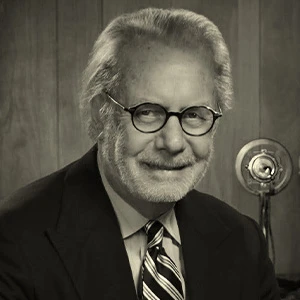
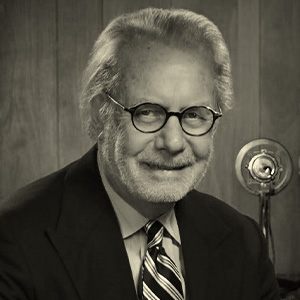
Tulsa Radio Personality & Voices of Oklahoma Founder
Founder of Voices of Oklahoma and Tulsa radio personality John Erling shares the story of his life, his career, and the lessons he has learned in his work to preserve the voices, legacies, and wisdom of influential Oklahomans for future generations.
John Erling, a self-described “North Dakota farm boy,” was raised in Grand Forks, North Dakota. His early interest in performance emerged at the age of three, when he delivered impromptu sermons to the chickens on his family farm. This formative experience foreshadowed a distinguished career in radio. He spent five years with Northwestern College Radio in Minneapolis, Minnesota, before continuing his broadcasting career at WDAY in Fargo, North Dakota, and later at WOW and KOIL in Omaha, Nebraska.
In 1976, Erling moved to Tulsa, Oklahoma, and began broadcasting on KRMG. Following a 45-year career in radio, in 2010 he founded Voices of Oklahoma, an oral history website through which he has interviewed hundreds of Oklahomans. He is a member of the Oklahoma Association of Broadcasters Hall of Fame, the Oklahoma Historians Hall of Fame, and the Tulsa Hall of Fame.
This interview was recorded October 9, 2014.
Full Interview Transcript
Chapter 1 - Introduction
John Erling, a self-described “North Dakota farm boy,” was raised in Grand Forks, North Dakota. His early interest in performance emerged at the age of three, when he delivered impromptu sermons to the chickens on his family farm. This formative experience foreshadowed a distinguished career in radio. He spent five years with Northwestern College Radio in Minneapolis, Minnesota, before continuing his broadcasting career at WDAY in Fargo, North Dakota, and later at WOW and KOIL in Omaha, Nebraska.
In 1976, Erling moved to Tulsa, Oklahoma, and began broadcasting on KRMG. Following a 45-year career in radio, in 2010 he founded Voices of Oklahoma, an oral history website through which he has interviewed hundreds of Oklahomans. He is a member of the Oklahoma Association of Broadcasters Hall of Fame, the Oklahoma Historians Hall of Fame, and the Tulsa Hall of Fame.
In his oral history interview, recorded October 9, 2014, John talks about his fundraising for community needs, the Tulsa Mountains, and the day he was fired by KRMG on the oral history website and podcast Voices of Oklahoma.
Chapter 2 - Homesteaders
Clayton Vaughn (CV): Hello, I'm Clayton Vaughn, and today's date is October 9th, 2014. Our guest today is John Erling. So, John, state your full name.
John Erling (JE): Yes, my full name is John Erling Lowell Frette.
CV: And your date of birth is?
JE: October 9th, 1941.
CV: Now you're the -- and your present age is about 73, right?
JE: Yes, it’s about 73. Right.
CV: And this is your birthday?
JE: Yes.
CV: Happy birthday to you, sir.
JE: Thank you, sir.
CV: I hope you have many more and good health and long life and all of that kind of stuff.
JE: Right.
CV: This is your project, this Voices of Oklahoma, and we should say at the outset that you do this as a public service, really, to try to make sure that the views and expressions of prominent Oklahomans and others are preserved so that future generations might look back, listen back, and find out who these people were who helped shape our state. And there were several people, myself among them, who suggested that you, indeed, were one of those people. And that ‘where were you in the lineup?’ And you always said, "Well, it wasn't me," and I said, "Well, if you need somebody to do an interview of you, I'd be happy to do it," and I talked you into it and here we are. So, thank you very much. We are at your studio, not mine, so thank you for the hospitality.
JE: Well, I'm very grateful that you asked and very honored that you would do this interview.
CV: You were born in 1941 in Thief River Falls, Minnesota.
JE: I was indeed, but I was born in Thief River Falls because my mother went there to birth me. We actually lived on a farm 13 miles south of Grand Forks, North Dakota.
CV: Thief River Falls is a big … town?
JE: No, it isn't, but it was big enough to have a hospital, and she would be in town as opposed to being on the farm. And so then I came home to the farm 13 miles south of Grand Forks, which was homesteaded by my grandfather, which I'll get into.
Let me just state about my mother, as we've talked about her, and her name was Luello Amanda Vickerslund, and she was born January 20th, 1906, and she died 57 years old. I was 21 years old or so when she died and didn't understand the significance of age then and thought that 57 was old, and I realize now at 73 that 57 is so young and I feel bad to this day that she was not able to live as long as I have and enjoy life.
And then she was born in the Rock Prairie, Minnesota area and she grew up in that area. She, her father…
CV: On a family farm or in a farm situation?
JE: On a family farm, and then her father had contracted tuberculosis. And she was at home caring for him and then she contracted tuberculosis, was in a sanatorium for one stay, and then as she became older and my mother in Grand Forks, she went back to the sanatorium again, so she had two bouts with tuberculosis. She was a very nurturing, loving mother, and she's the one that brought us off the farm to bring us into Grand Forks, North Dakota, which was the town that I grew up in.
CV: How did she ever come to have a name like Luello?
JE: I have no idea.
CV: Never heard it before.
JE: I don't know who she was named after. Never asked, ya know? I will say there are many questions that we think of later on in life that we should have asked when they were around. And so if there's anything about this interview, it will prompt people in their 40s, 50s, or whatever to think of all the questions you'd like to ask. Do it now -- because one day it'll be too late. So I never did figure out Luello.
We lived on the farm. They were married and lived on the farm. Two years later, I was born and they lived in the same house with my grandmother, and that happened a lot back in those days. Families lived with each other. My father's name was John Arnt Frette. He was born March 21st of 1903 and he died when he was 88 years old. So he grew up on this farm now that we're talking about that my grandfather homesteaded. And so the two of them lived there with my grandmother; and so my mother had grown up on a farm, but I would credit her more with being the mother who took us to town rather than the farm wife.
Her mission was to get us back into town. She did not want to live on the farm. But my grandmother fits in what you're talking about as being the pioneer woman.
CV: Who was she? How did they get -- how did your grandparents start? And I assume it was your grandparents' homestead.
JE: Right. Yeah, well, my grandfather … Once I get to heaven and I've said hello to Matthew, Mark, and Luke and John, and maybe Moses, I want to say hello to John Gustaf Frette.
All my grandparents, both sides, my mother's side, my father's side, they were all born in Norway, and my grandfather -- born May 25 of 1851 -- he died when he was 61 years old, but he came to America for the first time in 1891, and he was 40 years old.
And then he lived in a dugout, and he homesteaded this land -- 160 acres -- and as people know of homesteading, if they would promise to improve the land and build a homestead there, then that land was theirs. So when he comes from Frette, Norway -- and I have been to Frette Norway many times where they just raised some sheep -- and while it was beautiful and the acreage was small, he comes here and I know he felt like a land baron with 160 acres, so he came in 1891.
John Erling [Voiceover, 2026] I'd like to interrupt your listening to this interview I recorded with Clayton Vaughan in 2014 in which I began to tell you about my grandfather coming from Norway in 1891. He secured land through the Homestead Act. Now the reason I'm adding this addendum is because I now have my father telling that story. Of course, my father knew the story because his parents had handed down these stories to my dad and his brothers and sisters, but of course never recorded. But, fortunately, I was able to record my father talking about his dad, my grandfather, coming to America in 1891.
John Arnt Frette (JAF): When my father came across alone before he was married, I came across on the boat, and then he came to Grand Forks, and then he went south to Grand Forks 13 miles. And here he made the application for land there. He had to live on the place 6 months of a year. So he stayed there during the summer and then the fall comes, and he went back to Norway. Then the next spring he came back again and he built the house. There's this old prairie around there and here comes the prairie fire and burned the house down.
The next fall he went back to Norway again; and he’d come back and he built the second house. And the tornado took that one. Then they put up a log house. And that stayed until they tore it down when they built the other house. The first summer he was there, he dug a hole in the ground, and threw cover over it, just like a root house. He stayed in there and slept in there.
John Erling [Voiceover, 2026]: It is fun to hear my dad's voice with a Scandinavian accent telling that family story. And now I return you to your regularly scheduled interview.
JE: … And then he comes back in 1894 with his bride, who was Ingeborg Christine Tornborn's daughter, Frette, and she was born April 23rd of 1858, and she was the pioneer woman, but he was the adventurer one. He brought us to America. And I have nothing but honor and praise for this man who didn't give up, knew that this was the place to be, and the two of them raised 5 children there on that farm. He died early and she ended up raising most of them. So that's our beginning on my father's side.
CV: So is that where the homestead -- the farm that you were born to -- came from?
JE: That's where we came home and we lived there and then moved to town when I was about 3 years old.
CV: Is that the same place that the dugout was?
JE: That is correct.
CV: That's where “dirt poor” comes from, right?
JE: Right. And my father was born in that log cabin and then wonders why he didn't become president of the United States.
CV: (Chuckling) Well, they already had one who fit that qualification.
JE: Yeah, right.
CV: So do you have siblings?
JE: I do. I have a brother -- one brother -- and no sisters. His name is Luther Hans Frette. He's 6 years younger than I am, and education was his calling. I remember he would play school on the front porch of our house in Grand Forks when he was 5 years old, and he went on to become a 9th grade teacher specializing in Billy Shakespeare -- William Shakespeare -- and retired after 40 years. He was inducted immediately into the Educators Hall of Fame in Grand Forks, and I've been with him. He walks around town like a rock star because they all come up to him and talk to Mr. Frette. But on my -- we can finish that on my mother's side. They too came from Norway. And my grandfather -- my mother's father -- was Elling Ellingson Vickerslund. He was born October 13th, 1863, and he was 66 years old when he died.
He came to America in 1890 at 27, and then his bride that he met here in the United States was Amalia Gunhilde Thorson, and she was born October 19, 1866. She died on May 21st of 1943. She was 77 when she died.
But she came to America in 1885, and of all my grandparents, she was only 19 when she came, and then she came and lived in Wilmer, Minnesota. She worked for some time in Minneapolis. Then she met Elling, and they married in 1894, and then they lived in that area known as Rock Prairie, Minnesota. And the Rock Prairie Lutheran Church became very important to them, and that's where they are buried.
CV: Does “Elling” have anything to do with “Erling”?
JE: I have wondered that question for all 73 years, and there's a question that I never asked either, why she named me Erling. Now, Erling is a Scandinavian name, and there are many, many Scandinavians who are known probably as their last name, but Elling and Erling are close. I have no idea. I was given four names, and that caused a little problem in the family because people were wondering -- aunts and uncles -- who she thought she was to name this child with four names. Who in the world did they think he was that was born? Well, here I am. She did name him, and I've lived with it, and it worked for me because I used “John Erling” as my radio name and then protected the Frette name from the public.
Chapter 3 - Preach to The Chickens
Clayton Vaughn (CV): So how was it on the farm?
John Erling (JE): The only thing I have remembrances of the farm is taking eggs and throwing them at the barn door and getting in trouble with my father. I remember getting a cow in the barn and thinking I was going to milk this cow, and I realized it takes stronger hands than mine to squeeze the teats of a cow to get the milk to come out.
CV: The things we learn, yeah?
JE: And so my father couldn't understand why that cow was standing in the barn. So that's the only thing I ever -- and then I have a remembrance of preaching to the chickens out there because my career actually started on that farm. I must have gotten it because we went to church and realized that the preacher -- I have no recollection of this, except that why would I stand on a tree stump and preach to the chickens? And then go into the house and complain to my mother because the chickens kept running in and out of my church and they wouldn't pay attention to me.
CV: Lutheran, I assume.
JE: Yes, right.
CV: Have you ever heard the phrase, "You don't save any souls after 12 minutes, how long did you preach to the chickens?”
JE: No, it was shorter than that, I'm sure, but at 3 years old, I didn't have time to prepare a very long sermon.
CV: I wonder about Minnesota and -- Lutheran, I assume -- Minnesota, and Lutheran, and Norwegian… all of that seems like it's tied together.
JE: It is.
CV: And the community was large and -- what was special about the culture, if anything, that you recall?
JE: Well, first of all, Lutheran is a state church of Norway, so when they come here, they are obviously going to be Lutherans. And within the Lutheran Church, there are liberals and there are conservatives. My mother actually found the church that became a mainstay of our family -- Bethel Lutheran Church on Belmont Road in Grand Forks -- and that turned out to be a very conservative branch of the Lutheran Church. They were a Church of the Lutheran Brethren. And so it was very strict. We weren't allowed to see movies, could not go bowling, could not do any of those things.
CV: And when did you realize that that was different than some other families?
JE: I realized it when the children in the neighborhood had birthday parties and they were going to a movie and I could not go to the movie but could go to the birthday party after the kids had come home from the movie, and that's when I noticed that, right. And of course I was young at the time, when you realize those things -- you're 7, 8, 9, 10 years old -- and you just press on. You don't argue or fight about those kinds of things.
CV: It's the way your universe is limited at the moment.
JE: Right.
CV: I see, according to -- I'm reading, I'm using notes and so are you. I made some, you made some, and we've both got both of them, but I see that the first house you lived in that you remember was 1018 Oak Street.
JE: Yeah, that was 1018 Oak Street. That was the first house I remember. We were, I don't know, maybe a few blocks from the tracks.
CV: The good way or the bad way?
JE: The good way. My father took any kind of a job. He was a farm boy and he loved the farm, and he would never have been living in town if it wasn't for the fact that my mother wanted her children raised in a town environment, I suppose for education purposes or whatever she questioned; and of course it was the best thing that could have happened to us that we moved to town. And it was good for my father as well.
CV: Why do you say that?
JE: Which part?
CV: That that was the best thing that happened to you.
JE: Well...
CV: What's wrong with one-room schoolhouses in the '40s?
JE: There is nothing wrong with one-room schoolhouses because many of the people that I've interviewed in Voices of Oklahoma, their education started in a one-room schoolhouse and they went on to do great things. I think probably it was the church that she connected with because then I ultimately, in high school, went to the church school in Fergus Falls, Minnesota. And then connections I made there, which we'll talk about. I think that was the biggest reason -- or the best reason -- we moved to Grand Forks. She didn't know it at the time, but it turns out that was the best.
CV: You and I have something almost in common. The street where I grew up was Oak Street and my address was 1017 in Cushing, Oklahoma.
JE: (Laughing) Yeah, and I have fond memories of that neighborhood. I can name names from back then: Darryl Danielson, and Richie Roggie Rose, and Emmett Olsen, and Greg Christensen, and I had a wonderful, wonderful childhood. I was a very active, outdoor boy. I did not enjoy being in the house. From the minute daybreak, I was outside playing, and I've been an outdoor boy ever since.
CV: That I assume was a community where you didn't pay that much attention to security and have alarm systems and guard dogs and stuff like that?
JE: That's correct. And so that was in the '40s. You see, I was born in 1941, so we're talking about 1947 and 1948, 1949, '40s, and then on into the 1950s, which the 1950s I think were probably the last most innocent era of America.
CV: And you would have been in high school.
JE: I graduated in '59 from high school, but then the first school I attended was Roosevelt Elementary. We had moved by that time to Cottonwood Street, which was right across the street from Roosevelt Elementary, and I did my 6 years there and then on to South Junior High School and then on to high school. I did a year of high school in Grand Forks Central, but then my parents wanted me, I think, out of town and out of the house.
CV: Come on, John.
JE: I think that I probably could have ended up with the wrong crowd.
CV: John, if somebody hears this, they're gonna say that that may have actually been true, and surely it was not that they wanted you out of town.
JE: Well, I'm being facetious. I mean, they wanted me in a more safe environment, which was at Hillcrest Academy in Fergus Falls, Minnesota, and that was a boarding school, and that was --
CV: Safer in what kind of sense? That you wouldn't be attracted by movies and girls and dancing and cigarettes behind the barn?
JE: No, I think it's the kind of people that I probably was beginning to run with, and it was not a good crowd. But the issue of Hillcrest Academy was one of those things that every boy or girl born into the Lutheran Church in Bethel would eventually go to Hillcrest Academy. So...
CV: Is that a high school?
JE: Yeah, right. Last two years I went there and that was good because I made very good acquaintances, and then ultimately maybe a career change came about there.
CV: Do you want to talk about the career change or do you want to finish your education thing?
JE: Well, my education actually ends with Grand Forks -- I mean, Hillcrest Academy -- in 1959 because then after that, I was kind of in limbo. I didn't know what I wanted to do. The church synod had a Bible school there, so I went back to Bible school just because I didn't know what I wanted to do. I actually roomed with 3 people, one of them his name is Chuck Ewan, and he'd been a radio broadcaster.
CV: Now where is this in relation to Grand Forks?
JE: Yes, Fergus Falls is 120 miles south of Grand Forks in Minnesota.
CV: So it’s a couple of hours away?
JE: Yes, it is. Right. But we we have … Chuck Ewan was on his way to seminary in those days. And we'd be sitting in our apartment and studying and talking, and he'd say to me, "John, with that voice of yours," he says, "you just really, really should be in radio."
CV: You never had any experience in school in speech, debate, any of that kind of stuff?
JE: I did, right, but I hadn't really particularly focused on radio at that point yet. So he kept saying -- "Oh well, how do I get into radio?" "Well," he says, "there's a radio school in Minneapolis -- Brown Institute." And he'd been on radio. He didn't go to radio for any training. So it was one of those things that you file away, and then Grand Forks -- I went back home to Grand Forks. And I worked, and then it was the fall of 1960, and so when I went to the University of North Dakota, and I really had radio in my head. And I'll never forget: I went to their radio -- I go there, I look at this broadcast, and that equipment was so old and archaic, I thought to myself, "You people are not truly interested in teaching radio."
On top of that, I was not a student. I was not a book person. I was not a reader at that time. I can still remember in that -- I only went a semester there. I can still remember a professor who taught Greek mythology that -- I don't know why I was taking, but I did -- and I can still remember him talking, and this was in 1960.
And I've often thought, it's one of my regrets in life that I didn't have a college degree. It would not have helped me in getting a job in radio, but it would have made me a more well-rounded person. And I just know that as I got into talk radio, I would have drawn on the experiences of a college professor who might have said this and that. It would have enriched my life. There's no question. Plus the discipline that I admire of those who do graduate from college. It was more to fill in the gaps of my life. Would it have -- it would never have gotten me a radio job, but at any rate, it should have, and I should have finished it, but I didn't, and I had plenty of time in my life to have gone 4 years of college and gotten into radio. I didn't need to hurry that project. So, I dropped out.
Chapter 4 - Loving Radio
John Erling (JE): And then I went, moved to Minneapolis, got myself a job at Stendhal Shoe Store in the daytime, and then that supported my -- I got $50 a week selling shoes downtown Minneapolis in 9th and Nicollet, and then at night, I would go to radio school, and on my $50 I was able to pay for my room and for the school and for my food.
Clayton Vaughn (CV): Did you want to get into radio because you thought you could make money or because you wanted to be a star, because you wanted to be famous, because you thought you could do a good job? What did you want, or do you even remember that?
JE: Let me take you back when I was listening to radio programs. In the '40s, in '46 and '47, because I would sit and stare at that big concert radio.
CV: Sure.
JE: And I would listen to Fibber McGee and Molly and Amos and Andy and all those and The Great Gildersleeve, and that's -- yes, radio was big and bigger than Hollywood to us. I mean, Hollywood obviously was still big. But so I have radio experiences back then. I have radio experience listening with my mother to Joe Louis fights. For some reason, she liked boxing, and I would listen to boxing with my mother. I mean, that just is a great -- and including when my father ran for -- he was deputy county treasurer of Grand Forks County and then he ran for county treasurer and I'm sitting listening to the radio for the returns and he ultimately lost. So that console radio, which I wish I had today, was a big deal.
CV: Did it ever occur to you that that's what you would do?
JE: You see, that was too early. No, no, no, I didn't.
CV: Wouldn't until that guy in the college dorm room said, "Golly, John, you've got a great voice. You oughta be…"
JE: Yeah, well, I was somewhat enamored with radio, but it just didn't -- I just didn't put 2 and 2 together on how I would get there. So I understand how big radio was and in some ways is more needed now than for entertainment. It certainly has changed down through the years.
CV: Well, where did you -- how did you actually start? When did you get your first -- when did you enter? When did you stop selling shoes and start being on the radio?
JE: So then, as I said, I was in Brown Institute in Minneapolis. It was a nine-month course. I had gone to KILO in Grand Forks, North Dakota, to say, "I'm thinking about going to radio school, and I don't know whether I should or not, and you have an opening. I'd like to audition for that job. I'll let you decide whether you want to hire me or whether I should go to radio school," and he listened to my tape and he says, "I think you ought to go to radio school."
CV: (Chuckling)
JE: But they were also the ones who came calling after I was 8 months into the program at Brown in Minneapolis, and they said, "Send us a tape now, we have an opening," and I sent them a tape. So I actually left Brown in Minneapolis and I went to KILO in Grand Forks.
CV: But it's curious that you had that experience, It's even more telling for me that you dropped out.
JE: No, I didn't drop out.
CV: I thought you said --
JE: I got a job early and I left. That's not dropping out.
CV: I'm sorry.
JE: That's not dropping out. No, no, I didn't drop out at all.
CV: Okay.
JE: And for me it was a very good experience, if for nothing else, the pronunciation of words, and I realized that most people, they're -- I mean, sloppy in the way they speak, sloppy in their pronunciation of words, and I drew from that. And then the delivery of commercials. My style was then pretty slow and all, and they would encourage me to speak faster and with a little more energy, and I was so taken with those instructors. They've been former broadcasters in Minneapolis. And Jimmy Valentine, he would teach on Friday nights and you didn't have to go Friday nights, and he had been a big star, and to be able to sit and listen and talk to these giants in the broadcast business about radio, I could not believe it.
You see, radio -- you asked earlier about why did I want to be in it. I didn't have a choice because I was born with the spirit to speak. I remember in my church at 6 years old, we would memorize our Christmas pieces as they called them, and I would stand on stage and I would deliver that, and I can remember to this day my body getting into it and speaking as loud as I could and projecting to the audience, and I knew I was doing something good and I knew that afterward that was affirmed by people that would come up to me, "Well, that was very good, Lowell." I was known -- I grew up being Lowell -- and they would say, "That was good." So I knew I was doing something good in a speaking capacity at 6 years old.
CV: That's never gone away, has it?
JE: No, it hasn't.
CV: Every time you do it and you've got an audience, even if it's only one, and somebody says, "That's good," that's a great feeling.
JE: Right, right. So you can see this little boy who started preaching to the chickens, and then when he gets on stage in a church at 6 years old, you begin to draw a line here.
"Well, this young man is probably going to be in some performance capacity."
And I didn't know which way it was going to be. Then I was interested in football and could care less, and I played baseball and collecting baseball cards. I was in speech contests -- a lady in the church wanted me to be in speech contests for the Women's Temperance Christian Union, speaking about the evils of alcohol, and we would memorize speeches and then you'd get medals for that.
So see, I was a performer in that and I still didn't know about performing in radio, but it wasn't then until Chuck Ewan said -- and I think this is an important point because when we see children today or see talent today, you never know when you've added a nurturing word to that young person. "You know what, you ought to do something," and that may be all it is, and you don't even know if they really took it in. It could be the life-changing experience.
So, would I have gotten into radio eventually? Probably so, but I became so enamored about radio. I had a hard time driving past a radio station without having to be in that radio studio and just standing there watching the performers. I mean, that was it. And I also thought that everybody in the world knew what they wanted to do when they were born and gone to school or, say, graduated from high school or college.
And then it was many, many years later I realized people went to college and they still didn't know what they wanted to be. I knew I was going to be something in a performance, and then when radio got into my brain, that was it. I knew it. And to me, to this very day, it's an absolute blessing that I knew. I went to trade school. I didn't have to go hunting for my trade. I went to trade school. Not everybody goes to college. Not everybody needs to go to college. I would encourage people to go to college, but those who don't -- if you're still looking for that trade, I kind of feel sorry for you. Eventually everybody finds their place in life, but I had it.
CV: Do you know anybody else -- your brother, you said, was an educator --
JE: From birth.
CV: Same kind of thing?
JE: Exactly, exactly.
CV: And do you think that's just serendipity or do you think it's something genetic in the Frette family or what?
JE: No, no, there weren't any broadcasters and there weren't any --
CV: No -- that knowledge that you know what you're going to do at a very young age?
JE: Right. And they were all farmers. That was just a lucky gene; that's all it was, I believe. My mother was a great Sunday school teacher. She had the teaching aspect to her which my brother probably inherited, but beyond that, knowing what we wanted to do is kind of unusual. He knew when he was 6. I did too.
CV: You ever done anything to your voice?
JE: No, no, no. People would say to me, "You've been to radio school," he says, "Well, how did you get that voice? Well..."
CV: "Opened your mouth."
JE: I just started talking. That's all I did. "Did they give you that voice in radio?" No, no, they didn't give me that voice in radio. I would laugh when they would ask that question.
CV: You have what's called a “Broad American” accent, and I can never tell where they're from.
JE: And I never got that lilt of Minnesota and North Dakota because up there they talk like this. They have that little lilt, and it's kind of pretty actually, particularly women, I think, but they will talk like this and they will talk and da da da da da, and I heard all of that.
CV: Did it ever occur to you that the primary person I suppose that's always held up as the example of that is Johnny Carson, who is from the same general geographic area as we're talking about, right?
JE: In Nebraska, right. You mean your question was --
CV: Yeah, about that Broad American accent, about that thing that people just grow up with.
JE: Tom Brokaw grew up with it as well. He came out of South Dakota and so we have that. That doesn't mean you have to live there, but a lot of broadcasters that you will hear on the air today will say, "I had to lose my accent. I had an Eastern accent, but I had to lose it." So they had to teach themselves the Broad American accent, I guess we call it, in which many of us did not.
CV: I'd have been smart enough or not to do that.
JE: To have learned it?
CV: Yeah.
JE: To unlearn it. Right. Well, I suppose if you want a job bad enough and somebody says your Eastern accent is standing in the way, maybe if you really wanted that bad enough, you would do it, but I didn't have any of those issues.
Chapter 5 - Got Off the Couch
Clayton Vaughn (CV): So how was your first encounter with radio?
John Erling (JE): Well then, I was at KILO in Grand Forks, North Dakota.
CV: This is the place that took you 8 months into my radio career --
JE: Right, radio school, right? And I had wanted for a good number of years to be in Christian broadcasting. And Northwestern College Radio out of Minneapolis was the headquarters for at that time 5 radio stations: KFNW in Fargo; KNWS in Sioux Falls, South Dakota; KNWC in Iowa, and KTIS in Minneapolis. And I wanted to work in Christian radio. And I made --
CV: Were you devout?
JE: I was -- Oh, what do you mean?
CV: Evangelical, you wanted to proselytize, or you just --
JE: Not necessarily, no, but I wanted to work for Christian radio.
CV: Grew up in church...
JE: Yes, right.
CV: Listened, I suppose, to that kind of broadcast.
JE: I did, right, but I didn't grow up listening to them because they weren't even around when I was growing up. But Chuck Ewan had been in Christian radio, and so I idolized him and I knew what he had done. So I made it known. I was in Minneapolis one day and I went up to KTIS --
CV: And is that one of the stations in …?
JE: In Minneapolis, right. And I say to them, "I'm interested in this," and Spencer Bauer, who was the director, I'll never forget, he smiled at me and he says, "Well, maybe with sweet persistence that can happen for you." And I've used that term "sweet persistence" a lot because I think that earns, that gets you way in many places, sweet persistence, right?
And so he knew that. Well, then, when I was at KILO in Grand Forks, I got a call from a minister in Sioux Falls that I'd known, Hampton Kavlie. He'd been in Grand Forks, and he said, "Spencer Bauer just called down here and said they have an opening in Sioux Falls. Are you interested in this?"
So what I did was turn around at KILO and I said to him, "I'm sorry, I'm leaving this job. I appreciate you hiring me when you did, but I'm going to something that I'd really enjoy doing."
CV: After how long?
JE: A month, and he was irritated.
CV: A month?
JE: Yes. And he says --
CV: God gives you a job, you're in school, and you only stay a month?
JE: Right.
CV: That doesn't even look very good on your resume.
JE: Yeah, but you see, you do things when you're young. You take gambles when you're young that if I were older, I wouldn't have taken. I have many times in my life took gambles when I was young that my brain of today would have said, "No, you shouldn't have done that," and they all turned out to be good. So then I went down there to Sioux Falls and I was with that chain of stations for 5 years. And ended up, I was in Sioux Falls for a while --
CV: These are the Christian stations that you’re talking about.
JE: Right, and I was at KTIS then in Minneapolis for a couple of years. Northwestern College was there, and it was fun for me. It didn't dawn on me to be taking college classes. I had these friends who were in college at Northwestern College, but it didn't dawn on me. My profession was to be on the radio, and I enjoyed that very, very much. And then ultimately, I moved to Fargo, North Dakota, KFNW.
CV: And that's still part of the group?
JE: It is. So I had 5 years there, which is fun. Now those are the years that I could have been going to college. Instead, it was my time there. On these kind of stations, you're not on the air a lot. You're --
CV: What is broadcast on them as a typical --
JE: They're preaching.
CV: So you're just a series of preachers?
JE: For the time of the day, that's true -- 15-minute programs or 30-minute programs -- and then you come on and say, "This is KFNW, the temperature is 55 below zero, but the skies are blue."
And they need to do that. But then in the afternoon, you felt that you're more of a disc jockey from 4 until 6 or something, you got to play gospel music and do those sorts of things.
Well, there came a time when this became boring, but it took me 5 years to get there, which is probably all right. So by that time, I'm about 25, 26 years old. And if Oral Roberts says, and he did, that God spoke to him, God spoke to me because I would go downstairs after I get a tape on and I lay down on this couch, and I could lay and time my sleep for 14 minutes or 29 minutes, then get up, make a station break, go back down and lay down.
CV: I've heard these stories all over the place about people in radio who could do that. I'm not sure I ever believed anybody who could do that.
JE: You're talking to one who did, right. And I'm laying there, it's a God moment. God says to me, and he didn't speak out loud, he says, "Lowell, are you going to lay here for the rest of your life?" And I said, "No, I am not." And the next day I got up and I went to see -- it's Fargo-Moorhead -- I went to Moorhead and KVOX and I said, "I'm looking for a job in radio. I've been with KFNW," and they said, "Well, do a little tape here for us."
CV: Is this part of the Christian network?
JE: No, this is one -- now I leave Christian radio and I go into the commercial world, and they hired me, but --
CV: At the behest of God, you did that? That doesn't sound quite right somehow.
JE: The behest of God was not to lay here. I mean, you can have good people who work in commercial radio and all that kind of thing. It wasn't that I was leaving my faith or anything of that sort. I wasn't mad at God. God was helping me. He was telling me…
CV: Alright. Showing you the way.
JE: "Are you really going to lay here for the rest of your life?
CV: “This is it for you?”
JE: “Is this all you're going to expect out of life?" And so KVOX -- and then they had, I'll never forget, they had a buy-and sell-program which you didn't use the phone. People would call in on the phone, and there was something about the phone I came alive on. The use of the phone and talking on the phone, it just did something to me, and you file that away.
So I did that, and was on in the morning from whatever, 6 until 10, and so forth. And I'll never forget the old sports guy, Manny Margette, and I was so enthralled to be able to work with him, and then I was there six months.
CV: Well, you say you run from 6 to 10. What were you doing?
JE: Well, playing whatever music, and then this call-in program, and all that kind of thing.
CV: Was it a talk show?
JE: No, no, we didn't do talk shows back then.
CV: More of a disc jockey thing.
JE: Yeah, yeah, you see.
CV: What kind of music were you playing?
JE: I have no idea. In the '60s, so I --
CV: I mean, was it rock and roll?
JE: No, no, no, no, no, no. You know, so then, the mainline radio station -- the news station in town, WDAY in Fargo -- they called and said, "We've been listening to you, we'd like to have you come work for us." And so, yes, after 6 months, I left that station and I went to WDAY.
So my decisions of leaving when I wanted to worked out well, and then I was at WDAY for 5 years. I did television on the weekend news, and enjoyed it. I got to work with these -- these were people that were bigger than life in Fargo, North Dakota. These were Dewey Bergquists, and Don Dresser, and Earl Williams, and Maury Carl --
CV: I'm sorry, what do you mean, “bigger than life?”
JE: They were big. They were Hollywood stars, as you talked about earlier. They were Hollywood stars.
CV: The biggest game in town.
JE: Oh yeah, they're just huge, the big names, as I will get to when I talk about WCCO in Minneapolis. So this was fun to be able to work at WDAY -- the leading station, NBC station -- for years, and I got to be working there. That was a great experience for me.
CV: Big fish.
JE: Yeah, yeah, that was fun. So then I just decided, "You know what, I want to move on to a bigger market." So I sent out tapes and I sent one to WOW in Omaha, Nebraska, and that one connected, and I went there.
CV: Big station, national reputation?
JE: Right -- WOW. And I should say that I was married and living in Fargo-Moorhead in '67. Kristen Frette, I was married to her. We had two children then, David and Michelle. And David was born in '69, Michelle in '71. So by the time we moved, they were just babies, basically, as we moved to Omaha, Nebraska. But I have fond memories. I did do some talk show, by the way, in Fargo in WDAY. I did an afternoon show for an hour called What's Your Opinion. Then there was a nighttime show, and so this --
CV: Those would be people calling in on the radio about different issues?
JE: Right. And so this was the time that talk was just beginning to come about. Bob Arnston had a morning program at 9 o'clock in the morning and he was very liberal for that area and he got a lot of controversy, and I would fill in for him and play the very conservative one.
CV: This is liberal in Minnesota?
JE: Yeah, Minnesota was very liberal.
CV: That's what I mean.
JE: It was the home of the DFL, the Democratic-Farmer-Labor Party, and the great home of Hubert Humphrey, and I remember seeing Hubert Humphrey coming to the radio station to be interviewed, and those people were there. So Minnesota was liberal. But there were -- yeah, as in any community where there would be conservatives, basically conservative farmers. Farmers up there were Republican. My family was Republican, and I consequently was -- my first registration was as a Republican, so we had those things --
CV: Doesn't sound as if you are now.
JE: I have strayed in the Republican area. Anyway, at any rate, that whole experience was good for me. I got to do talk shows and all that. I did television and I had that experience.
CV: When you say you did television, what did you do?
JE: No, just on the weekend -- weekend news, television. People would always say to me, "Well, eventually you're gonna get into TV, aren't you?" I just laughed at them. "No, I don't know why I'd want to be on TV. I have the greatest job in the world. I can be on the air for 4 hours performing, and I don't need people looking at me." In fact, I often said, "I like it that way. I don't like people around me. I don't want to see them, touch them, or smell them." And so that's why radio is appealing to me. And there wasn't a television in the world that I could have been on for 4 hours. I say, "No, I am not -- do not want to be on television." It just was not interesting to me. I did enjoy doing the Saturday night news for WDAY because that was an honor to be doing that because they had some great newscasters and all, so the fact that I could sit there and do that was fine, and I would come in and rewrite the news. I would just rewrite the news from what the earlier newscaster had been, and so that was a good experience for me.
CV: There are those of us who have done both. And many, including myself, who think that they are so different and they each have their attractions, but radio is by far the most intimate of the two broadcasting. When you can sit there and be inside somebody's head and...
JE: Well, I would agree, but I would agree if a really good TV personality or person, when they look into that camera and you're looking back at them, that's a pretty intimate experience, too, if the person who's delivering has that kind of charisma who does that. That's an intimate moment as well.
CV: I was just trying to get to the point that they are different, and one is not superior to the other. They are just different.
JE: They are just different, and you could paint pictures in the minds of people that could not be displayed on television. And so it was a theater of the mind. That's what radio is all about.
CV: And still is.
JE: So that was my -- it was radio. I had opportunities.
So then I go to WOW in Omaha. Johnny Carson had worked at that radio station. In fact, my program director, Ray Olson, was also the program director for Johnny Carson. Merrill Werkhoven was the newsman there, and he talked about Johnny being there, and they talk about Johnny walking down the hall and saying to the manager, "You know, you got enough money in your pocket to cash my check? I just got paid today."
I guess the thing that ultimately got him is they were trying to get rid of the pigeons who were landing on tall buildings and obviously doing what they do on people's heads. And they were killing them, poisoning them, I guess, in some way, and Johnny played the sound of these poor little pigeons cooing on the radio. "How can you kill these poor little things?" And he actually got fired. And so, as what they say, the lore of it is, and then he packs up and goes to Hollywood, and I guess he became famous.
But anyway, that was kind of fun.
CV: Yeah, he did become a little famous.
JE: So I was at WOW, and I did an afternoon shift from 3 until 7, and that was fun, but then I was fired there after 2.5 years there.
CV: What for?
JE: I told a joke about Blue Cross and Blue Shield on the air. And Blue Cross and Blue Shield was one of the biggest advertisers. Plus, I'd been irritating my boss's wife. I was … at that time, “Women’s Lib,” and “Women's Libbers” and all was very much in the forefront.
CV: What year? I'm lost on the year, sir. When was this?
JE: In the 1970s, I would have come there in 1971, 1972.
CV: So it’s early 1970s we’re talking about.
JE: Right. And so --
CV: Women's lib in the early 70s. Okay, I got it.
JE: I was making fun of these women at that time who were women's lib. I was making fun of them, and his wife, I'm told, was very much into the cause of women's liberation. And so I may have irritated them, and then this joke was about Blue Cross and Blue Shield, which I came to Tulsa and I told him about that joke and I said, "Well, let me just tell this joke here in Tulsa and see if I can get fired or not."
And so I told the joke there and I told the joke here, and the joke was: "Back in May of 1962 was a very unusual month. That's when all the executives of Blue Cross and Blue Shield were out of town and they just forgot to raise your rates." And that got me fired.
And so that was a good thing.
CV: The first time.
JE: Right, and I didn't get fired for that down here. I took a chance. I told a joke, but I knew that I felt the atmosphere was a whole lot different; and Blue Cross, if they advertised, were not a very big broadcast, and everybody just laughed at it. It was just silly. Anyway, I lost my job.
Well, I'll never forget then the manager of TV said, "Well, wait a minute, we don't want to lose you. I've worked out with the owners of the radio station with Meredith Broadcasting" -- and they were the publishers of Better Homes and Gardens out of Iowa, and one of our perks was to get their magazine every month.
And he said, "I would like for you to come over to television. We have an opening on TV on Saturday night sports." Well, I pondered that. I also was given a job opening at KFAB in Omaha, which was the biggest radio station in town. That was the news station. They also wanted me to come over there, but I didn't like that because they rotated their announcers, and so if you did mornings for two weeks, then you'd have to go in the afternoon for 2 weeks, and no, I don't want to do that.
And when the boss -- he says, "All right, we're gonna have a meeting with the salespeople. Come in the afternoon at 4 o'clock, we'll have all the salespeople there and we'll announce you as the new weekend sports guy."
And I came to that meeting and he said, "Well, John is here now for our new job as weekend sports guy." And I said, "Sir, I'm sorry, but I cannot take that job."
"Why not?"
"Because radio is my calling, and TV is not, and I don't want to give up radio."
And he was mad. I'll never forget that because I had let it go too far.
Chapter 6 - Station Goes Dark
John Erling (JE): So I was still without a job and then I got a call from KOIL radio which was the rock station. It was a Don Burden station. Those of you who know rock and roll radio…
Clayton Vaughn (CV): Now is this in Omaha?
JE: Yes; and he introduced the rock and roll format in Omaha, which was ultimately copied for years and years later on, and I went and I worked for their FM station and then I worked on the mornings then at KOIL. That gave me morning experience.
Let me say that while I was at WOW we hired a guy by the name of Jimmy O'Neill. And Jimmy O'Neill, when he was in his early twenties, did the ABC television program called Shindig, and he introduced the Beatles and he introduced all these people. He was a very, very talented young man, and how -- and he was in Hollywood.
How it was he got to Albuquerque, New Mexico on the radio is unknown to me, but he came to talk to Omaha and he did our morning show. He ultimately went back as he got older and he left Omaha and he went back to LA and he did do Los Angeles radio.
Well, Jimmy O'Neill… Here's another case where people come into your lives and you're influenced by them. I was in the afternoon and here this Jimmy O'Neill was on the morning show, and he used the phone like I had never ever heard the phone be used. He would talk to people -- that was new to me. He would take polls, he would take a song and talk about it and "What do you think of it? What does the song mean?" and all this. He used the telephone in many, many ways.
So my experience at KVOX -- using the phone for buy, sell, and trade -- I knew that was something I liked. Here, Jimmy O'Neill, who I became friends with and we were buddies, we connect. I mean, he used the phone. I thought “I'd never ever done that.”
Well then, I took that when I went to KOIL across the street because I'd been fired. I got on the morning show. To be known as a “morning man” was a big deal in radio because then that could probably give you --
CV: Still is.
JE: … could give you another morning show if you had morning show experience, and I did all the things that Jimmy did, in the mornings. Well, ultimately, Jimmy lost his job at WOW and he came to KOIL and he worked in the afternoons. Point is: he was key in my professional life. So, I'm there at KOIL. And then one day, the radio station goes dark. Not many --
CV: Just before you get into that, let me clear up this business about using the telephone because that's still being done, of course, to a great degree; and all of these people, particularly the larger markets and the syndicated and so forth, this is a very highly-produced kind of operation.
They have screeners. You're sitting there as the host or whatever you call yourself and you've got a computer screen that says that "Janet's on line one and wants to talk about this," and "Harry's on line two and wants to talk about this," and "This person on line four is crazy," and then it's your choice about which one you go to.
Did you have that kind of assistance, or was this all just fly-by-wire?
JE: No, no, we were flying by the seat of our pants. You're way too sophisticated at that point for radio, for telephone --
CV: -- because this was the beginning of that, right?
JE: Right, right, right. And no, we'd just go to the phone coldly. I didn't know who was there. You start talking to them: "Hello, good morning. You're on the air. What are you talking about? Well!"
And then you'd get regulars who would call and they became characters, and so many of them were funny, or they were wild, or they were mad or whatever, and so you begin to deliver a cast of characters by using the phone.
CV: You created a little community.
JE: Yeah. I remember KOIL in the morning, there is this one lady -- Jaws was just big then -- and she had seen Jaws for like 78 times. And so she became a character or somebody you would talk to. So, yeah. So the phone became one of my best tools, and then to generate phone calls and polls. So then my radio station --
CV: And you could poke at people, too, when you did that, if you wanted to.
JE: Yeah, but in those days I was not controversial. In those days I was just having fun, just having fun on the radio.
CV: Really nice guy kind of thing.
JE: Probably, yeah, just … right. So the radio station goes dark.
CV: Now what does that mean? What do you mean “goes dark”?
JE: That's when a radio station's license is taken away from the owner by the FCC and it no longer broadcasts.
CV: I … that doesn't happen that often.
JE: That's right. Fortunately it doesn't.
CV: What do they do?
JE: The owner of the radio station, Don Burden, had tried to influence a U.S. senator from Nebraska. Senator -- maybe Zorinsky was his name -- and because it was some broadcast legislation that Don Burden wanted to see passed. And so he did -- one specific item was that he placed a brand new Cadillac in the driveway of the senator and left the keys in it, and the FCC frowns on those kind of things.
CV: (Laughing) Oh, that's amazing.
JE: And so that license was taken away from him, and I'll never forget listening at midnight to silence. That radio station was gone.
CV: Did it sign off?
JE: I can't remember. It just -- it was traumatic. It was gone. It was silence. This rock and roll legend in Omaha, Nebraska…
CV: Big station at the time.
JE: And had been big for years, and rock and roll, and yes, it was gone.
So what is John going to do then? And by the way, my name change from Lowell Frette at KFNW came about when I went to KVOX in Moorhead. That's when I began to use John Erling as my radio name.
CV: Why?
JE: Because even you will understand there is a better -- should I say, a commercial spin to John Erling than Lowell Frette. Erling in the Morning sounds a whole lot better than “Frette” --
CV: “Frette in the Afternoon!”
JE: And I had no idea about Erling in the Morning when I did that. I mean, that just all fell into place. Anyway, I became John Erling back then.
My program director there was Sam Holman. Sam Holman had been an ABC New York broadcaster for years. And he had come to Omaha because of his friendship with Don Burden, and he said, "John, I think I may have a job for you down in Tulsa, Oklahoma." He says, "I know Gary Swanson and the Swanson Broadcasting people." He said, "They're looking for a morning man, and here: these are the people you ought to contact." So he put me on to that job.
I'll never forget I met Ronald Reagan with Sam Holman. Sam said to me one day, he says, "Ronald Reagan's in town. Do you want to go see him?"
And I said, "Sure." So we went to see Ronald Reagan. I'll never forget: he was running for office at that time and he was under a tent. I can still see him. I was surprised he was shorter than I am. That's what blew my mind. I couldn't believe, "You're shorter than I am?" And I never thought of myself as tall. I'm 6'1", so he was probably 5'10", something like that, and of course, very gracious.
I also have a remembrance when I was in Minneapolis at KTIS of meeting Billy Graham. Billy Graham was associated with Northwestern College Radio. And they tried to make an executive out of him, and it didn't work because he was a preacher, but they took advantage of his name. He liked Northwestern College. And he became the president of it at one time.
So then one time he was holding a crusade in Minneapolis and then of course there was a news conference, and Paul Ramseyer, who was my boss at KTIS said, "Billy Graham is going to be at this news conference. You want to come along with me?"
I said, "Sure." So we went to it and all the WCCO-TV and KSTP and all these guys were in there with their cameras and their microphones, and they are setting up, and here Paul comes along and he sets up this little microphone, it said KTIS on it, and Billy Graham comes in and sits down.
And he looks around at all these places and he puts his hand on KTIS, the microphone, he says, "This is my radio station."
CV: (Laughing)
JE: And of course we felt so proud, and then he came around and shook hands with us, and I'm still looking at those beautiful blue eyes of his -- and of course, a handsome, good-looking guy. Anyway, that's an aside, but it was fun to have those memories.
Chapter 7 - Find What You Are Looking For
John Erling (JE): Ron Blue was my contact here in Tulsa for Swanson Broadcasting. Gary Swanson was a member of the Swanson Frozen Dinner Families. And that's where their money came from. And then why they chose broadcasting as an investment, I really don't know.
Gary Swanson had a stellar reputation in town. Ron Blue, by that time, he had been in part of the great raft race, the beginning of it, and then Ken Greenwood, of course, was back there too, but I came then to town to talk to Ron Blue and Gary Swanson. And I'll never forget, I was in their office and they had listened to my tape and all that, and they interviewed me, and then they went out of the office and went down the hall and came back again. They said, "Well, we've decided to hire you. We'd like to have you part of our meeting." They took me to the Summit Club, I remember, and this was tall cotton stuff for me, and we had lunch, and so they then they hired me. So that's how I got in.
So it helped that I was fired from WOW because it gave me morning show experience at KOIL. It helped me that KOIL was taken off the air because then it put me here in my thirty-year stay of KRMG. So it's interesting when we look back on a path that has been built for you unknowns, you say, "OK, I know now why these things happen to me, why these people were put in my way to help me."
Clayton Vaughn (CV): So you're a believer in predestination.
JE: I don't know, but if that's predestination, then I'm a heavy believer in it because I am walking the path of whatever was determined for me. Yes.
So then when I first came to town, I had no idea that KRMG was the station in this town. It was the station. They had ratings that were bigger in the morning than all television morning had all put together. They were just huge. Now, I know you worked for a radio -- for rock and roll radio as a newsman.
CV: Right, right. KAKC.
JE: But KRMG at that point when I came in '76 had had the largest command of the entire community and was well, well respected, and Ken Greenwood was the one that put them on that. When you were at KAKC, KAKC was bigger than KRMG.
CV: It was, but it had started to fade. It was the original rock and roll station like your situation at KOIL, but that happened in the -- the big years at KAKC were the '50s, late '50s and '60s, and sometime in the '70s it had started to fade. And KRMG began this meteoric rise.
JE: And that's when Ken Greenwood then did away with the CBS syndicated programming, and then they began to play music and all and news -- driven news -- and the thing that put KRMG then on the mg was their coverage of weather and tornadoes, even to the degree that the newspaper would criticize them that they overdid it. But it put them on the map because of weather and the tornadoes. I just fell into a very huge stage.
CV: Right.
JE: I was there on something -- and I'll never forget Don Cummins, who was our newsman and character cut-up, when I came and sat down, we visited, he said, "John, you have no idea what's about to happen to you."
And so then I was there about a week or so -- no, I didn't leave.
CV: (Chuckling)
JE: I had this idea in my head that I picked up in Fargo, North Dakota. Dewey Bergquist was the somewhat-eccentric weatherman, TV weatherman. He talked about Mount Fargo. And people would laugh because Fargo, North Dakota, and that area is so flat you can watch a dog run away for two weeks.
CV: (Chuckling)
JE: So that was funny, but when I came to Omaha, Nebraska, in Council Bluffs, Iowa is right across the way, I said, "Well, I'm looking at the Council Bluffs mountains." And it didn't click. So I kept that idea in my head, and I'm in Omaha for 5 years.
I come to Tulsa and I see hills, and what I see around here for this flatlander are mountains. And so I said, "Well, I'm looking out my window here in Liberty Towers. We're on the 23rd floor. I'm looking at the Oklahoma mountains." And it still didn't click. And something told me, "John, you got to drive this some more."
And one day I said, "Boy, those beautiful Tulsa mountains are out there," and that's when the barn door opened and it became the biggest way, I would imagine, to introduce a newcomer on a radio station in a town that he never lived in because the whole town started talking about this character who's talking about Tulsa mountains, and it was fun controversy: "You don't know what you're talking about. A mountain is 8,000 ft tall," or whatever it is, and then, "None of us do that," and they'd argue what a mountain is and people knew what I was doing. Some of them did and some of them didn't. So some of them knew what John Erling was doing. He's making fun. He's just having fun, and these people would call and they'd argue with me, "Well, where are the mountains?"
"Well," I'd say, "Out in Sand Springs area; you just go on out there and you look up there, and those are the beautiful mountains out there."
And then I had a guy from Rogers State College. He started calling and playing along with me and he developed the concept of Parton's Peaks are out there, and Pantyhose Run are out there. And so all of this was just -- it was made -- a public relations person could not have invented a tool to introduce me to Tulsa. Then we had billboards with mountains and me and my ski outfit, and then we'd take ski trips to Oklahoma -- I mean to Colorado --
CV: Bumper stickers.
JE: Bumper stickers. And then we had a song that was created -- the Tulsa Mountains song. And to this day, people will say, "Yeah, I remember when you talked to that trucker," and there was a guy who would come through from Missouri, a trucker, and he'd hear me talk about the Tulsa mountains, and he'd hear all this, and once in a while he'd stop and call and he says, "What are you talking about?"
I said, "Yeah, we have beautiful mountains here."
And then one day on a Saturday morning, I get a call from a young man. He says, "Well," he says, "My dad's a trucker. We’ve been through here and we have all our ski gear on and we just came to Tulsa. Can you tell us where the Tulsa mountains are?"
And that was on the air and I said, "Well, just a minute, I don't have much time to talk now, but I'll tell you off the air."
Well, off the air, I had to -- I said, "I am so sorry, guys. This is just a joke. I'm just having fun with this, and your dad heard me talk," and then he just laughed and he says, "Hey, we understand, we're gonna have fun in Tulsa anyway, so no big deal."
Well, that trucker, I recorded his phone call one day. He says, "My son's come down here," and he says, "and then you tell him there aren't any mountains," he says. "Are you crazy? Is there something wrong with you?"
And I kept saying to him, "But listen. Do you believe in the Easter Bunny?" He never caught it. "Do you believe in Santa Claus?" I tried to get across to him on the air because I never in all my time ever admitted on the air that this was just fun. It was a hoax. And so I tried to get that through to him. Well, that phone call, then we interlaced that in our Tulsa Mountain song and it became a bit. That was a lot of fun; and people to this day will still say, "Man, I remember the day you talked to the Tulsa mountain..." He became known as “The Tulsa Mountain Truck Driver.”
But then after 6 months, I quit KRMG.
CV: Why?
JE: You like to follow my quitting. I quit.
CV: Yeah, keep your resume intact. Only work for a short time anywhere and then quit or get fired if the station goes off the air.
JE: That is right. It had been my dream to work in a major market. And KMOX was a CBS-owned-and-operated radio station in Saint Louis, and WCCO in Minneapolis was my dream station. That's where I wanted to work. Those were the big boys -- the Roger Erickson and the Charlie Boone. I'm gonna be mad at myself if I can't remember more names -- and Howard Viken and Joyce Lamont and all those people.
You talk about people who were bigger in your heads than any Hollywood star. It was WCCO radio. And one day I had gone to WCCO radio and talked to the program director about a job and he wanted to know where I was, and I suppose by that time I was in Omaha. And he said, "Well, let me put you in the studio and record it," and I'll never forget. I went in the studio and I knew I was in a hallowed ground, and my nerves, my arms, my hands were shaking. I was so nervous when I did that.
They wanted me to read news stories and do some commercials. It was just nervous. I'd hate to listen to it now. Then the general manager called me in and he wanted to know more about me and my community involvement and all that, which wasn't much, so I left and I continued my job.
Well, I'd also sent a tape into KMOX in Saint Louis, and they called and they said, "We'd like you to come." And that manager was bigger than life in Saint Louis. And he said, "We'd like you to come and audition on the air."
CV: How long had you been at KRMG?
JE: 6 months, 6 months. So I said, "That would be wonderful."
CV: But the Tulsa mountain thing had happened?
JE: It already started, right. And I said, "I'm up for that. I'll come to Saint Louis and I'll do my show on a Saturday morning." And I go into that radio station. Unfortunately we didn't have to run our own board there. We did, you know, these other stations. So you had an engineer and working with you, and I thought, "Well, what am I gonna do?"
Well, I knew the phone was my bit. And if I could get these people to call about maybe old buildings in Saint Louis, say, and the phone was hot, and I got them to talking about these old buildings and what they remembered and all that, and I did that for 3 hours, and the guy called me and he says, "Well, I like what you did." He said, "I'd like to hire you to do afternoons here at KMOX." So I went home, told Ron Blue I was going to KMOX. And I went to KMOX.
And I realized there's a pattern here. When I did afternoons -- and by the way, Bob Costas, who's now very famously instilled as an NBC newscaster, he had just graduated from Syracuse University and he did sports in the afternoon. He was 21 or 22 years old.
CV: Bob Costas?
JE: Yeah.
CV: I think he's the best -- one of the best -- broadcasters who ever worked, and probably in sports, he's the best, actually.
JE: And he was very, very friendly and all, and he and I bantered quite easily on the air. I also have, in the time I was there, never forget Jack Buck, the longtime broadcaster of the Saint Louis Cardinals, and he's enshrined in their Hall of Fame right now, KMOX, and his son, Joe Buck, is broadcasting now.
But Jack Buck saw me across the way in the studios, and he made a point to walk over to me and shake my hand, and he says, "I just want you to know you're welcome. It's good to have you here at KMOX," and this guy was bigger than the Statue of Liberty, that he would do that kind of thing to this young broadcaster. I've never forgotten it. What a kind man. I can almost tear up talking about that.
So I was introduced and then, you know, after a while, after I said, "This is KMOX Saint Louis," after a while, I thought, "You know what, it's no greater thrill to say KMOX Saint Louis than it is to say KRMG Tulsa."
And so after 2 weeks, I quit.
And I walked in to his office -- it was on the 5th of July -- and I walked into the manager's office of KMOX and I said, "You know, I'm a little nervous the way you keep moving people around, and at the last minute, you'll move FM people to here." And then I said, "That makes me nervous. It makes me nervous that you're gonna move me from 4 to 7 to some other time."
"Well, no…"
And I said -- you know, he says, "I'll pay you more money to stay." He says, "I was listening to you last night."
I did a show from the hotel in downtown Saint Louis on the 4th of July. And it was sports-driven and baseball, and so I'll never forget how I was getting calls from New York City and I was getting calls from all these areas, and that just threw me, but of course, it was fun because I had never had that wide reception. They, too, were 50,000 watts at night, so they were just going all over America, and I got these calls from Easterners and so forth, and that was a thrill and fun.
But something inside me said, "You know, this isn't gonna cut it." And so when he says, "I'll give you more money to stay," I said, "I'm sorry. That will not cut it. I am done and I'm leaving now."
I had called Ron Blue ahead of time and I said, "Can I come back?"
CV: Smart move.
JE: And Ron said, "Yes."
"Would you give me a job?"
He said, "Yes."
And I said, "The morning show?"
And he said, "Yes."
So I moved, but there's a moment there --
CV: Nice two week vacation in St. Louis.
JE: There was a moment there. I had taken an apartment, of course the family hadn't moved. I'd taken an apartment which was upstairs.
The day I was going to go in and tell the manager of KMOX that I was leaving, I walked down the steps. "No, I'm going to go to the station, tell them. Now, do you realize, John, this is what you've lived for, is to work in a major market, and KMOX is one of the best known call letters in the entire land. It's like KGO in San Francisco, WCCO. I can go on and name the main line."
“No.”
So I walked -- I walked back upstairs again. I sat down. "No, John, there is something that's not right about this. You're nervous about him moving you, and it's not a big deal for you to say those call letters. It's just another radio station, is all it is."
So I went back down. I did that 2 or 3 times up and down the steps until finally I said, "No, I am going to go," and I did what I said I did.
And then I went to the manager of the apartment and she says, "Well, I sure hope you find what you're looking for."
CV: (Laughing)
JE: And you know what?
CV: You did.
JE: I did. I found what I was looking for and didn't know it. And I came here and I took off, and I remember Bob Hower was on Channel 8, he came to our house in Tulsa here and he interviewed me because I was coming back to town and all that kind of stuff, and that was kind of a big deal. So then I came back, and then the rest is history.
CV: Before we leave that business, or this topic, there is a phrase that's very common in the broadcast business, which is "major market." And virtually everyone who is not in a major market thinks, as you did, as I did once or twice, that things are going to be different in that major market. So the other phrase that goes along with that is "there are no major markets." You can move to wherever you wanna move, but unless you're comfortable, the job is where you ought to be where you can call it home.
JE: Right. Right, because you still had human beings around in KMOX. They still were human and all that kind of thing, and I also knew I was never gonna make it to the morning show there because they had two entrenched longtime news guys really that were doing the morning, and so it was a newsy, newsy, newsy, and the kind of fun things that I did would never transfer to KMOX.
CV: We should mention that the morning show is the Holy Grail of radio. Monday through Friday mornings -- drive time -- is the number one slot in radio anywhere.
JE: As for you as a TV newscaster, you know, the 6:00 and 10:00 newscasts were the Holy Grail of television stations, and we should point out you too left here and you went to major market. And which major market did you go to?
CV: Los Angeles once and New York once.
JE: There you go, see, and then you came back, too, didn't you?
CV: Right, I did.
JE: And you quit those stations and came back, didn't you?
CV: Yeah, I did. I did.
JE: Anyway, so, Clayton, he knows moving to a bigger market and then probably realizes, you know, it's fun, you probably have a bigger impact, but I couldn't know how I could have had a bigger impact on a great community.
The only thing I could have had -- I think of Wally Phillips at WLS in Chicago -- and he had that town wrapped up, as in WCCO to have a bigger town that you have wrapped around your little finger. Maybe bigger than, say, Tulsa, Oklahoma; but I had the same feelings in Tulsa in radio as those guys did in those bigger markets, and I had no idea what was going to happen, what was happening to me.
CV: And as far as radio and TV is concerned, it's not a competition in the sense that you're talking about. What it is is just a different thing, you know. We're just a couple of fish in the pond.
Chapter 8 - Oral Roberts
Clayton Vaughn (CV): I was looking up some stuff about you. I thought that you were instrumental in starting the Great Raft Race, but that's not quite right, it isn't? It was already gone on and I assume that that was Ken Greenwood.
John Erling (JE): It was Ken Greenwood, very much so.
CV: But it was started in '73, but it became a huge event in Tulsa -- annual event -- and is largely credited with creating the interest that eventually ended up in creating the River Parks.
JE: That's exactly right. The River Parks Authority, right. And Ken Greenwood tells me, and I've interviewed Ken, and you can hear his interview elsewhere on this, on Voices of Oklahoma. They just had a meeting one day among several of his people, as program directors and all. "Well, what do you think? We've got this river out here. What should we do?"
And somebody says, "Well, I don't know, we could have a raft race," and in that instant -- and of course, Ken Greenwood is a godfather in my estimation, in many areas in this town, but particularly now in radio, because he was an enormous figure. I mean, he did commentaries. I mean, he was great in the community, and then he got KRMG really started, and then he's the one who embraced, "Well, that sounds like fun. Let's try that."
CV: Well, and he had a wonderful vehicle too, KRMG.
JE: -- which he probably couldn't have done it on a smaller radio --
CV: -- probably could not have, but all the stars were in alignment and you certainly helped because you got in at about the right time as it was in its upward climb.
JE: It was on its upward, right, but it was an energy that had just taken off. KRMG was a family radio station, so what are families looking to do? They're looking for things for their children.
Well then, they got involved in building their own rafts. There was a company eventually that was developed who built rafts, but to this day, people will have great memories. "Oh, I took my kids in there, we all got involved," and what a bonding experience for a family to have that these families built their rafts and they come down the river.
And I'll never forget, Ron said, "All right, we have a Great Raft Race coming up." He says, "Why don't you do your show coming down? No, do reports coming down in the afternoon to promote this," so I did it.
And there wasn't any river water in the river at all. And so I would go from puddle to puddle dragging my little raft.
CV: Well, that’s part of the game, huh?
JE: “And now I'm standing on the sand and now I'm in some water,” but we promoted it that way. So, yeah, those were fun days, but it was an energy that took off and I helped, but it was bigger than all of us. It was bigger than the radio station and everybody, and then that ultimately had to come to an end because of liability -- and insurance for a liability… It got to be enormous and it took a lot of time from salespeople and everything to put on.
CV: That’s to say nothing about the fact that the river was incredibly polluted and still is.
JE: It was, but that's what drove -- and then it got to be a younger crowd, younger males are drinking and all that kind of thing, so. We thought for sure another radio station would take up on it, but when people found out how much work it took and the liability insurance you take out, nobody's done it since.
CV: I know, but it was a great idea at the time, and it must have been really fun for you.
JE: It was because it involved all these stars and the governors and everybody would want to be in the race. Well, then you'd interview them along the way, and yeah, no, it was fun to be a part of the radio station and that.
CV: What time period were we talking about, '77?
JE: And in '77…
CV: The late '70s is what we're talking about, and I assume you were divorced sometime in that period.
JE: I was. So this is something else that KRMG gave me: My wife, Margaret Frette, Margaret Erling Frette. And you can ask me about the name business. She was a longtime educator and in those years she was a teacher at Lee Elementary. She wanted her class to be exposed to a radio station. And she had called several times and I wasn't always great about returning phone calls, and "Who's this Margaret? I don't know."
So just like Margaret, she just comes stomping up to KRMG and she stands out in the lobby and says, "I want to talk to John Erling, because I want him to show my class radio." And I was on the air.
And so Doris, our receptionist, this was in Liberty Towers, she comes into the studio, she says, "John, there's a teacher here. Her name is Margaret from Lee Elementary. And she's a really nice-looking lady. If I were you, I would talk to her."
And so, "Send her in."
CV: Yeah, right.
JE: And so that's how we got introduced to her. If it hadn't been for KRMG, I wouldn't have known that. And she and I now have been married for 33 years.
CV: She's a famous lobbyist in Oklahoma City.
JE: She is.
CV: In Tulsa, for that matter.
JE: She was a principal for many years, and she was -- I mean, she was a teacher for many years, and she was a principal for several years. And when John Thompson was here, she was in his office as an administrator and then left that and then now she's a lobbyist today, right.
CV: And lobbyists sometimes carries a negative connotation, but in Margaret's case it should not really because what she does is represent people and corporations and not only in their relationships with the state government, but also about how they ought to improve their position in the community and that kind of thing, and she has a great reputation for being a very accomplished woman. You should be proud of that.
JE: I am proud of that. Mark Twain once said lobbyists are the invisible government. There's a lot of truth to that, so, but, yeah, no, she, if you're an educator, you'd want Margaret there. I mean she has many fine --- client list. So anyway, yes, we were married then in '81.
CV: That was the John Erling age. I mean, in the early '80s, late '80s, I mean, you came in, here was the Great Raft Race. Here are the Tulsa mountains that are still around, and then all of these things started happening to you like Oral Roberts and Lee Gideon doing Modell Phipps and Terry Young who hung up on the mayor. I mean, what do you --
JE: Those are all great stories, and Oral Roberts…
CV: Let’s start with Oral.
JE: He became the butt of my story. I respected Oral Roberts for his faith in what he stood for because his very basic message I believed in. But it was his style of raising money… And so then the time comes when he wants to build a City of Faith, 70 stories high and 777 beds. And I'll never forget, many of my ideas have come from either running or driving around, and I'll never forget the day --
CV: We should mention that you've been a runner for years and years.
JE: I want to talk about that. I was driving, and the thought came to me, "Well, why don't you build the Kennel of Care and have 777 kennels in it -- have a dog house and a cat house and praying paws out in the front?"
And so I presented that on the air. And it produced kind of the same controversy as the Tulsa Mountains because people laughed and they just thought it was the funniest thing in the world, and then others, "How dare you criticize Oral?!"
I said, "I'm not criticizing him. I'm just having fun. It's a parody.
CV: Sure.
JE: It's what it is. “I'm just having fun with his style of raising money." And so I have a beautiful rendering of an architect -- he brought in one day and it shows the tall 777 kennels, the cat house and the dog house, and the praying paws and the live stream of water out in front. I still have it here. And so that took off. And that was a lot of fun.
Then one day Oral says he would be either taken from this earth or he would die. Now, everybody thought he was going to die, and I have -- of all the interviews I've done for Voices of Oklahoma … Every time you do an interview, you will always think of questions you should have asked. I don't care what interview you do, there'll always be a question you should have asked. I didn't really get Oral -- in the interview I did with him and can be heard here on VoicesofOklahoma.com -- I didn't really grill him hard enough. “Did he think he was going to be transfigured from Earth, or was he going to die?” I kind of let him pass on that, and I should have asked that question tougher, but I didn't. I wish I would have.
As I talked to him about it, I said, "The media always felt that you had to die." He says, "Yes, they did and all this, and they took me wrong." I don't know if he thought he was going to be taken from Earth alive or not, but anyway, his life on Earth was going to end if he didn't raise how many millions of dollars.
So, the thought came to me that my dog Louis would be taken from me if I didn't raise, say, 20,000 pounds of cat and dog food. So I put that on the air. And I said, "So, tomorrow morning, I'm gonna be out here at 61st and Yale, LaFortune Park, and would you please come by with cat and dog food? Would you please do that? 'Cause otherwise, my dog Louis is going to die."
And I had no idea what was going to happen. I get out there at 6 o'clock in the morning and I'm telling you the cars started streaming in and they were backed up on Yale and they just came in with cat food and dog food, and I stayed out there for several mornings with that kind of response. They knew the fun I was having, and then I said, "This cat and dog food is going to go to the SPCA. It's going to go to a worthy cause." Oh, they had fun. They called, they drove up in their cars laughing, "Here's for our dog Fido," and all that kind of thing. It was truly fun.
CV: You hit a gold mine that everyone could appreciate and participate in. You did have a good time.
JE: I did. It was, and for the Oral supporters, it was at his expense. They couldn't -- many of them couldn't have fun with this, but the majority of my audience did.
CV: I interviewed Oral 3 times before he died, for television, and I think he appreciated that kind of thing. I really do. He was a man of God, and I sincerely believed -- I didn't have any problem with what he believed. I had similar problems with his methods sometimes, but he was sincere and he could take a joke. And I'm sure that that's how he ended up with you. Otherwise, he would never ever talk to you for the rest of his life.
JE: Well, I have a story on that. So then, one day, Oral sends out these vials of water -- healing water -- from the stream of water that was outside the City of Faith. So we started thinking about that, and we thought we'd have the pH factor of a vial of water tested. Well, it wasn't water that came out of the stream of water. It would have been Tulsa water. Well, it didn't match it. Well, we did some more testing, and somebody within that testing business, he wanted to be really anonymous because he knew he'd get in trouble, said, "I think if you'll test the water in Dallas, it'll be the same factor."-
CV: Because that's where they were putting the vials together.
JE: And there was a production company down there -- a packaging company -- that put these vials together. So I go on the air and I said, "Folks, that water is not coming from the stream of the City of Faith, it's coming from Dallas, Texas."
Well, it angered Richard Roberts so much that he wanted to come up to the radio station. And Ken Trickey, who was the coach then of their team -- of the basketball team -- he came with him.
It was so beautiful. The Tulsa World wrote, "Richard Roberts will be in studio with John Erling" on the front page of the newspaper, proclaiming that he's going to deny that this has happened.
Well, I thought to myself, "You're coming up here in person because you think you're going to intimidate me in person. It's easier on the phone to be intimidating or for me to intimidate. You're going to face me down."
And I thought, "I'm not gonna let you do that to me. I'm going to stand by my story." I held up that vial to him and I said, "This does not match. You say it comes out of that water," and he argued and he hemmed and hawed till about 10 minutes to 8. It would have been normal for him to be at 8 o'clock, stay there till 8.
He said, "I'm really busy right now," and he got up and he walked out.
CV: He left. Yeah.
JE: Later on, people within the organization said, "John, you don't know what you caused out here because you caught them in a lie." So that story that came along then. My boss at the radio station calls me in during the 8 o'clock news and he says, "I don't want you talking about this anymore. I don't want you talking about it."
I said, "How can I -- how can I ignore -- at 8:10 -- how can I ignore this? What just happened?"
"I'm telling you, I don't want you to talk." So either he was wimpy, he'd gotten a call or something. To me, the cat was out of the bag. I was only on until 9. You had to talk about it. People were calling like crazy. They wanted to react to it.
CV: Sure.
JE: He said, "Don't talk about it," and I listened to him. And I can't remember what I ended up talking about or whatever. I suppose I said, "Well, it's unfortunate that he had to leave," and all this kind of thing, and I probably went on to another topic is what I did. Anyway, so that was that experience about Oral.
Good friend of mine in town who used to work there, he was a recruiter for their school, Chuck Ramsey. He was close to Oral, and he says, "John," he says, "I think I can get you Oral Roberts. I'll try to get you him."
And I said, "You know what, I kind of beat up on him on the air. I did it at his expense.” I said, “I believed in what his message was, but I just had fun with his style."
He said, "Well, I'll talk to his secretary." And time went on, time went on. I thought I’d have never heard from him.
My wife and I were traveling with another couple. We were in Phoenix, and I got a phone call: "Yes, is this John Erling?"
"Yes."
"Just a minute for Oral Roberts."
"Hello, John, this is Oral Roberts. Tell me again what you're doing."
I said, "I'm recording interviews of Oklahomans. This is for education, and it'll be on a website, and students, people will be able to listen to this for generations to come."
He says, "I think that's a good idea. Here's my secretary and we'll work it out."
So I go out there to his condominium in California, and you can hear this on our website. And I had no -- I was really nervous about that. That morning, I was so tight. I come out there and Chuck Ramsey came with me. And Oral was sitting in a big blue chair and by that time he was in ill health and he was sitting with a blanket around him and so forth, but he was very congenial.
And I sat up and we made cozy talk and we start talking, and we get to the part about the media. And he says to me, "You know, John, I never -- when the media attacked me," he says, "I kind of lay low," he says. "I never fought back. Did I, John?"
And I knew then he knew what I'd been doing. But he overlooked it all and he said, "I'll do this interview." And I was obviously very grateful to him for doing that, but he knew, he knew, he knew that this John Erling had been beating up on my ministry. So, and…
CV: How long ago was that?
JE: He died 6 months after I interviewed him. So, I’d have to go back and listen to that.
CV: But it’s been within the past 10 years? Or 5 years?
JE: Oh, yes, but that’s because I’ve only been doing Voices for 5 years.
CV: So it would be some time around two-thousand and…?
JE: Let’s see. I started it in around 2009. So it would have been 2009, ‘10, ‘11 -- in there -- that he died. And, yeah. So, it was a good ending. And I’ll never forget I saw him walking down the hallway in his condominium with his walker and that’s the last time I ever saw Oral Roberts.
But Oral didn’t like the media.
CV: Did it ever occur to you that you would have liked to have interviewed him when you were on KRMG? Did you ever ask him to come on?
JE: No, I was put off by Oral. When I first came to town, Oral was speaking that first Sunday I was in town at Boston Avenue Methodist Church. It was a time of his life he wanted to be more accepted in the nation, and Pentecostals weren't, and he wanted to be a Methodist.
And so he was speaking at Boston Avenue Methodist Church, and I went to the service and afterward, he was saying hello to everybody in the congregation passing out and I came by and I shook my hand. I said, "My name is John Erling. And I'm new. I'm just going to start tomorrow or whenever on KRMG," and in my brash way say, "I want you to listen," or something, just let him know that I was in town.
He did not say a word to me. Didn't say anything. And then it bothered me later on because I realized the call letters KRMG were very big to him because his broadcast was on KRMG for all those years, but for some reason, he was not gonna say anything like, "Well, good to have you in town. Hope you have a good career. That radio station is a good station." He could have said things like that, but he didn't do it. But it ended up that I was granted that interview, so I have a fond memory of him right now, of course.
CV: Right, yeah.
Chapter 9 - Fundraising
Clayton Vaughn (CV): How about some of the rest of those people who were Tulsa, either very well known or in some cases institutions, and I'm thinking of people as different as Senator Inhofe and a character named Modell Phipps.
John Erling (JE): Well, yeah, and people even talk about Modell Phipps to this day. That was Lee Gideon. Lee Gideon was a very talented writer of commercials, producer of commercials, and he created this voice known as Modell Phipps. And we'd have him on every morning, every Friday morning at 7:45.
CV: Can you do the voice?
JE: No, I can't. And if people didn't listen to the morning show during the week, they would tune in to hear Modell Phipps. There's no question about that. That was one of my characters that was just -- I had a number of characters.
CV: Did he charge you for doing that?
JE: No, he didn't charge me anything. He was grateful because he got so much feedback in the community, and "I heard you this morning," and he talked about his wife Lurlene and his cat, Snot, and all those things that he would go on.
CV: I don't think I ever remember anybody who you had on in that kind of capacity who was having more fun than Lee Gideon did.
JE: No, he did. And then he and I would just end up laughing so hard we couldn't even talk. It was fun.
Then there was a day that the mayor of Tulsa was Terry Young, and Terry Young and I had -- I had these interviews with elected officials and the mayor, at like every Wednesday morning at 7:45.
Well, the town, we still fight weeds and tall grass around here, and I was taken with these tall weeds, and so one day I said when I left the area, I said, "I'm going to go out and I'm going to spray paint these tall weeds to make it -- if we're not going to cut them, to make them look nice at least." And I had all sorts of colors and I just went out on these medians and I sprayed these weeds.
Well, it was a tipping point for Terry Young. And so the next time I got him on, he immediately says to me, he says, "John, I hate to say this, but what was once a fun time to connect with the people of Tulsa through your fine radio station, it's no longer become fun, and I'm really too busy to talk." And he hung up.
Well, that just played in my favor just so beautifully. I mean, the people called and they could not understand why the mayor couldn't have had fun with you on all this. "Yes, we have weeds, and yes, we have that," and you just had fun. It just played in my favor. It was a front page again: "Mayor Young hangs up on Erling." It just fell into my lap.
And then we continued to interview Mayor Young. We found out all the Mayor Youngs we have in the United States. And so then I'd promote the fact, "Mayor Young, Wednesday morning at 7:45.
“Hello, this is Mayor Young from Hartford, Connecticut!”
“Hello, this is Mayor Young from Fort Collins, Colorado"
And we had a ton of fun with all that. And so at the time, Mayor Terry Young of Tulsa was getting his advice from a local public relations firm that is in existence today and I shall not name. And it was their advice. They wrote a script for him and kind of helped him with his wording, so he knew what he was gonna do and said, "Well, why don't you just hang up on that John Erling on the air? That'll get him."
So he accepted their advice and it backfired on him. It backfired on him so much that when he lost the next election, which was coming up soon, the paper referred to that -- not that he lost it completely, but they said it led to his downfall.
And however, as time went by, we got him back on the air and he admitted on the air that that was a foolish thing for him to do, and we were very cordial with each other.
CV: I always thought he was smarter than that myself and thought it was just an incredible gaffe, but I don't know what else you chalk it up to.
JE: Right. Senator Inhofe -- I had a good relationship with him too, and then there was a point in time when he didn't like my contesting him on his issues and then he refused to come on the air. And he stayed off in the air until my last day, and I just know his wife Kay said, "Jim, you need to go on the air and say a final goodbye to John." And so he came back on and he did that.
CV: Has he been on this program?
JE: I have interviewed him for it.
CV: Whenever I think about what you did, what I think about is all of the varied stuff that you did. It seems like you were into everything.
JE: You're talking now about raising money.
CV: Yeah, raising money.
JE: Right. Raising money. My greatest thrill on the radio was to raise money. This controversy stuff, it was fun and so forth, but it was the raising money for a cargo of wheat for Ethiopia.
Children, I remember, got involved with that with their pennies, and I can't remember what kind of money it was. And to take for us to ship a cargo of wheat for Ethiopia. I'll never forget we went out there and we saw that boat go down the McClellan–Kerr Waterway.
We did that -- raised $150,000 for police camcorders. It was a police officer, Spanos is name -- his first name just slipped me. He was killed. A guy when he walked up to a car and the guy shot him -- Gus! Gus Spanos.
And so then the thought was they ought to have camcorders. Well, it turns out we bought them, but the police officers at that time were not anxious about having camcorders in their cars, and it kind of -- that went away. And now we know today how much the recorders are used.
We raised $40,000 for a trust scholarship fund for a police officer who was killed -- and his family -- who was killed, the officer was killed in action. $250,000 for Coats for Kids.
And I just didn't think it was right to allow myself to be aligned to an organization. These needs that need to be held, need to be met in the community. It was like I was a foundation handing out money, but it was the audience and the great pull of the KRMG radio station that allowed me to do this.
And I remember learning how to do that. “John, you got to be honest with your audience now. Let them know you're behind, you're not getting anybody to call. You're behind $20,000. Tell them, instead of acting as if, ‘Yeah, this is going great.' Tell them, be honest."
And my honesty with the audience helped me meet goals. That was a time then when I can tell it now, rest his soul, Walt Helmerich, he would listen to this. He was a radio listener. I'd come up about 10 minutes to 9, "I'm 5,000 down, I'm 7,000 down. I don't know if I'm gonna make this," and he'd call up and he says, "John, I'll give you the $7,000, but don't tell them where you got it."
So I'd go on the air and I'd say, "An angel just called." And that angel called me several times and helped me reach my goal.
And then -- and Walt and I became friends. And we lunched together once a month for about 12 years up until his death. And he's the inspiration for Voices of Oklahoma, and I can talk more about that, but I just -- it was -- so, my times of raising money for people were really the best.
One other story -- this is funny, and I could go on and tell lots of stories. One Saturday morning, a man called and said he was thinking about killing somebody. So I said, "Well, let's talk about this and let's talk about it off the air."
And he said, "I just have these thoughts of killing somebody."
I said, "Do you want to talk about it?" He said, "Yeah."
I said, "OK, I'll meet you at the expo building because the fair is on. I'll meet you there."
He said, "Fine. I’ll walk in the front door by those telephones, and I'll know who you are."
So on the way home, I'm calling the police department. I'm saying, "Do you think I should really be concerned about this?"
He said, "John, knowing who you are, I would be concerned about it." They said, "This is what we'll do. We're going to get our SWAT team in a holding room to the south, to the side of that entryway." He said, "Meet us at the back of the north side of the expo building."
They led me into that room and the SWAT guys, I mean, they were muscle guys, they had all their chest protectors on. I mean, they were people like I'd never seen before in my life. And they put a jacket on me, and they put a microphone on me so they could listen to everything I said, and I was numb.
And I went out and I saw this man walk in. And he stood by the phone. And they said, "We're gonna be with you," until I realized I was walking up to him all alone.
"I'm John Erling."
"Yes."
“Well, let's go over here and sit at this park bench." And we started talking. And one of the detectives in the room said, "If I walk past you and say, 'Hi, John, the heat's off,' you have nothing to worry about."
Because in the conversation I had with that man, it turned out the person he wanted to kill was his wife, his ex-wife. He'd had a big fight with her, but he would never come clear on that.
He just said, "I want to kill somebody." He never did, and so they were listening to that, and then after, I don't know, 15, 20 minutes, they realized what the man was up to. It was an interesting situation that I got into simply because I took phone calls. There's the phone again. And that was the time on Saturday morning, you just go to the phone. I didn't have anybody help me, just go to the phone, "Hi, what can I do for you?"
"Well, I'm thinking about killing somebody.”
CV: Yeah. “I wanna kill somebody.”
JE: Right. And so that's where the phone helped me there, but there are so many, many, many stories that we could tell.
Chapter 10 - The Downside
Clayton Vaughn (CV): Let's talk about the downside.
John Erling (JE): Yes.
CV: There was a guy in town, Michael Bates, who really had it out for you. He did a blog, not any good news -- didn't like you at all, didn't like you, apparently didn't like you personally, but certainly didn't like what you were doing on the air. And there were other people who didn't like what you were doing on the air. Bates just became their voice.
JE: Well, he was a writer. He was a writer -- very good writer -- very articulate.
CV: How do you take -- how did you take that kind of stuff?
JE: Well, when you do a show like that, you need controversy and you need people not to like you. If everybody liked you, you'd be beige. You'd be blah. And you have to have both sides to like you, or to dislike you, because people who dislike you want to tune in so they can dislike you even more.
CV: But doesn't that hurt a little personally?
JE: No. In the case of Bates and all that and other people, Frosty Troy too, he would jump on me and all that. If they knew how little I gave thought to that, they wouldn't have written about me at all. But they thought I was some cunning fox who was trying to do this, trying to do that, and I wasn't. I was just a guy who went in on the radio that day. It was showbiz.
People thought that I thought about politics a lot. I didn't. I thought about politics when it was an issue for 3, 4 hours, and when I was off at 9, I was thinking about a project at the lake. It didn't -- it wasn't like Rush Limbaugh who lived and breathed and he had an agenda. I never had a political agenda. Whatever my take was on that day, it could be a liberal take, or it could be a conservative take, but I believe I was down the middle.
“Well, some people saw you a different way.”
So, yeah, I just thought, "These guys are giving me way, way too much credit."
CV: I would respectfully disagree with you about Limbaugh, for example, because I think what Limbaugh did and what we now think of as talk show hosts, particularly those on the right, is identify an economically viable section of the public. And then feed them raw meat just to make sure that they get big ratings. And I always got the impression from you, at least, that you were exactly who you sounded like. And if I were going to run into you two hours after you got off the air, you'd be the same person.
JE: Yeah, and I probably would have forgotten what I was even talking about. But Limbaugh was -- conservative issues were big for him.
CV: He was a sports guy. Come on, yeah, we shouldn't argue.
JE: No, we shouldn't, but I will say I believe what he's doing now is, as you say, feeding raw meat, but he was very much a conservative, and I wasn't. I'm happy to say that the first president I voted for was Barry Goldwater, who was obviously a conservative, and I love him to this day because in his days as he grew older, he actually became more liberal in his social issues and standing.
But I was influenced at that time by my friend Joel Berglund, who was very much interested in -- in 1964, I voted for Barry Goldwater, and I love to tell people that. I love to tell people that on the radio because they saw me as being quite liberal in this community, in this town.
CV: I voted for Goldwater as well.
JE: Very good. The things that bothered me the most when somebody would come up to me personally and say something to me -- "If they did it on the air, call me on the air and say it," but if they did it to you personally... People would talk to you a lot about everything. I'll never forget. Our church was First Methodist, First United Methodist downtown Tulsa. And I was at the communion rail with Margaret, and this lady taps me on the shoulder while I'm taking communion to tell me about something that she didn't like that I said on the radio. I said, "Ma'am, this is not the place for that." But anyway...
CV: There's something about taking hits, and you don't -- nobody deserves that kind of business.
Chapter 11 - Erling Fired
Clayton Vaughn (CV): What did you do after you left KRMG?
John Erling (JE): I left KRMG and I had become friends of Angus McQueen of Ackerman McQueen Advertising Agency. His father listened to this radio station -- to KRMG -- for many, many years, and then Angus did too. God love him. His father was killed in an automobile accident in Wisconsin. And Angus heard that I was leaving the radio station, and he says, "I want to have lunch." He says, "I want you to manage our Tulsa office." And so one thing led to another. And that's what I did.
CV: You feel comfortable dropping out of the public arena?
JE: Yeah, I did. I'd been there. I've done that. And after a while, near the end of KRMG, the things that you never thought about before became a hardship. Getting up at 3:30 in the morning began to drain on me, and before when I was really having fun, you could hardly wait till 3:30 in the morning, woke up so you could get up and go do your job.
Well then, toward the end that began. Then the format was beginning to shrink and you didn't have as much time to do things. It shrank even more after I left, so that today it's a utility. It's news, traffic and weather, news, traffic and weather, and people do that -- like to do that -- but that wasn't my kind of radio. It wasn't there for me at all. So it just -- it was not, so that you just start thinking, "I need to leave this," and I don't have any qualms about leaving it.
Then I went on to Ackerman McQueen. I'm gonna tell you a story right now.
One day, the manager of KRMG comes to me. He says, "I want to have lunch," and we would do that periodically. So we went to have lunch. We had a long lunch, probably an hour and a half. At the end of the hour and a half, he says, "John, I think it's time for you to step down."
CV: Really?
JE: Yeah, he says, "You're coming off as being too liberal. Michael Del Giorno's over there painting you as a liberal. He just doesn't -- we have Limbaugh and all this, and we've got conservative radio," so he says, "It's just time for you to step down. We're gonna retain you where you can do public service work, do interviews, and all that. We'll keep you the same salary, but we cannot have you on the radio anymore." So I was fired. Well, of course that was tough.
CV: Yeah, you never could keep a job, John.
JE: Right. And so I… I didn’t… I could have gone to the public and said, "KRMG fired me." But I played their game. And I said on the air, "I'm getting ready to retire. It's just time for me to move on. And I'll be doing -- I'm still with the radio station and I'll be doing these other types of interviews and all for the radio station." So I did that, and then I told him that, and then I signed off.
Well, before I'd actually signed off, Dan Lawrie said to me, he says, "Now the media is going to be asking me questions," he says. "So what we're going to have is a meeting. And in that meeting, I want you to say, 'I really think I'd like to retire and leave.'"
So I'm thinking, "OK, I hear what you're saying." So then that he could tell the broadcast, the people, the media that John Erling -- in a meeting we had -- he brought up the topic and said he wants to retire.
CV: I think they call that plausible deniability in government.
JE: OK. And so I had a meeting. Drew Anderson was the program director, and I come in and sit down. And I kind of laughed a little bit. I said, "Well, Dan, I'm really thinking about retiring. I think I'd like to step down."
I did everything they told me to do, everything. “Yeah, OK, all right.” And that just happened for a few minutes. Then he got up and walked, all so that he could say we had that meeting, and I haven't -- there are only 2 or 3 people who probably know, maybe there are more by now, but I'm telling it to be recorded now, whether it's to be aired or not. I don't know, but I wanted it to be part of this.
Public had no idea. I just played that, moved on. I remember asking a friend of mine, "Do you think I should go out of here with a fight, with controversy, or should I go on like this?"
He says, "Go peacefully." And it was good advice because to this day, the public doesn't have to remember me as leaving in a firestorm. They still come up to me to this day: "John, how are you?" And people love me more today than they did when I was on the air because I was irritating them on the air.
CV: Right. You remember the good things.
JE: But now they say, "Man, John, we miss you," all that kind of stuff. So I went off into the night. I remember we were on our way to Italy and the next day we were flying off to Italy and it was fine.
Chapter 12 - Voices of Oklahoma
John Erling (JE): Went with Ackerman McQueen, and they're so professional, one of the leading advertising agencies in this town or in this state. And while there, they had a very interactive website, and this is kind of when websites are becoming more and more on our conscience -- hadn't really come there yet.
And we had an hour program, a live program. I want to call it “intervision” or whatever, and I performed on it and I did things on it.
Then it came to a time where I thought, "You know what, I'm just 66 or 67. I want to do something else. I really don't have to work here and I'm going to leave."
Told Angus I was leaving. In the meantime, Walt Helmerich -- I said, "Walt, all these stories you're telling me down through the years, they need to be captured. We need to do a book on you."
"John, my grandfather Colcord did a book. Nobody read it. I don't wanna do it."
Clayton Vaughn (CV): That sounds like Walt.
JE: I said, "OK, how about if I record you?"
"OK."
So we went to the boardroom at Helmerich and Payne and I did a couple-hour interview, and I said, "Well, how was that? Did you enjoy it?"
"Yeah, it's fun. Let's go to lunch."
So then I said, "Well, I'd like to do a follow-up and have some more time. Is that OK?"
"Yeah."
So he goes to Florida, I'm back here and I'm driving one day and I think, "You know what, if I took his interview and others like it, and put it on a website for educators, students, and everybody, that would be a good thing."
When he comes back, I tell him that. Now, you didn't know which way Walt was gonna -- if he was gonna agree or anything. You could not read him. When I told him, he instantly said, "I think that's a great idea."
I said, "Would you get your friend Henry Zarrow to be interviewed?"
He says, "I will."
He interviewed and both of them were the early contributors to VoicesofOklahoma.com.
CV: Contributors not only in the sense of being subjects, but also I suppose economically.
JE: Well, that's what I meant. No, I meant that.
CV: This requires some money to operate this.
JE: I meant their foundations gave immediately. They were of the early foundation giving, yeah.
CV: But they were also of the early people who were interviewed, and you would have a really tough time trying to find any two better…
JE: To begin with, and then so then you could tell other people, "Well, Mr. Helmerich and Mr. Zarrow have..."
"Oh, well, if they're going to do it..."
So I had some fairly good instant credibility at the very beginning and then we got many fine foundations that came on which you can see on VoicesofOklahoma.com.
So then in 2009, I began seriously interviewing people. Interviewed 30-some in 2009, and then in March of 2010, we launched our interview with Wilma Mankiller.
People say, "How do you know which guy you're going to talk to?" It's kind of like whoever comes to my brain. I'm kind of glad I didn't have, at this point, a committee because who came to my brain, I'll go there. Here's another one. Here's another one.
Here's somebody who's in ill health, is near death. I interviewed them. I knew Oral was. I knew Wilma Mankiller was, all that kind of thing. And so what have I learned from the people I've talked to? Most of these people -- and everybody has a story. This is oral history, and I didn't really end up interviewing the rich and famous, that was -- but I knew that if I interviewed those people with their success stories, that would be good for students and everybody, and it draws people to the website. There's no question about that.
Some people I have that they don't know, but they're glad they found out about them. Most of these people -- many of them came from a one-room schoolhouse. But there was something about them as youngsters. They were either salesmen as youngsters. Boone Pickens had 13 paper routes when he was 13 years old. And he, by the way, when I was interviewing him at 82, 83, he had to interrupt our interview twice because he had to go down to a board meeting and then come back and finish it off.
And they're just driven people and they're very smart. People around them, many of them saw this young person as smart, and they would help that person. They would come out and say, "Oh, this guy's talented. We want to help him."
It's almost like I want to say, because I was an average student in school, nobody really came out of the woods to help me. It'd be fun to help people who are average students and say, "Hey, I want to be of help to you." But anyway, these people were standouts. There's no question about that.
CV: Do you think that has anything to do with the culture of this part of the country?
JE: Oh, I'm sure that all these stories could be told anywhere in any state. I don't think so. I could dream up a story that these are hardworking, loving people, but I think you can go into any state and say that. I can't imagine a state that wouldn't have those kind of people. I would love to say that about Oklahoma as being the only one because I love Oklahoma. I love our history. I love everything about it. We have 7 ecosystems in this state. It's wonderful and I love Tulsa. This is the garden spot of Oklahoma, as a matter of fact. It's the Garden of Eden.
But yeah, no, and every state should have a Voices of Florida, a Voices of Texas. They should all be doing it and maybe some of them are doing it to some degree.
CV: Because it's worth preserving.
JE: It is, I believe that the voice is the HD to a story -- to hear this voice. Wouldn't it be great to hear Thomas Jefferson, as we have all heard described his voice as a very thin, thin voice, but to hear that very thin voice talk about his beliefs?
Anyway, we get to do that now, and so we get to hear Henry Bellmon and the way he spoke, and I just -- these students are just, I think they are fortunate to be able to have this kind of tool to hear the voice. It adds to the personality.
But they were driven people. They were leaders often in high school. Walt Helmerich, he would take wine out of his father's cellar and sell it on the street for X amount of pennies, and he would get in trouble, but he was a salesman. He wanted to sell. He was young. I never thought about things like that. But then he was very smart and went to Harvard, and he was more proud of his, I believe, his street smarts than anything, and he made a mark in this town.
In board meetings when he was 40-some years old, when the board members were 60 and 70 years old, and he was the youngest guy in the room, and they all had respect for him. He was very, very smart and all.
Anyway, I just learned that you can spot these people when they're very, very young and they were still driven. Nobody retired at 65. They were working at 70 and 80 years old and still had an involvement in life.
Chapter 13 - Alcoholism
Clayton Vaughn (CV): Happy birthday, John.
John Erling (JE): Thank you. This is my birthday, but I have another birthday.
CV: What's that?
JE: It's 23 years, probably sometime this year. And I think I'd be remiss if I didn't tell my story of alcoholism. I grew up, as you've heard, in my church family background, as nobody drinks alcohol. Nobody should drink alcohol. The evils of alcohol, WCTU -- Women's Christian Temperance Union.
So I never drank in high school, never drank out of high school, getting married in Fargo, North Dakota. I had a fascination thinking about it. I wouldn't dare go into a bar because people would see me, but when I got to Omaha, Nebraska, that town was so big. I then could go into a bar and nobody would know who I was, and I started drinking there.
And then I thought I was just a drinker. I had never been around drinkers. I didn't know what they did, but I was having fun, and alcohol got to me. Nobody knows, as they say, the peace and comfort that comes from alcohol to somebody whose system really enjoys alcohol. There's a connection there.
And so we're in Omaha and I'm drinking. My first wife says, "We really think you should go into rehab." I did. And it didn't take, and then along about that time, I'll never forget I had a job at WLW in Cincinnati, Ohio waiting for me. They said, "We don't care. You say you have a drinking problem or you're gonna go to rehab. Why don't you just come down and work for us?"
I said, "No, I need to go into rehab. I can't come to Cincinnati." So I went to rehab, came out, moved to Tulsa. I started drinking, and life was not good for Margaret, my family. It was not good. How I stayed out, could drink late at night and get up in the morning -- but you see, if I missed work, that must mean I'm an alcoholic. If I didn't mow my lawn, that must mean I'm an alcoholic. The last thing in the world, I don't care how sick I was, I would never, ever miss a day of work.
Well, I, of course, was playing games with myself. Picked up for DUI a couple of times in this town. My name by the records was John Frette. Media would come and check the blotters. They had no idea that John Erling had been picked up for DUI. And so I was -- I hit a telephone pole over by St. Francis. I drive by that telephone pole a lot. I look at that pole and I say, "Wow, I could have been killed. I could have killed other people in driving drunk in this town."
And so all of that happened over a span of many, many, many years. And up until the time I'm about 50 years old. The hangovers began to hurt, and I realized as I drank Miller Lite, I was drinking poison. This stuff that I'm drinking is making me hurt, and by the time you're 50, you naturally develop hurt anyway. Why embellish on that by pouring this Miller Lite into your system?
And the day one day came and said, "I need to stop this. I need to stop it." And so I did. I have no idea of the date because I didn't want to know the date. I didn't want to know the buildup of, like, I'd go to AA in this town and they'd say, "I'm 6 months sober," or around that. I didn't want that pressure. All I knew is that day I was not drinking alcohol, and that's all I needed to concentrate on, and tomorrow I can if I want to, but to say I couldn't -- I can't -- for the rest of my life would not work for me.
So that's the way it worked for me. And so then I put days together and now I sit here 23 years, a sober man. I'm still an alcoholic. We're all alcoholics if we have this problem. You're either a recovering alcoholic or a practicing alcoholic. I'm still an alcoholic, and I need to remember that.
And so I wanted to tell this story because I think family members who would listen, they know, "Well, John, there's a side to you that we know about, that you're gonna tell it." I tell it so that people who listen -- I guarantee you somebody's gonna listen to this and to Voices of Oklahoma who have a drinking problem, they don't know if they have one or not, or maybe they are an alcoholic and need to get help. I quit for myself.
Margaret said to me one day, "’You quit for yourself?’ And all the stuff you put me through in our family?"
I'm sorry. I quit because I couldn't stand hurting anymore. And so it is a very selfish disease in the first place, and it is a disease, and it's for a very selfish reason that you quit because you cannot stand it. You can't do it for somebody else because your wife told you to. You have to get so sick and tired of doing this that you are the quitter, and so I did.
CV: Well, you have 23 years to be proud of, and I'm pleased and honored to have talked to you on the 73rd year of your life.
JE: And so I got to say to you, Clayton, because you have a stellar reputation in this town at all -- you have those who liked you and who didn't.
CV: Sure.
JE: The same thing I had, but you were known as the newscaster in this town and a great interviewer. So to have you interviewing me is a great honor, and I want to thank you very much.
CV: Thank you, John. And happy birthdays.
JE: Thank you.
Gallery
Production Notes
John Erling
Program Credits: John Erling — Interviewee Clayton Vaughn — Interviewer Mel Myers — Announcer
John Erling. "John Erling: Tulsa Radio Personality & Voices of Oklahoma Founder" Voices of Oklahoma, July 30, 2026, https://www.voicesofoklahoma.com/interviews/erling-john/, Accessed October 21, 2026